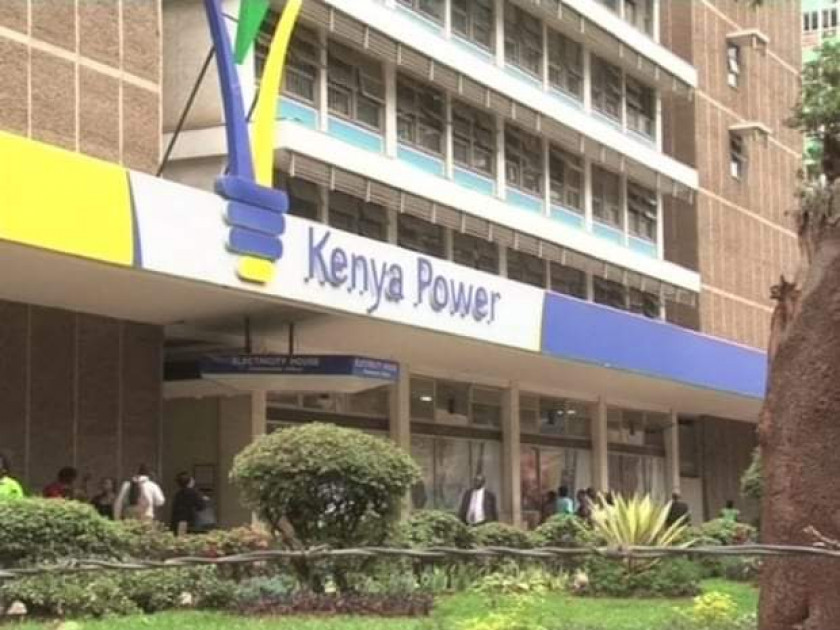
Hundreds of Kenya Power employees manipulated company documents to access loans, exposing serious weaknesses in the utility’s payroll and human resource controls.
The internal audit report for the 2024/25 financial year shows that 384 staff members were involved in the scheme, raising concerns over governance and oversight.
The findings, released by Auditor-General Nancy Gathungu, reveal that the fraud left 361 employees with payslips showing deductions of more than two-thirds of their salaries, in violation of labour laws.
“An internal investigation during the year on alleged use of forged documents by employees to obtain loans from financial institutions revealed that 384 employees acquired loans using forged payslips and Human Resource (HR) approval letters,” Gathungu said.
The report highlights that financial institutions were misled into granting loans that should not have been approved.
Section 19 of the Employment Act, 2007, bars employers from taking more than two-thirds of an employee’s salary, yet the audit shows that 94 per cent of those affected were left with less than a third of their basic pay.
“Out of those, 361 employees were in breach of the statutory one-third basic salary rule. The practice highlights weaknesses in the company’s payroll and human resource approval processes, which may have facilitated deductions beyond the statutory thresholds,” the report states.
The audit did not provide the total value of loans obtained through the forged documents, nor the names of the banks involved.
The forged payslips were only one of 33 fraudulent incidents identified at the company during the year.
Other schemes included collusion between staff, off-grid power station guards, and fuel transporters, resulting in the theft of 1.16 million litres of fuel. Employees manipulated delivery records to divert supplies over a period of more than two years.
Kenya Power confirmed that at least 20 employees were dismissed in the year ending June 2025 over irregularities, including fuel theft, corruption, and illegal electricity connections.
The Auditor-General also criticised the company for failing to track and monitor the implementation of recommendations from fraud investigations.
“There was no tracking and monitoring mechanism to follow up on the implementation status of recommendations arising from fraud investigations. In the absence of such a mechanism, management was unable to effectively assess progress, enforce accountability, or ensure closure of fraud-related control weaknesses,” Gathungu noted.
The report further questioned the role of Kenya Power’s board, noting it was unclear whether the board regularly reviewed fraud investigation reports from internal audit and security departments. This gap, Gathungu said, weakened governance and reduced the effectiveness of oversight.