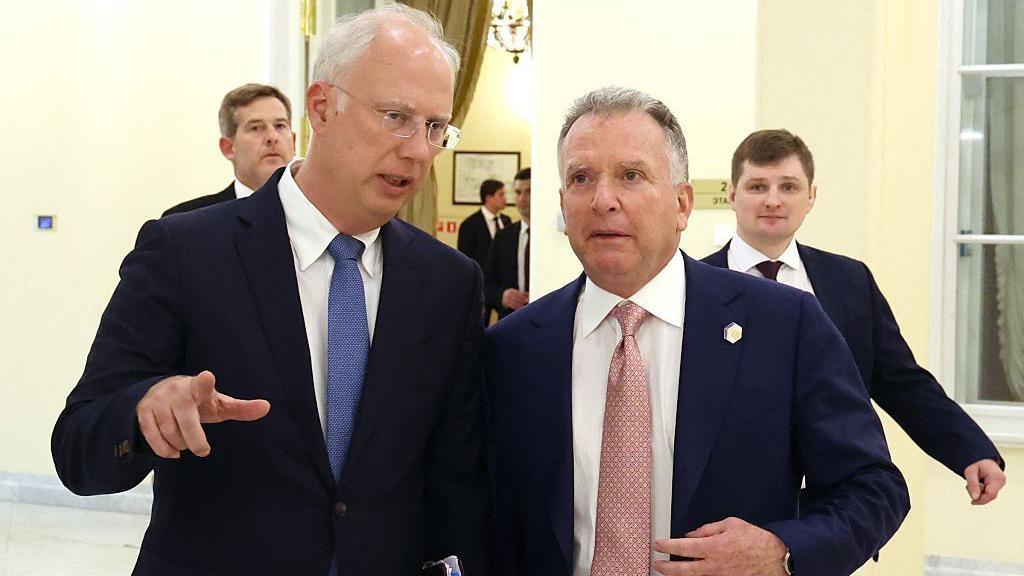
Kirill Dmitriev stands apart in Vladimir Putin’s inner circle. A US-educated financier and head of the Russian Direct Investment Fund (RDIF), he is the polished, English-speaking envoy who has become a central figure in backchannel peace talks with the US. Yet, his promotion of a peace plan that mirrors a Kremlin wishlist has many questioning whether he is a genuine bridge to peace or a sophisticated propagandist.
Dmitriev’s biography makes him an unlikely Kremlin insider. Born in Kyiv to Ukrainian scientists, he participated in pro-democracy protests as a youth and built a career in the US, earning degrees from Stanford and Harvard and working for McKinsey. This background grants him a credibility in Western circles that most Russian officials lack.
However, his current role tells a different story. Since Donald Trump’s return to office, Dmitriev has worked closely with US Special Envoy Steve Witkoff, who has praised him as an “important interlocutor.” Their collaboration has produced a draft peace plan demanding Ukraine cede occupied territories and reduce its military—terms widely seen as a victory for Moscow.
This duality defines him. To the West, he presents himself as a pragmatic dealmaker. “We are sure we are on the road to peace, and as peacemakers we need to make it happen,” he stated at a recent conference. Yet, his actions align closely with Kremlin power plays. The US Treasury has previously sanctioned his fund as a “slush fund” for Putin, and he has been filmed repeating Russian disinformation, such as denying attacks on civilian targets moments after a kindergarten was bombed.
His deep personal ties to Putin’s circle—his wife is a close colleague of Putin’s daughter—further cement his status as a trusted regime insider. While he leverages his Western background to build rapport, his ultimate loyalty appears to lie in Moscow, making him either the key to a diplomatic breakthrough or one of Putin’s most effective modern weapons.
By James Kisoo