WARSAW
China’s electric-vehicle industry captured half its domestic market in just a few years, crushing sales of gasoline-powered vehicles from once-dominant global automakers.
But foreign players weren’t the only losers. Many Chinese legacy automakers also watched their sales collapse – and responded by flooding the world with fossil-fuel vehicles they couldn’t sell at home.
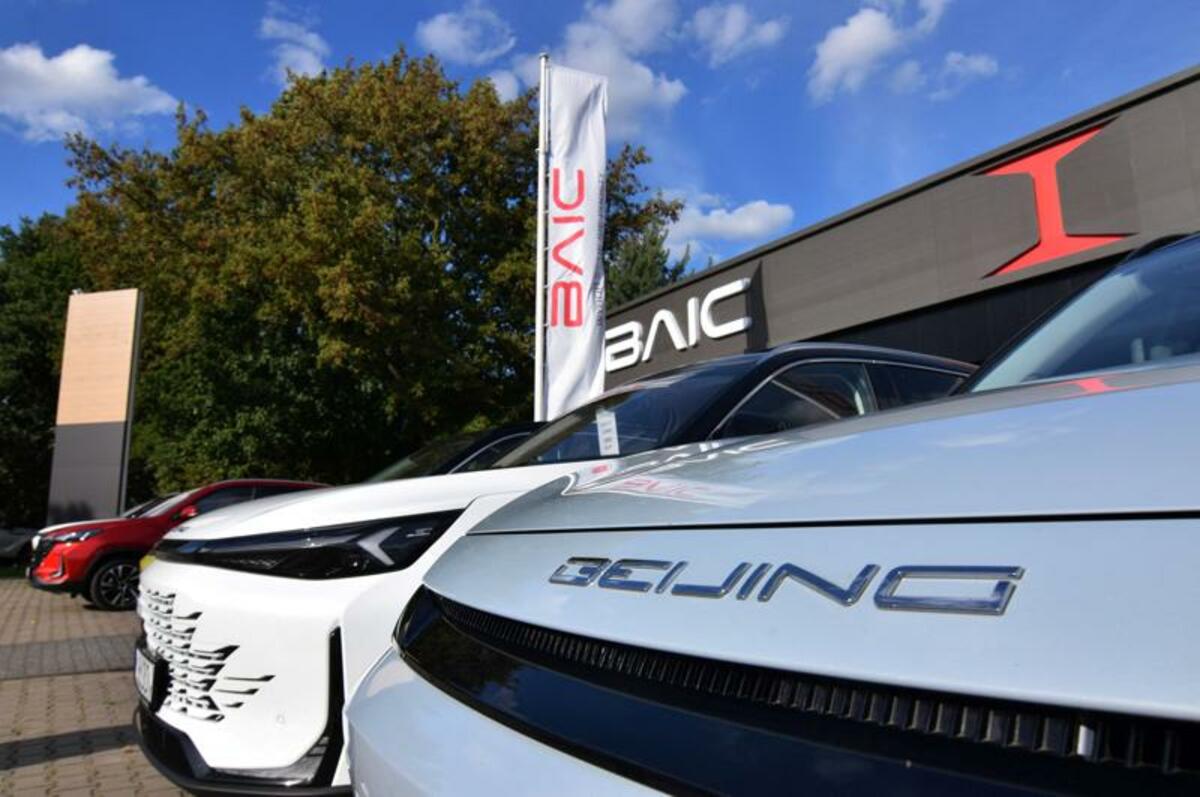
While Western policymakers have focused on the threat of China’s heavily subsidized EVs, protecting their markets with tariffs, U.S. and European automakers face greater competition from China’s gas-guzzlers in countries from Poland to South Africa to Uruguay. Fossil-fuel vehicles have accounted for 76% of Chinese auto exports since 2020, and total annual shipments jumped from 1 million to likely more than 6.5 million this year, according to data from China-based consultancy Automobility.
The boom in gasoline-powered exports is driven by the same EV subsidies and policies that wrecked the China businesses of automakers including VW, GM and Nissan by underwriting scores of Chinese EV makers and igniting a devastating price war, a Reuters examination found. The phenomenon highlights the far-reaching impacts of Chinese industrial policy, as foreign competitors struggle to keep pace with government-backed firms chasing Beijing’s goals to dominate critical sectors nationally and globally.
China’s gasoline-vehicle exports alone – not including EVs and plug-in hybrids – were enough last year to make it the world’s largest auto-exporting nation by volume, industry and government data show. This account of Chinese automakers’ global expansion is based on a Reuters review of auto-sales data in dozens of countries and interviews with more than 30 people, including executives from 11 Chinese and two Western automakers, distribution managers for Chinese brands and industry researchers.
The influx of Chinese gasoline cars into emerging and second-tier markets reflects a collision between Beijing’s current EV push and older policies that built China’s domestic gasoline-vehicle industry by leveraging foreign automakers’ technology.
Among the biggest exporters are state-owned legacy giants, including SAIC, BAIC, Dongfeng and Changan, which historically relied on joint ventures with foreign automakers for profits and engineering know-how. These partnerships started in the 1980s as shotgun marriages forced by Beijing as the price of foreign players’ access to China. More recently, with the rise of innovative privately owned Chinese EV makers, led by BYD, these joint ventures’ sales have plunged. SAIC-GM’s annual China sales, for instance, fell from more than 1.4 million vehicles to 435,000 between 2020 and 2024, SAIC data show.
Now these state-owned players are racking up sales in export markets that were once the domains of the same foreign automakers who are their partners in China. SAIC’s exports – mostly of its own brands, without GM – soared from nearly 400,000 annually in 2020 to more than a million last year.
By James Kisoo