By Andrew Kariuki
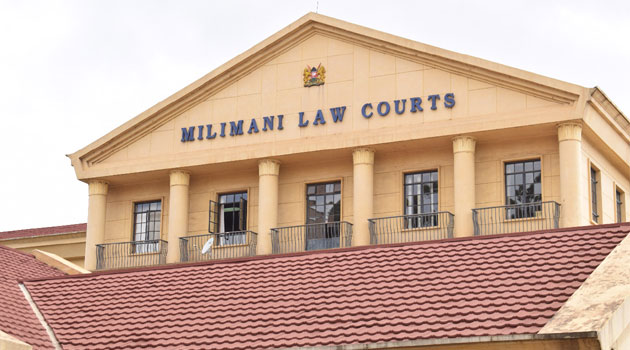
The High Court in Nairobi has dismissed a public interest petition seeking to overturn the appointment of the chairperson of the Public Procurement and Asset Disposal Regulatory Authority Board, ruling that the allegations raised against him did not violate the Constitution or bar him from holding public office.
The case, filed by Kiroko Ndegwa, sought 12 orders; including the quashing of the appointment, a declaration that the appointee was unfit to serve due to alleged breaches of Chapter Six and guidance on whether candidates with unresolved integrity questions can lawfully take up public positions without clearance from the Ethics and Anti-Corruption Commission (EACC).
The petitioner relied on two affidavits accusing the 4th Respondent, a former Murang’a governor, of embezzlement, abuse of office and misuse of public resources, claims dating back to his 2013–2017 term.
He further cited impeachment proceedings by the County Assembly, adverse reports on corruption, the EACC’s past refusal to clear him for the 2017 polls and ongoing cases; a forfeiture suit and a criminal case.
The 4th Respondent opposed the petition, arguing that the Senate had already cleared him of allegations that did not meet the threshold for gross violation and that the impeachment findings were not a lawful basis for disqualification.
He maintained that pending civil or criminal cases do not prevent citizens from holding public office, and that Section 62 of the Anti-Corruption and Economic Crimes Act was inapplicable because he was not a public officer at the time he was charged.
While the Attorney-General and the 3rd Respondent filed grounds of opposition, they did not tender affidavits or submissions, and both EACC and the Interested Party remained inactive.
The court described EACC’s silence as a dereliction of duty, noting that the Commission was best placed to guide the matter.
Justice B.M. Musyoki framed three issues for determination: whether the allegations against the 4th Respondent disqualified him from appointment, whether the Constitution was breached, and whether the orders sought could be granted. On impeachment, the court found that although the Senate noted some violations of the law, they did not rise to the level of gross violation required for removal and therefore could not be used to retroactively bar the appointment.
The judge held that the High Court had no authority to re-evaluate the Senate’s findings.
On the pending forfeiture and criminal cases, the court declined to comment on their merits to avoid prejudicing ongoing proceedings, noting further that the existence of criminal charges does not automatically bar one from public office.
Because the 4th Respondent was a private citizen at the time he was charged, Section 62 of the Anti-Corruption and Economic Crimes Act—which provides for suspension of charged public officers—did not apply.
Justice Musyoki further held that the appointment process did not violate Chapter Six.
The law requires the appointing authority to consider integrity standards, but the court emphasized that the mandate to evaluate suitability rests squarely with EACC.
Since the Commission did not oppose the appointment or file any report declaring the 4th Respondent unsuitable and had previously cleared him for the 2017 general elections, the court found no constitutional breach in the appointment.
The court dismissed the bulk of the petitioner’s prayers, saying courts cannot expand the statutory thresholds for disqualification or suspend individuals merely because they are under investigation.
Such an approach, the judge noted, would amount to rewriting Sections 62 and 64 of the Anti-Corruption and Economic Crimes Act.
However, for clarity, the court granted one prayer: a declaration affirming that neither the President nor any public body has power to overturn EACC’s integrity determinations, only a court of law may do so.
All other prayers were dismissed and no order for costs was issued due to the public interest nature of the petition.
The judgment was delivered on November 28, 2025, by Justice B.M. Musyoki.