By John Peter
A homicide investigator has described to the High Court how dozens of CCTV clips—gathered from several neighbourhoods across Nairobi—were assembled to retrace the final known movements of four women who disappeared from Eastleigh in late October 2024.
Testifying before Lady Justice Margaret Muigai, Corporal Lawrence Kamau said he joined the multi-agency investigation on October 24, 2024. His primary task, he explained, was to help reconstruct an hour-by-hour timeline showing where the women were last seen and the route a suspected vehicle appeared to follow.
Kamau told the court that, over a span of nearly two weeks, he and two colleagues moved through Eastleigh, Athi River, Parklands, and Lavington, requesting and reviewing surveillance recordings from residential buildings, petrol stations, shops, and private security firms. The team worked “location by location,” he said, looking for repeated patterns that could establish continuity.
According to his testimony, one element appeared consistently throughout the footage: a grey vehicle that surfaced repeatedly on the nights corresponding to each disappearance. Kamau said this repeated appearance quickly made the car a central focus of the inquiry, even though much of the footage was grainy.
One clip he described came from cameras at the Albeit Building in Eastleigh. The footage, captured on October 21, showed one of the missing women—dressed entirely in black—entering the lift and later walking out of the building toward a grey car parked outside. Investigators believe this was the last moment she was seen alive.
Footage taken later that same night at the Total Energies petrol station in Athi River showed what appeared to be the same vehicle arriving shortly before midnight. The car stopped briefly for service before driving off, though its occupants were not clearly visible.
Another sequence, recorded in the early hours of October 22, showed the grey car returning to Eastleigh. In this clip, Kamau said, two women—one wearing blue and the other a black hooded sweater—could be seen lingering near the vehicle, seemingly hesitant before eventually getting in.
The investigative trail then shifted to Parklands. At around 3:28 a.m., cameras at Valley View Apartments captured the same vehicle pulling into the compound.
Later, additional footage from AD Site Limited on 6th Avenue raised further alarm: as the car reversed, cameras recorded an object on the ground that investigators believed resembled a body. Police visited the location and later confirmed finding bloodstains at the spot.
Kamau also recounted footage connected to the fourth woman.
CCTV from Valley Heights Apartments in Lavington recorded a woman wearing maroon leaving the premises on October 29 and later shopping at a nearby supermarket.
Two days afterward, a man was filmed leaving the same building carrying two bags—one of which resembled the woman’s.
During cross-examination, defence lawyers highlighted the limitations of the collected footage.
Kamau acknowledged several gaps: poor lighting in some recordings, distant camera positions, and an inability to clearly read the vehicle’s license plate or identify its driver.
The defence further argued that Kamau should not have commented on the movements of the fourth woman, Deka Abdi Noor, because he had not been assigned to that portion of the case.
Prosecutors countered that the investigation was conducted as one continuous sequence, and that Deka was still alive when Kamau joined the inquiry, making his involvement relevant to the broader timeline.
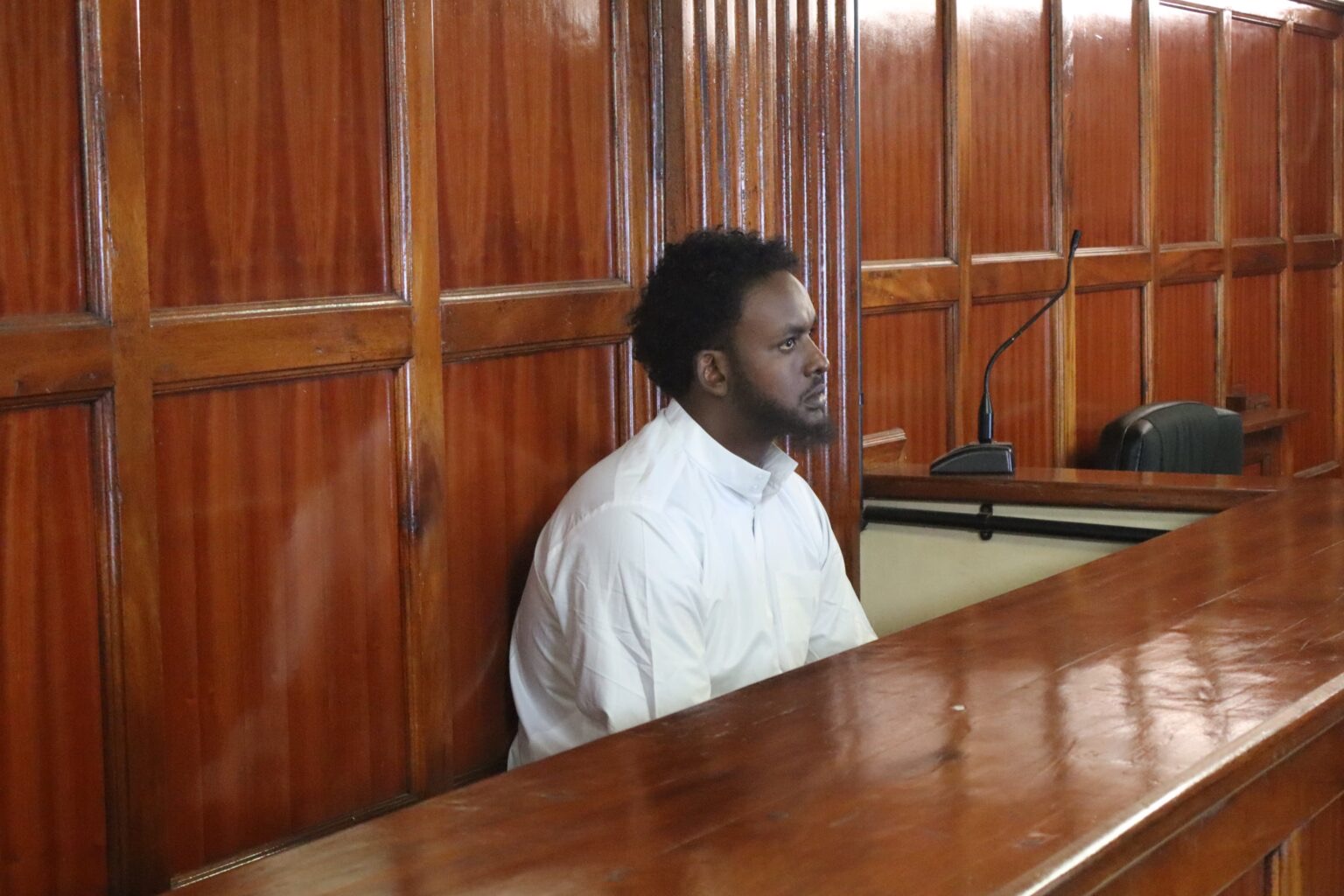
The accused, Hashim Dagane, has pleaded not guilty to murdering Dahabo Daud Said, Amina Dhahir, Musayba Abdi Mohamme, and Deka Abdi Noor between October 21 and 30, 2024.
The matter is scheduled for mention on March 26, 2026.