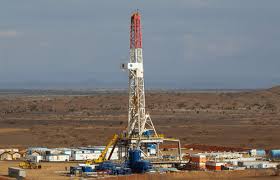
Kenya is on the verge of finally unlocking commercial oil production in Turkana, with the Energy Ministry urging Parliament to quickly approve the revised Field Development Plan (FDP) for Gulf Energy’s South Lokichar project.
The ministry says fast-tracking the approvals will pave the way for investments and the start of production as early as next year.
The government is also moving to extend incentives and tax exemptions to Gulf Energy to accelerate the transition of the Turkana oil project from exploration to full-scale commercial operations.
The project had been stalled for more than a decade under Tullow Oil due to funding challenges and disagreements among partners.
Production is expected to begin at the main oil sites of Ngamia-1 and Amosing, located in Block T6 and Block T7 of the Tertiary Rift Basin.
“But all these will depend on the approvals,” Petroleum PS Mohamed Liban said.
In a major development in April, Tullow Oil PLC agreed to sell its entire Kenyan portfolio to Gulf Energy Ltd for a minimum of $120 million (Ksh 15.5 billion), effectively stepping away from a project that had been marred by regulatory delays, partner exits, and investment uncertainty.
Gulf Energy submitted its revised FDP to the Energy and Petroleum Regulatory Authority in October. After approval, the plan was endorsed by Energy CS Opiyp Wandayi last month before being forwarded to Parliament.
Under the Petroleum Act, the CS must submit the plan within 30 days of approval, and Parliament has 60 days to debate and ratify it.
“We are hoping that Parliament will make approvals within the shortest time possible to allow the project to go into the actualisation phase,” PS Liban said during the release of the oil industry’s third-quarter statistics by the Petroleum Institute of East Africa in Nairobi.
The FDP from Gulf Energy E&P B.V. outlines the strategy for commercially developing the oil fields in Turkana County, which were previously managed by Tullow Oil. The plan aims for a production capacity of between 60,000 and 100,000 barrels per day, starting with an initial ramp-up to 50,000 barrels daily.
If the plan receives timely parliamentary approval, the first oil export is expected in December 2026, according to Gulf Energy and the State Department for Petroleum.
PS Liban noted that the initial oil will be transported by road, with Kenya Petroleum Refineries Limited—recently acquired by Kenya Pipeline Company—serving as a storage facility for exports.
“We are ensuring that all the infrastructure, especially in northern Kenya, is improved,” he said, adding that plans are underway to construct an 895-kilometre crude oil pipeline connecting the Turkana oil fields to the Lamu Port for export.
The Turkana project is expected to attract total capital investment of $6.1 billion (Ksh 789 billion) over its 25-year contract period.
To support the project, the government has revised Gulf Energy’s Production Sharing Contract, allowing the company to recover up to 85 per cent of annual crude production for capital costs before sharing profits with the state, up from 65 per cent.
This adjustment will enable Gulf to recover its investment faster.
Gulf Energy and its subcontractors are also exempt from several major taxes, including Value Added Tax (VAT), Railway Development Levy, Import Declaration Fee, and Withholding Tax on petroleum-related services.
Furthermore, the official point for crude oil transfer to buyers has been shifted from Mombasa to Turkana, reducing logistics costs and other operational expenses for Gulf Energy.
With approvals pending in Parliament and these incentives in place, the long-awaited Turkana oil project is finally positioned to move from exploration to commercial production, offering Kenya a significant boost in energy resources and economic opportunities.