At the heart of Donald Trump’s latest diplomatic flourish lies a stark transactional calculus: peace in exchange for minerals.
The US president on Thursday inked a framework agreement with Rwanda and the Democratic Republic of the Congo that promises American firms unprecedented access to the region’s bounty of rare earths, cobalt and coltan, resources vital for electric vehicles, smartphones and military hardware.
Eastern DRC alone holds an estimated 70% of global cobalt reserves and 60% of coltan, while Rwanda harbours neodymium deposits straddling the border, according to UN and World Bank assessments.
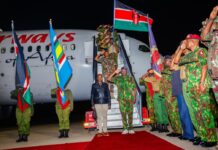
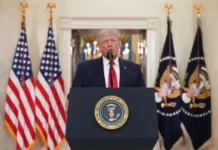
Trump, flanked by presidents Paul Kagame and Félix Tshisekedi at his eponymous Institute of Peace, boasted it would make “everybody a lot of money”, framing the pact as his eighth war ended since January.
The deal mandates Rwanda’s withdrawal of support for the M23 rebels, whom UN experts accuse Kigali of arming with up to 4,000 troops, in return for Kinshasa neutralising Hutu militias tied to the 1994 genocide.
Yet even as pens scratched paper, the accord’s fragility was exposed. Fresh bombardments rocked M23-held Kaziba in South Kivu, with Congolese jets killing dozens and displacing thousands, local officials told AFP. Explosions echoed across the Rwandan border at Bugarama, prompting its closure, as rebel reinforcements massed to encircle Uvira, the province’s last government bastion.
M23’s January sweep had already claimed Goma and Bukavu; this week’s clashes underscore accusations of ceasefire sabotage traded between Kinshasa and Kigali.
Kagame, ensconced in power for three decades, tempered Trump’s bombast: “There will be ups and downs ahead.” Tshisekedi dubbed it a “demanding path”.
Critics, including Nobel laureate Denis Mukwege, decry the opacity, arguing it valorises extraction over accountability for genocide survivors and the millions dead in three decades of war. Human Rights Watch has documented M23 war crimes, executions, rapes, forced recruitment, with Rwanda liable as de facto occupier.
This follows a June ceasefire, Qatar-mediated but swiftly violated, and builds on Trump’s broader Africa pivot: non-binding pacts with Thailand, Cambodia and Australia for mineral stakes, amid tariffs slashing US aid. Beijing, dominating 60% of DRC cobalt, watches warily as Washington eyes diversification, but without robust enforcement, the “miracle” risks becoming another extractive mirage, fuelling conflict over fortune.