By John Mutiso
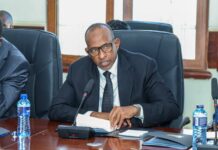
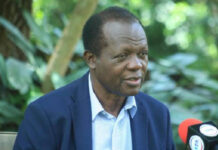
Kisii Governor Simba Arati and his Kakamega counterpart Fernandes Barasa have tied at 65 per cent for the number one spot in the latest Politrack Africa County Governance Index, emerging as the top-performing county bosses in the 2025 ranking.
The Index, released on Monday, assessed all 47 county governments across multiple indicators, including service delivery, financial management, public participation, development performance, and citizen satisfaction.
Arati and Barasa, both first-term governors, were lauded for consistent progress in infrastructure expansion, prudent fiscal management, and improved social services.
Following the two governors were Anne Waiguru (Kirinyaga), who scored 63.2 per cent, Patrick Ole Ntutu (Narok), 62.5 per cent, Gladys Wanga (Homa Bay), 61.8 per cent, and Abdi Guyo (Isiolo), 60.9 per cent.
The Politrack Africa study, drawn from a nationwide survey of more than 13,000 respondents and reinforced with expenditure data from the Office of the Controller of Budget, measured performance across four areas: service delivery, fiscal stewardship, governance practices and economic development.
Researchers found that counties where residents reported improvements in hospitals, roads, water supply and agricultural support tended to score higher overall.
Arati earned high marks for what the report described as vigorous revenue reforms, including a full shift to digital payments, which pushed own-source revenue up by 178 per cent. He also launched construction of a new 300-bed maternal and child health wing at Kisii Teaching and Referral Hospital.
Barasa was credited with expanding the county’s Kakamega Care universal health programme and driving the revival agenda at Mumias Sugar Company, while pushing forward plans for a county industrial park designed to attract manufacturing investment.
Other strong performers, including Waiguru and Guyo—were cited for pairing long-term planning with inclusive governance.
Waiguru earned recognition for operationalising the county industrial park and rolling out the “Kicare” health model. At the same time, Narok’s Ole Ntutu and Homa Bay’s Wanga were applauded for combining fiscal discipline with large-scale development programmes.
Jonathan Bii (Uasin Gishu) ranked 7th with 58.5%, noted for presiding over a key agricultural county with strategic investments. He was trailed by Joseph Mwangi (Laikipia) at 57.9% (8th) and Fatuma Achani (Kwale) at 57.2% (9th), both of whom received high marks for their unique service delivery models.
Peter Anyang’ Nyong’o (Kisumu) secured 10th place at 56.4%, recognised for his continued focus on urban renewal and health systems despite high regional political scrutiny.
Further down the list, Cecily Mutitu Mbarire (Embu) scored 55.7% (11th), and Joseph Ole Lenku (Kajiado) finished 12th at 55.0%, with his administration cited for navigating complex issues related to land, pastoralism, and urbanisation near the capital.
Jeremiah Lomorukai (Turkana), at 54.3% (13th), and Mohamed Adan Khalif (Mandera), at 53.6% (14th), were highlighted for their efforts in service delivery under extreme pressure from security and climate challenges, which significantly impacted their overall scores despite positive efforts.
The final tier included Irungu Kang’ata (Murang’a) at 53.0% (15th), followed by Abdulswamad Sheriff Nassir (Mombasa) at 52.4% (16th), who was recognized for overhauling the county’s revenue collection to a single digital platform (“Mombasa Pay”) and making all maternity services free, yet was pulled down by low scores in fiscal stewardship and dealing with urban issues.
The list was concluded with Stephen Sang (Nandi) at 51.8% (17th), James Orengo (Siaya) at 51.5% (18th), Andrew Mwadime (Taita Taveta) at 51.1% (19th), and George Natembeya (Trans Nzoia), who secured 20th place with 50.8% for his “500 KM Road Tarmacking” plan in the agricultural breadbasket, a significant development initiative.