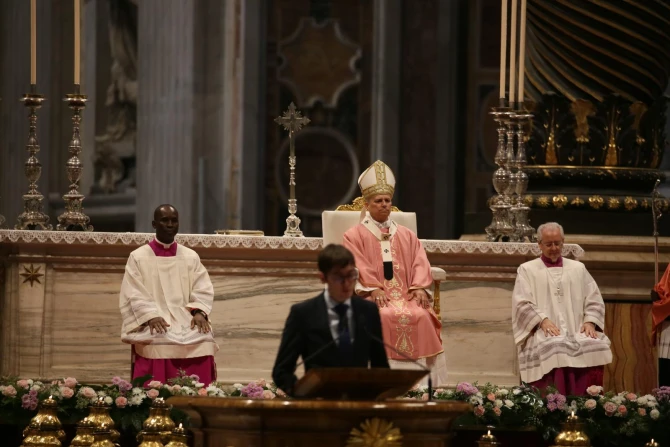
Pope Leo XIV on Sunday used the final major celebration of the Holy Year to deliver a pointed appeal for justice systems that do more than punish, presiding over a Jubilee Mass for prisoners at St Peter’s Basilica and calling for rehabilitation, reconciliation and hope.
Around 6,000 pilgrims from roughly 90 countries took part in the Jubilee of Prisoners, among them detainees and their families, prison chaplains, correctional officers, police and prison administrators. They came from across Europe, the Americas, Africa, Asia and Oceania, underscoring the global reach of incarceration and the shared challenges faced by prison systems worldwide.
As the Jubilee Year draws to a close, Leo acknowledged that progress remains uneven. “Despite the efforts of many, even in the penitentiary system there is much that still needs to be done,” he said, invoking the prophet Isaiah’s image of redemption to remind the congregation that liberation, in the Christian understanding, begins with God.
The pope did not romanticise prison life. He described incarceration as “a difficult place” where even well-intentioned reforms meet resistance, warning against fatigue and resignation. Instead, he urged perseverance marked by “tenacity, courage, and a spirit of collaboration”.
Central to his message was a rejection of justice defined solely by retribution. “No human being is defined only by his or her actions,” Leo said, insisting that justice must remain a process of reparation and reconciliation, one that allows for failure without foreclosing the possibility of renewal.
Reflecting on the deeper meaning of the Jubilee, he argued that compassion and mercy could take root even in the harshest environments. When respect and forgiveness are preserved, he said, “beautiful flowers spring forth from the hard ground of sin and suffering”, including humane initiatives and encounters that mature “even within prison walls”.
Leo also recalled the hopes of his predecessor, Pope Francis, who had envisioned the Holy Year as a time for amnesties, pardons and concrete opportunities for reintegration. Such measures, Leo said, reflect the Jubilee’s biblical origins as a “year of grace” offering the chance to begin again.
Addressing both prisoners and those who work with them, the pope pointed to systemic problems such as overcrowding, limited education and rehabilitation programmes, and scarce job opportunities, alongside the personal burdens of resentment and wounded trust. Yet he returned to a single refrain: “Let no one be lost. Let all be saved.”
In a quiet symbol of that message, the Communion Hosts used during the Mass were produced by inmates through an Italian project that has, since 2016, involved hundreds of prisoners each year in supplying parishes around the world, a reminder that dignity and purpose can survive even behind bars.