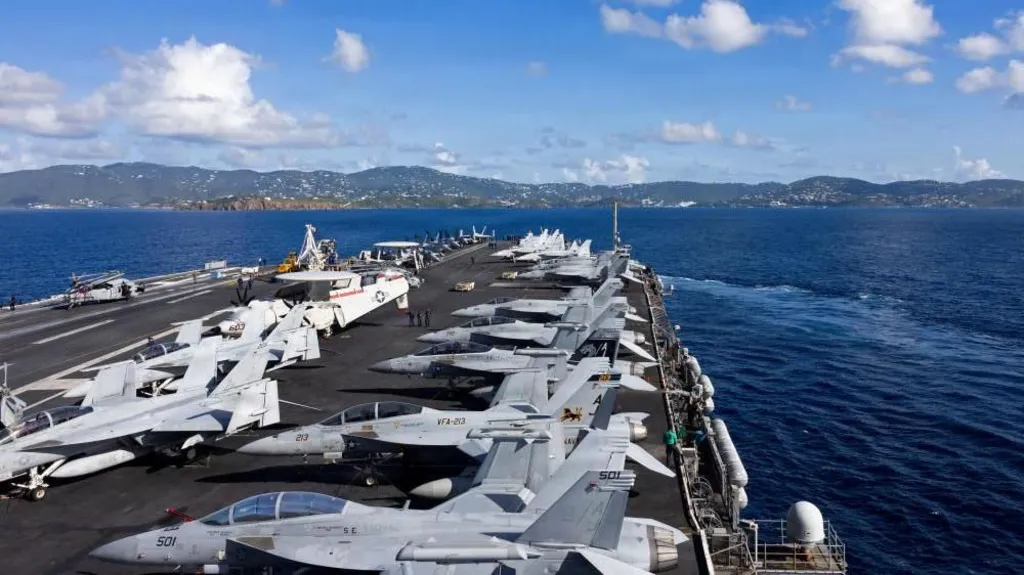
The escalating tension between the US and Venezuela has led to the biggest US military buildup in the Caribbean since the end of the Cold War.
The last time such a concentration of American warships and troops was seen in the region was in 1989, when Washington removed Panama’s President Manuel Noriega from power, accusing him of drug trafficking.
However, the parallels between these two moments are overshadowed by their fundamental differences.
The Spark: A Death at a Checkpoint
The path to the 1989 invasion began on a December night in Panama City. US Marine Lieutenant Robert Paz was in the back of a Chevrolet Impala with three other service members, heading to dinner at the Marriott Hotel. As US tensions with Panamanian strongman Manuel Noriega reached a boiling point, their car approached a checkpoint manned by the Panamanian Defence Forces.
Six soldiers surrounded the vehicle. Following an altercation, the Americans drove away, and the Panamanians opened fire, killing Paz.
His death was the catalyst. Four days later, on December 20, the US launched its invasion of Panama. To this day, “Operation Just Cause” remains the last major US military incursion on foreign soil in the Americas.
The Aftermath of ‘Just Cause’
By the operation’s end, Washington had mobilized roughly 30,000 troops. Noriega was forced from power, captured, and flown to Miami to stand trial on drug-smuggling charges.
The human cost remains disputed. The United Nations estimates approximately 500 Panamanian civilians were killed. The US military claims a far lower number, while critics of the invasion contend the true toll was significantly higher.
By James Kisoo