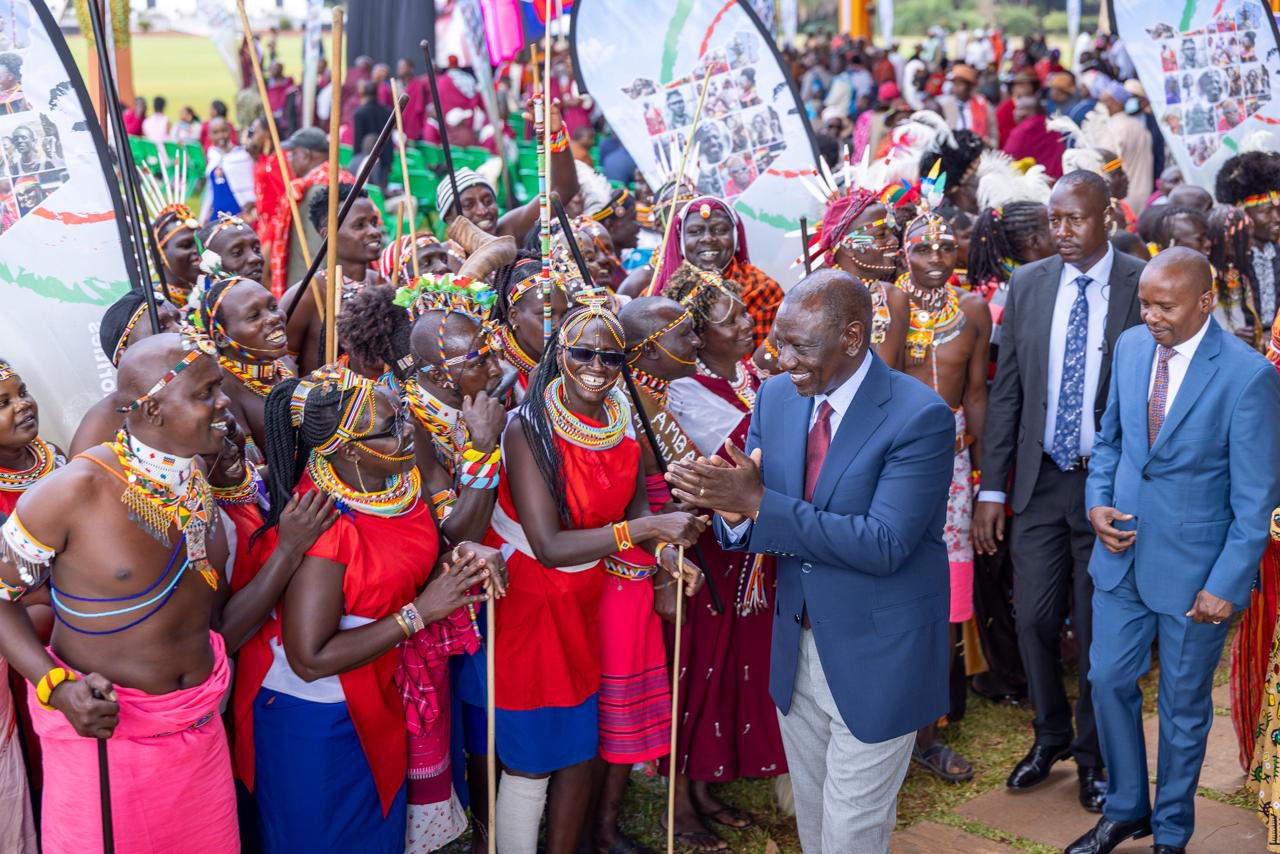
President William Ruto has announced that the Cabinet has approved a new national policy aimed at addressing the long-standing exclusion of ethnic minorities, indigenous peoples, and marginalised communities.
Speaking on Thursday, December 18, he said the policy is designed to run from 2025 to 2035 and is intended to create clear institutions, legal frameworks, and targeted interventions.
“Today, I am pleased to announce that the Cabinet has approved the National Policy on Ethnic Minorities, Indigenous and Marginalised Communities (2025-2035). I will shortly launch this transformative blueprint, which provides a comprehensive roadmap for the full realisation of Article 56,” he said.
Ruto explained that the policy was developed through wide engagement with communities, civil society, county governments, and experts, and that it establishes the structures required to address exclusion in a sustained manner.
“This policy is the product of extensive nationwide consultations with communities, civil society, county governments, and experts. It responds directly to the challenges acknowledged in this forum two years ago and establishes the institutional architecture we committed to build. Allow me to highlight its core pillars,” he added.
Ruto explained that the first pillar focuses on institutional coordination through the creation of a dedicated directorate and a national council to ensure minority issues are consistently addressed across government.
“First, the policy establishes a Minorities and Marginalised Communities Directorate as the central coordinating unit and provides for the creation of a National Council for Ethnic Minorities and Marginalised Communities through legislation.
“This guarantees a permanent, authoritative voice for minority concerns across government, with focal points in every ministry and county,” he further said.
Ruto said the second pillar introduces affirmative action measures and targeted investments to improve access to employment, education, skills, and financial support for marginalised communities.
“Second, the policy mandates affirmative action quotas in public service and public procurement, alongside targeted investments in education. These include mobile schools for nomadic communities, affirmative action in tertiary institutions, vocational training, and improved access to credit to support sustainable livelihoods,” he noted.
On political inclusion, Ruto said the policy seeks to entrench representation through law, ensuring minority participation is mandatory rather than discretionary.
“Third, to dismantle long-standing barriers to political inclusion, the policy requires legislation under Article 100 of the Constitution and amendments to electoral laws to ensure genuinely inclusive nominations. Representation in Parliament and county assemblies will no longer depend on goodwill, but on constitutional obligation,” he stated.
Additionally, Ruto said land rights are a major focus of the policy, with measures aimed at securing community land, protecting ancestral territories, and enforcing court decisions on historical injustices.
“Fourth, the policy accelerates the issuance of community land titles, establishes a digital registry to safeguard ancestral territories, mandates Free, Prior, and Informed Consent for projects on community land, and fast-tracks the implementation of court rulings on historical land injustices, including those affecting communities such as the Ogiek,” he said.
Ruto added that the policy treats indigenous culture as part of Kenya’s national heritage and commits the government to protecting and promoting it.
“Fifth, because your heritage is our national heritage, the policy commits to protecting sacred sites, revitalising endangered languages, integrating indigenous histories and knowledge systems into the national curriculum, and supporting community-led documentation of intangible cultural heritage,” he affirmed.
Ruto further said the policy recognises that certain groups within minority communities face multiple layers of vulnerability and therefore require targeted protection and support.
“Sixth, the policy recognises the compounded vulnerabilities faced by women, youth, persons with disabilities, elders, and children within minority communities. It provides for universal birth registration, youth leadership programmes, disability-inclusive infrastructure, targeted social protection, and strengthened measures to prevent and respond to gender-based violence,” he added.
Addressing climate change, Ruto said the policy prioritises community-led solutions and acknowledges that indigenous and minority communities are often the most affected by environmental shocks.
“Seventh, acknowledging that minority and indigenous communities are often the first and hardest hit by climate change, the policy allocates at least 30% of county climate funds to community-led adaptation initiatives, safeguards pastoral mobility corridors, and integrates indigenous knowledge into national climate action,” he explained.
Ruto further said that the policy strengthens access to justice and security by taking services closer to remote communities and recognising traditional conflict resolution systems.
“Eighth, the policy expands access to justice by establishing mobile courts and legal aid centres in remote areas, training justice sector actors on minority rights, integrating traditional conflict resolution mechanisms into national peace architecture, recruiting security personnel from local communities, and strengthening community-led disarmament efforts,” he further explained.
Elsewhere, Ruto announced that the government will establish a Ksh500 million national minority scholarship program.
He said the scholarship program will be implemented in partnership with the private sector and development partners.
Ruto noted that under the programme, children from minority and marginalized communities will be able to access secondary and tertiary education.
“The immediate establishment of a Ksh500 million national minority scholarship program to be implemented in partnership with private sector players and development partners.
“The programme will support children from indigenous minorities and marginalized communities to access both secondary and tertiary education, ensuring that poverty is no longer a barrier to talent,” he said.
At the same time, Ruto said the Ministry of Education will set aside Ksh200 million annually to upgrade and equip colleges in minority and marginalized areas.
“The Ministry of Education shall set aside KSh200 million annually as an Education Infrastructure Fund to construct, upgrade, and equip schools and middle-level colleges in minority and marginalized areas,” he added.