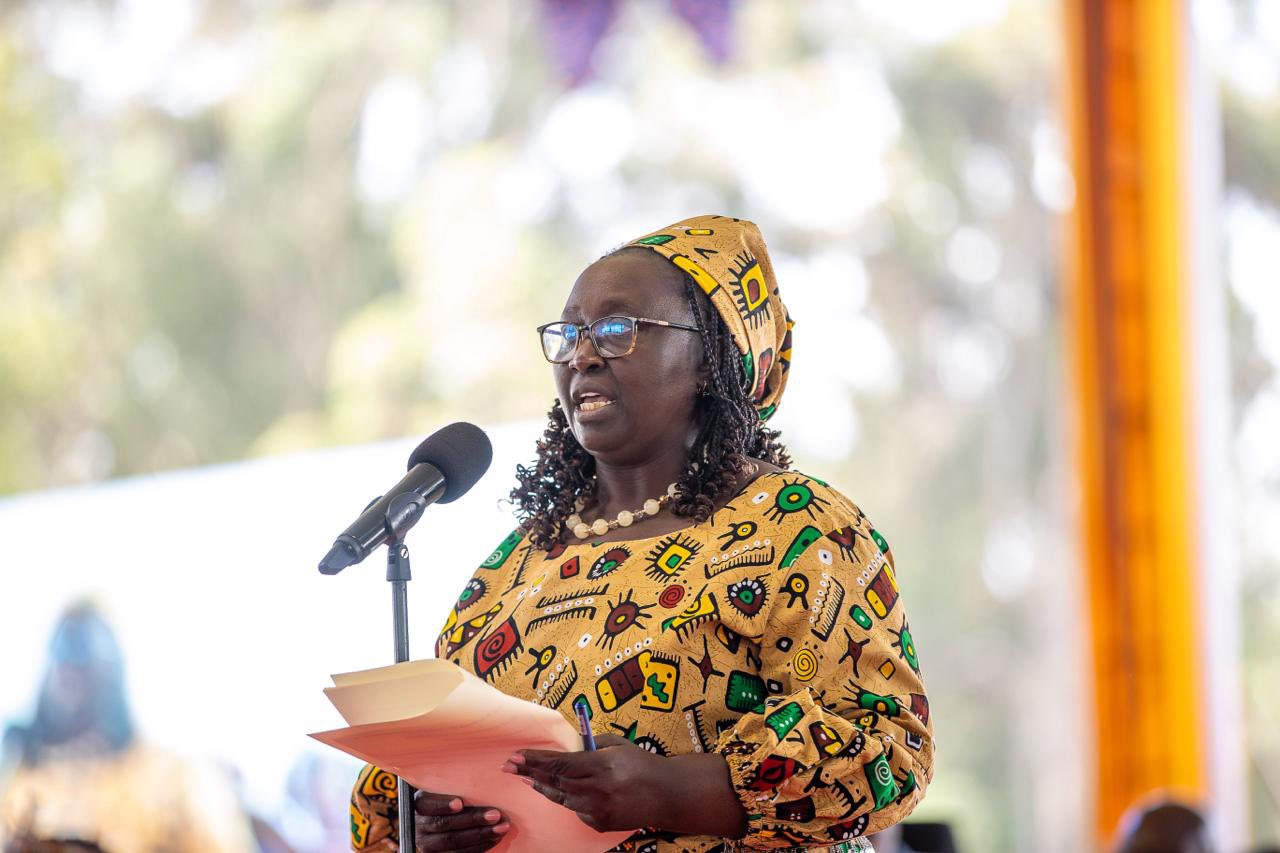
Gender and Culture Cabinet Secretary Hannah Wendot has called on communities to abandon harmful cultural practices, urging an end to female genital mutilation (FGM).
She spoke on Thursday, December 18, 2025, at the State House, Nairobi, during the marking of the International Day for Minority Rights. The event also featured the launch of the National Policy on Ethnic Minorities and Marginalised Communities (2025–2035).
Addressing leaders and representatives from minority communities, Wendot criticised FGM, saying the practice violates the law and harms girls and women. She warned against justifying the practice under the guise of culture.
“Your Excellency, these are the communities that we go around talking to,” she said. “Some people think they are helping God to create by removing parts of the body. Wanakaa wanakata wasichana mahali haifai kukatwa. Today, we want to say FGM must end.”
Wendot said the new policy gives the government a stronger framework to protect vulnerable groups while ensuring that cultural practices remain lawful and responsible.
“Tukipitisha hii policy, mambo ya kusaidia Mungu kutoa mahali pengine hiyo ikome,” she added.
President William Ruto hosted the event at State House, bringing together representatives from minority and marginalised communities across the country. The day, observed globally on December 18, aims to promote and protect the rights of ethnic, religious and linguistic minorities.
During the ceremony, President Ruto received a report on the status of minority communities in Kenya. He reaffirmed the government’s commitment to inclusion, equality and dignity for all citizens.
Head of Public Service Felix Koskei said the occasion reminded the country of its duty to ensure no community remains excluded from national development.
“This day gives us an opportunity to reaffirm our commitment to inclusivity, equality and justice,” Koskei said. “Every community must enjoy equal access to opportunity, representation and dignity.”
The government invited about 5,000 delegates from minority and marginalised groups to attend the State House event. Delegates travelled from at least 38 counties and wore traditional attire to showcase Kenya’s cultural diversity.
Communities represented included the Ogiek, El Molo, Rendille, Nubians, Makonde, Shona, Dasenach and Sakuye, among others.
Officials said the gathering marked one of the largest state engagements with minority groups in recent decades.
The National Policy on Ethnic Minorities and Marginalised Communities seeks to address long-standing challenges such as discrimination, low access to education, poverty and limited representation in governance. It aligns with Article 56 of the Constitution, which requires affirmative action for marginalised groups.