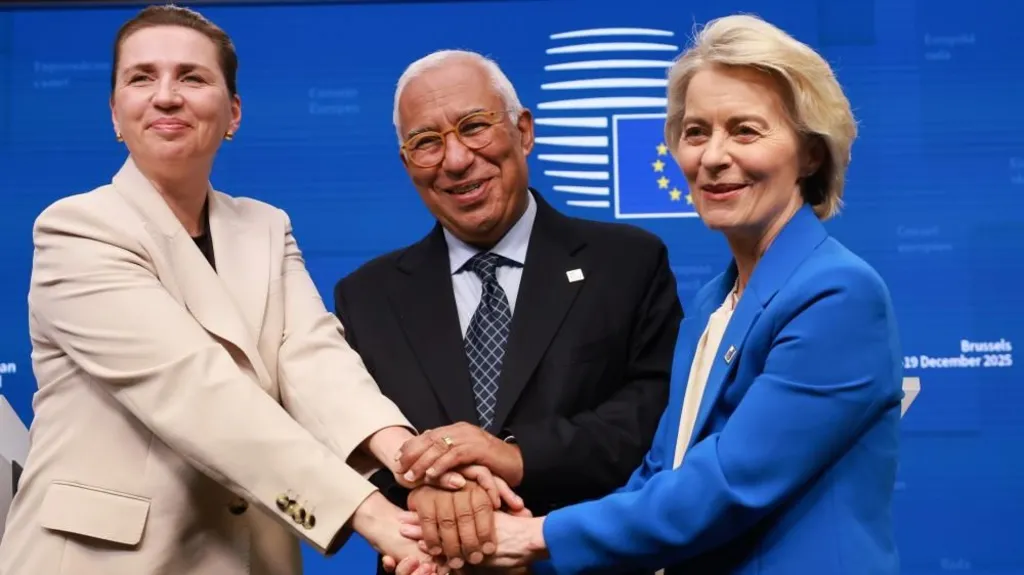
European Union leaders have agreed on a €90 billion loan to support Ukraine, overcoming a deadlock over a more contentious plan to use frozen Russian assets. The deal, reached after marathon talks in Brussels, aims to cover Kyiv’s urgent military and economic needs for the next two years.
“We committed, we delivered,” European Council President Antonio Costa announced on X. The agreement provides a critical lifeline for Ukraine, which faces a cash crunch as soon as April without fresh funding.
The summit exposed deep divisions over how to finance aid. Ukrainian President Volodymyr Zelensky had urged leaders to unlock €200 billion in immobilized Russian central bank assets, a proposal strongly backed by Germany. However, Belgium—where most of the funds are held—and other nations demanded liability guarantees others were unwilling to accept.
Belgian Prime Minister Bart De Wever framed the loan compromise as a victory for unity, saying it avoided “chaos and division.” German Chancellor Friedrich Merz, while conceding the asset plan, said the loan “sends a clear signal” to Russian President Vladimir Putin. Russia had previously warned the EU against seizing its funds.
The funding decision comes amid a flurry of high-stakes diplomacy. US and Russian officials are scheduled to meet in Miami this weekend for talks on a potential peace plan, with Kremlin envoy Kirill Dmitriev expected to meet Trump envoys Steve Witkoff and Jared Kushner. Simultaneously, French President Emmanuel Macron suggested Europe should seek to “re-engage” with Putin “in coming weeks,” stating it would be “useful” to find a new framework for discussion.
Zelensky, who warned that a lack of funds would force Ukraine to “reduce production of drones” by spring, also announced new talks with US delegations on Friday and Saturday, seeking clearer security guarantees from Washington.
By James Kisoo