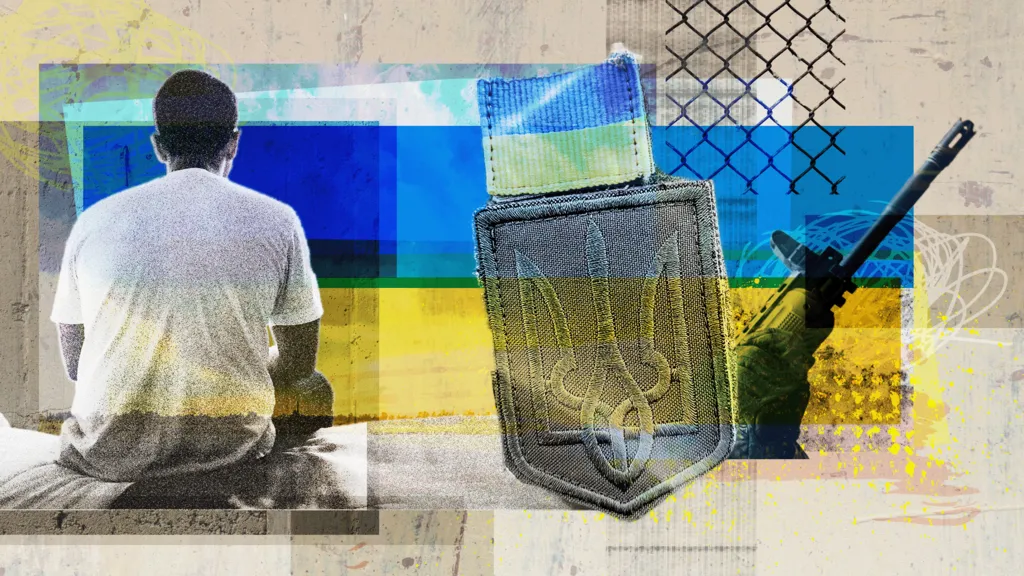
Kateryna cannot speak of her son Orest without her voice trembling into tears. Her grief is compounded by anger—and by a crushing stigma.
According to the official army investigation, the quiet 25-year-old, who dreamed of an academic career, died by a “self-inflicted wound” on the Donetsk front in 2023. His mother cannot believe it.
“I was divided,” Kateryna says. “Some died the right way, and others died the wrong way.”
While Ukraine collectively mourns over 45,000 soldiers killed since Russia’s full-scale invasion, a quieter tragedy unfolds in the shadows.
There are no official statistics on suicide among soldiers, with officials describing them as isolated incidents. Yet human rights advocates and bereaved families believe the number may be in the hundreds.
For Kateryna, the ordeal began when a recruitment patrol stopped Orest, whose poor eyesight had initially made him unfit. After a re-evaluation, he was deemed “partially fit” for wartime service and sent to the front as a communications specialist. “Orest was caught, not summoned,” she says bitterly.
Once deployed near Chasiv Yar, he grew withdrawn and depressed. Now, Kateryna writes him a letter every day—650 and counting.
Her mourning is intensified by the official classification of suicide as a non-combat loss. Families in her situation receive no compensation, no military honors, and no public recognition.
“The state took my son, sent him to war, and brought me back a body in a bag,” she says. “That’s it. No help, no truth, nothing.”
Her story highlights a painful fissure in a nation united by war, where the manner of a soldier’s death can dictate whether their sacrifice is remembered or rendered invisible.
By James Kisoo