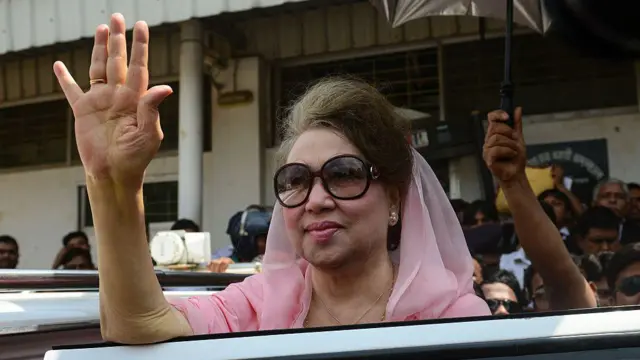
Khaleda Zia, Bangladesh’s pioneering first female prime minister and a central figure in the nation’s turbulent politics for over three decades, died on 30 December 2025 at the age of 80. Her passing followed a prolonged illness.
The Bangladesh Nationalist Party (BNP) announced her death early that morning. She had been receiving treatment at Evercare Hospital in Dhaka since 23 November for complications that included advanced liver cirrhosis, arthritis, diabetes, and heart and lung conditions.
Her death marked the close of a defining chapter in Bangladeshi history, one dominated by her fierce rivalry with Sheikh Hasina, another former prime minister who was later exiled.
Zia entered politics after the 1981 assassination of her husband, President Ziaur Rahman. She transformed from a housewife into a resilient leader who served as prime minister twice – first from 1991 to 1996, and again from 2001 to 2006.
She became a symbol of opposition resistance, enduring years of corruption charges that she and her supporters described as politically motivated. Acquitted in her final case earlier in 2025, Zia had expressed intentions to contest elections scheduled for February 2026, despite her declining health.
Interim Chief Adviser Professor Muhammad Yunus expressed profound sorrow, describing Zia as “a symbol of the democratic movement.” Indian Prime Minister Narendra Modi conveyed sincere condolences, noting the loss for her family and the Bangladeshi people. Pakistani Prime Minister Shehbaz Sharif highlighted her “lifelong service to Bangladesh” and her lasting legacy.
The government declared three days of national mourning and a public holiday. Funeral prayers were set for 31 December in front of parliament, followed by her burial beside her husband. Asif Nazrul, law minister in the interim administration, confirmed arrangements for a dignified send-off.
Zia’s political journey reflected Bangladesh’s post-independence struggles. She alternated power with Sheikh Hasina amid mutual accusations of corruption and authoritarianism. Freed from house arrest after Hasina’s ouster in 2024, Zia remained influential through the BNP, commanding significant support even in her absence.
Her death raised immediate questions about the opposition’s direction ahead of elections and the stability of Bangladesh’s fragile democratic transition. With Hasina sentenced in absentia and exiled in India, the era of the “battling begums” came to a close, leaving a vacuum in opposition leadership.
By Were Kelly