President William Ruto has publicly declared his ambition to secure a resounding victory in the 2027 General Election with a margin of between two and three million votes, signalling a shift from the razor‑thin margin that defined his 2022 win and underscoring his determination to consolidate national support and political stability ahead of the crucial polls.
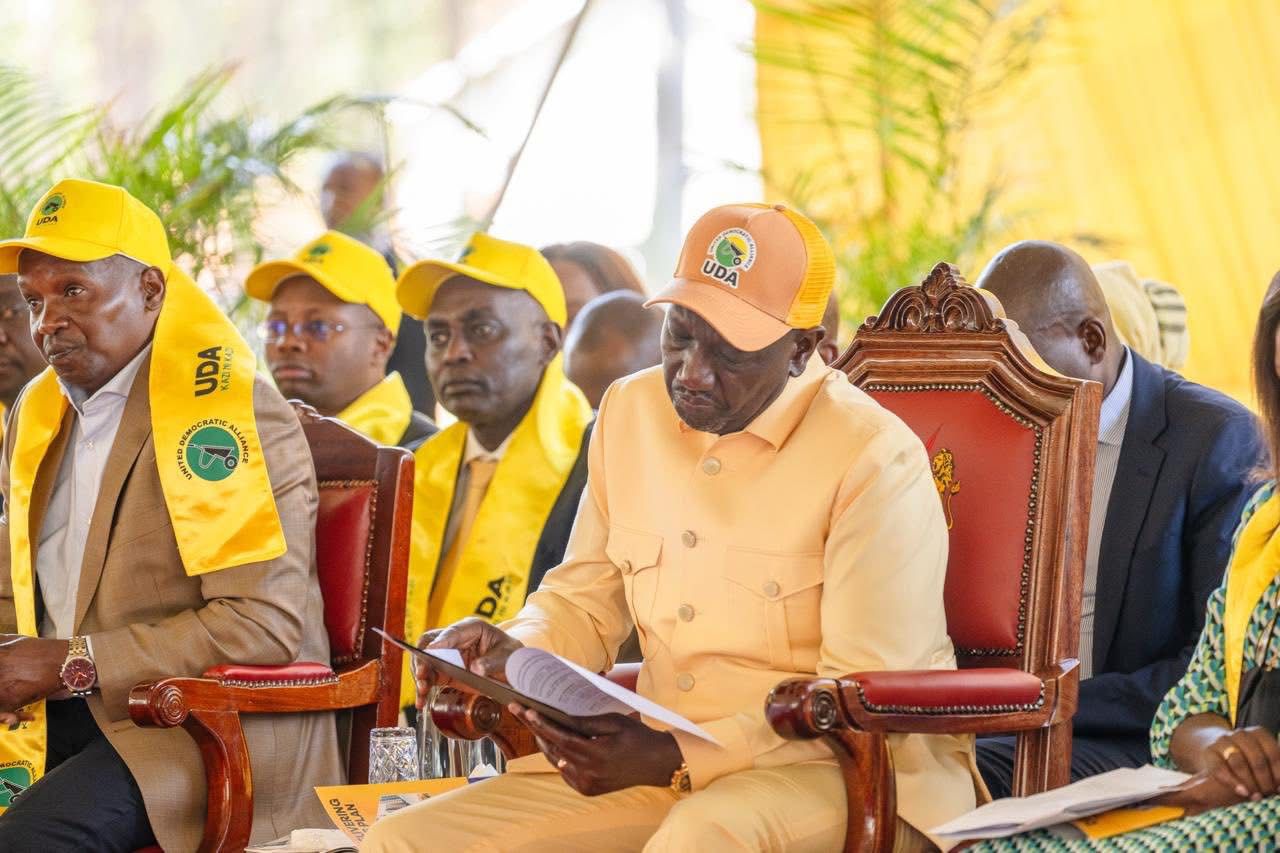
Speaking at the United Democratic Alliance (UDA) National Governing Council meeting at State House, Nairobi, on Monday, Ruto said Kenya needed a broad and decisive mandate to continue and deepen the transformation agenda of his administration. He pointed out that the narrow victory in 2022, won by roughly 200,000 votes, exposed the country to divisive politics and contested legitimacy, urging UDA leaders and supporters to build a strategy that delivers a far larger electoral endorsement this time.
Central to Ruto’s strategy is a potential political alliance with the Orange Democratic Movement (ODM). Negotiations between the two parties are reportedly underway, with leaders from both sides initiating talks aimed at formalising a pre‑election coalition that could significantly expand their collective voter base heading into 2027.
The Ruto‑ODM discussions reflect a broader trend of realignment in Kenyan politics. Under the broad‑based government arrangement established in 2025, UDA and ODM figures have been working together in government, and party leaders are now contemplating how that cooperation might evolve into a formal electoral pact. Officials have even indicated plans to draft a coalition agreement by early 2026, potentially laying the groundwork for a joint front.
Supporters of the coalition argue that united, UDA and ODM could pool their strengths to overcome fragmented opposition and secure a decisive win. Some analysts estimate that a combined UDA‑ODM force could command control of a large swathe of Kenya’s electorate, making it difficult for rival coalitions to compete effectively.
However, the prospects of such a merger or alliance are not without controversy. Within ODM, significant debate persists over the wisdom of aligning too closely with the ruling party. Some party leaders caution against a formal merger, arguing that ODM’s identity and organisational independence could be eroded if absorbed by UDA or subsumed into a broader political umbrella. Others within ODM insist that the party should retain its distinct platform while negotiating cooperation terms with UDA on specific policy and electoral arrangements.
Moreover, there are internal divisions within both parties that could complicate coalition negotiations. In ODM, factions disagree on strategy and leadership direction, with some key figures emphasising the importance of preserving the party’s national reach rather than becoming tied too closely to UDA’s fortunes. Among UDA supporters, there are calls to harness recent by‑election successes as evidence of grassroots confidence in Ruto’s leadership, reinforcing the narrative that a broad alliance could cement a strong electoral base in 2027.
The consequences of a UDA‑ODM coalition — whether formal or informal — are likely to be profound. On one hand, a united front could marginalise smaller opposition groups, reshape voting blocs, and redefine the balance of power in Parliament. On the other, unresolved tensions over party identity, leadership succession, and policy priorities could strain the alliance and spark internal fractures that opponents might exploit. Analysts also note that voter sentiment remains dynamic; while some see unity as a pathway to national cohesion, others worry about perceived political expediency overriding core democratic principles.
As Kenya edges closer to the 2027 elections, the probability of a formal UDA‑ODM merger or coalition appears significant but not guaranteed. Negotiations are advancing, yet both parties face internal pressures that could reshape the outcome. What is clear is that Ruto’s call for a two‑ to three‑million‑vote margin reflects not just a personal political goal but a broader strategy to secure a clear and enduring mandate — one that could redefine Kenya’s political landscape for years to come.