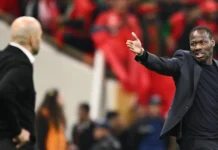
(AP) — More than $1 million in fines and bans for Senegal and Morocco have followed a shambolic Africa Cup final this month that FIFA condemned and Africa’s soccer body called unacceptable.
The bans apply only to Africa games and not the World Cup kicking off in June that Senegal and Morocco have both qualified for.
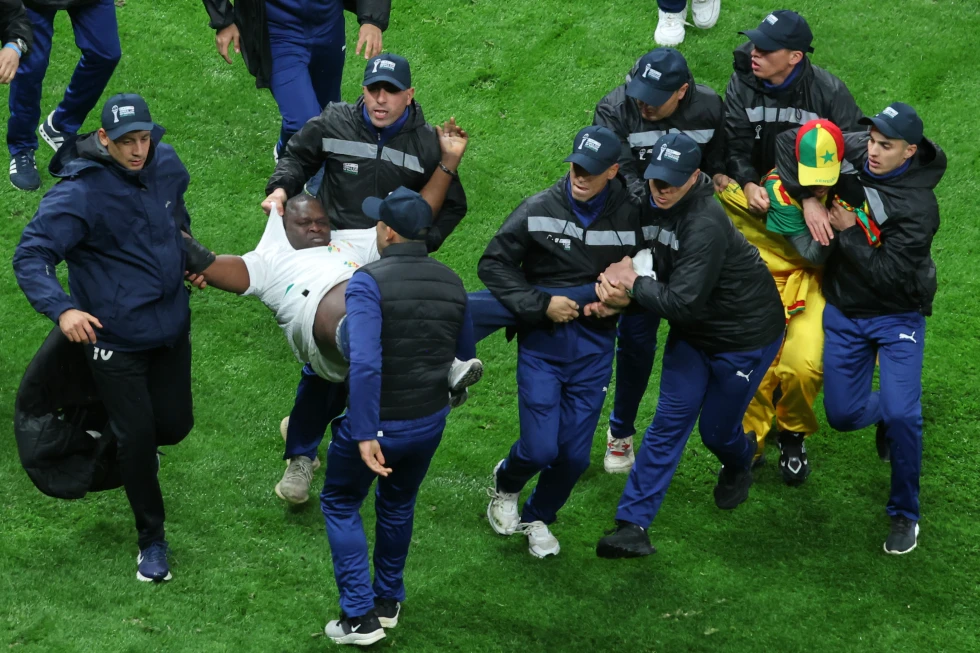
In the Jan. 18 final in Rabat won by Senegal 1-0 in extra time, Senegal left the field in protest during stoppage time for 15 minutes, fans tried to storm the field and fighting broke out among journalists afterward.
The Senegalese Football Association was fined $615,000 in total, the Moroccan Football Association was fined $315,000 in total, and Senegal coach Pape Thiaw fined $100,000 and suspended for five Africa games for bringing the game into disrepute, the Confederation of African Football said on Wednesday.
Senegal players Iliman Ndiaye and Ismaila Sarr were banned for two African games, Morocco’s Achraf Hakimi banned for two games with one suspended, and Morocco’s Ismael Saibari banned for three games and fined $100,000 for unsporting behavior.
Senegal was angered in stoppage time of a 0-0 draw when Morocco was awarded a penalty. Thiaw led a walk-off by his players and delayed the game for 15 minutes. Morocco missed the penalty and Senegal scored the only goal in extra time.
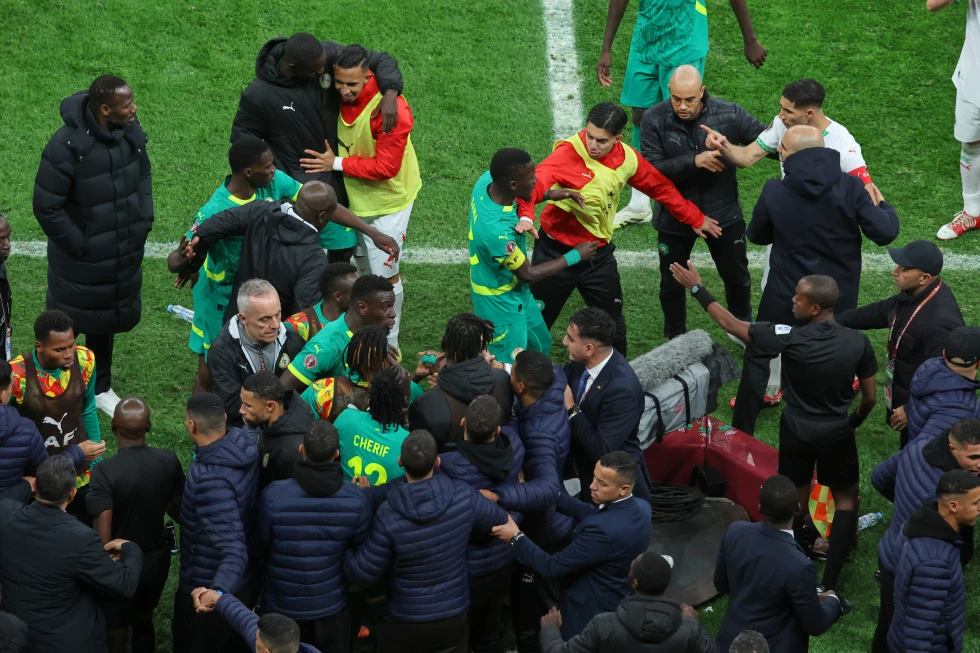
Beside supporters jumping the barricades and players from both side scuffling on the sidelines, there was a bizarre sequence in which Moroccan ball boys attempted to seize a towel belonging to Senegal goalkeeper Edouard Mendy in an apparent bid to distract him. That behavior by the ball boys alone led to a $200,000 fine for Morocco.
Morocco coach Walid Regragui said the Africa Cup final gave African soccer a “shameful” image. The incidents also reflected badly on Morocco, which will co-host the 2030 World Cup alongside Spain and Portugal. FIFA president Gianni Infantino called the Africa Cup incidents ugly and expected sanctions from CAF.
Morocco was hoping to host the 2030 World Cup final at the under-construction Hassan II Stadium, set to be the largest soccer arena in the world with a capacity of 115,000 after its planned completion in 2028. Spain said this week it will host the 2030 final.
CAF dismissed an appeal by Morocco to have the result canceled and Morocco declared the winner because of the Senegalese walk-off.
The game even strained diplomatic ties between Senegal and Morocco and prompted political officials in the nations to pledge to stay friends and call for calm. In Morocco, rights groups denounced what they called hate speech targeting sub-Saharan African residents in the country.
Senegal Prime Minister Ousmane Sonko said on an investment-related trip to Morocco days after the final that the reaction to it should be seen as “emotional outbursts produced by fervour and not as political or cultural rifts.”