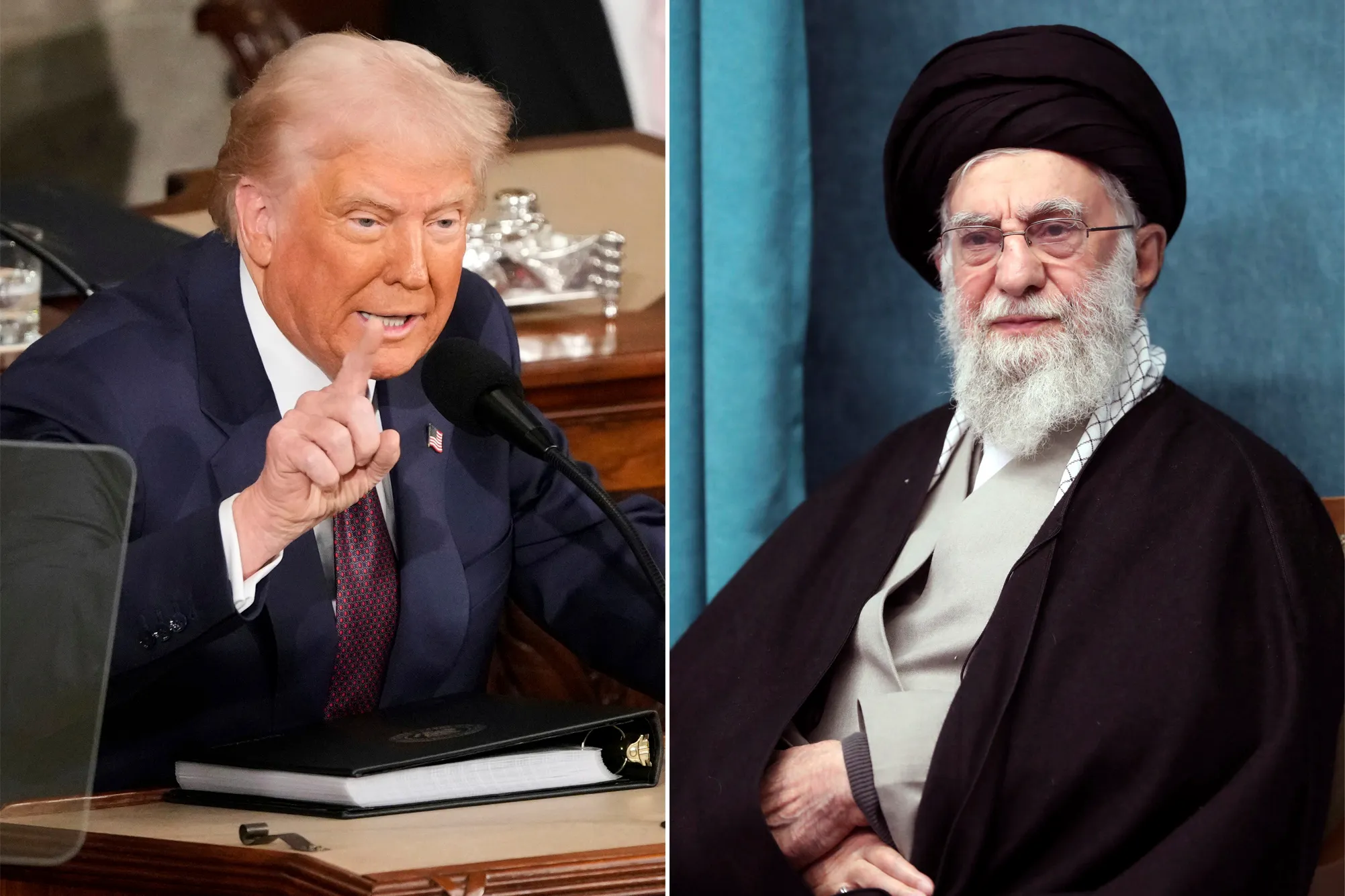
Donald Trump says he has told Iran it has to do “two things” to avoid military action, as the US builds up its forces in the Gulf.
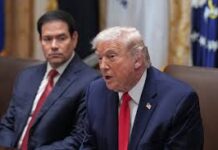
“Number one, no nuclear. And number two, stop killing protesters,” the US president said, adding that “they are killing them by the thousands”.
“We have a lot of very big, very powerful ships sailing to Iran right now, and it would be great if we didn’t have to use them.”
His latest remarks follow weeks of pressure on Iran to negotiate a deal on its nuclear programme.
Iran’s Foreign Minister Abbas Araghchi has said armed forces were ready “with their fingers on the trigger” to “immediately and powerfully respond” to any aggression.
Asked by the BBC whether he supported a potential US strike on Iran, UK Prime Minister Sir Keir Starmer said he was talking to allies about how to prevent Iran from developing nuclear activities and killing protesters.
“The aim here is that Iran shouldn’t be able to develop nuclear weapons. That’s hugely important,” Starmer said while on a visit to China.
“And of course we need to deal with the fact that they are repressing protesters, killing protesters. It’s grotesque what is happening. And so that’s where our focus is and we’re working with allies to that end.”
Araghchi, meanwhile, was in Istanbul on Friday for talks focused on averting the threat of US military action.
He said Iran was ready for talks with the US “if these negotiations are based on mutual interest, mutual respect and mutual trust” during a news conference with Turkey’s Foreign Minister Hakan Fidan.
But he added that Iran’s missile defence systems would “never be the subject” of talks and reiterated his government’s claim that Iran’s nuclear programme is entirely peaceful.
Fidan said Turkey was “ready to support any peaceful solutions to the problems”.
Earlier on, President Recep Tayyip Erdogan’s office said he had told his Iranian counterpart Masoud Pezeshkian in a phone call that Turkey was willing to help “de-escalate” tensions between Iran and the US.
Trump made his latest comments at the premiere of a documentary about his wife Melania. Earlier this week, he wrote on Truth Social: “Hopefully Iran will quickly ‘Come to the Table’ and negotiate a fair and equitable deal – NO NUCLEAR WEAPONS.”
He warned that a “massive Armada is heading to Iran”, and it was “ready, willing, and able to rapidly fulfil its mission, with speed and violence, if necessary”.
In response, Araghchi said: “Iran has always welcomed a mutually beneficial, fair and equitable NUCLEAR DEAL – on equal footing, and free from coercion, threats, and intimidation – which ensures Iran’s rights to PEACEFUL nuclear technology, and guarantees NO NUCLEAR WEAPONS.”
“Such weapons have no place in our security calculations and we have NEVER sought to acquire them,” he added.
Earlier this month, Trump said that the US would come to the “rescue” of Iranian protesters if authorities used violence against them.
Demonstrations began in late December after a sharp fall in the value of the Iranian currency, but swiftly evolved into a crisis of legitimacy for the country’s clerical leadership.
Tehran locals told the BBC that the crackdown on protestors was unlike anything that they had witnessed before.
Though Trump initially promised that “help is on the way”, he later said that he had been told on good authority that the execution of demonstrators had stopped.
The US-based Human Rights Activists News Agency (Hrana) says it has so far confirmed the killing of at least 6,479 people since the unrest began, including 6,092 protesters, 118 children and 214 people affiliated with the government.
It is also investigating approximately 17,000 more reported deaths.
Iranian authorities said last week that more than 3,100 people had been killed, but that the majority were security personnel or bystanders attacked by “rioters”.
The European Union has since added Iran’s Islamic Revolutionary Guard Corps (IRGC) to its terrorist list, in addition to placing new sanctions on six entities and 15 individuals in Iran.