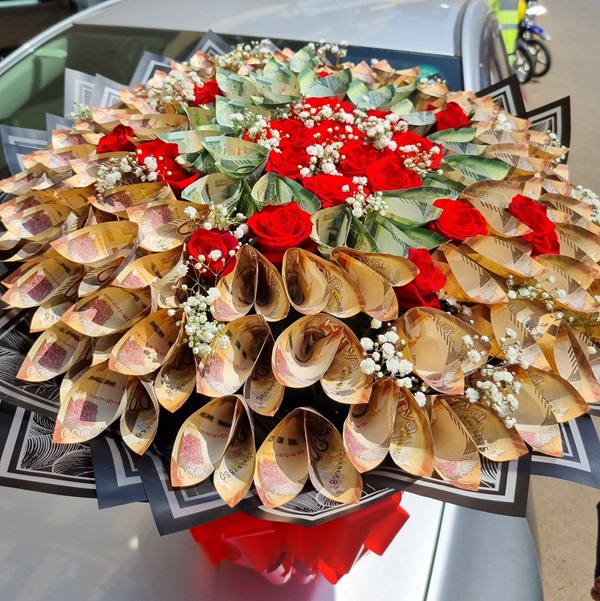
The Central Bank of Kenya (CBK) has cautioned Kenyans against the growing practice of using Kenya Shilling banknotes for decorative displays such as cash flower bouquets, money banquets, and ornamental arrangements, warning that the trend damages currency and violates the law.
In a public notice issued on Sunday, February 2, 2026, CBK said it has observed an increase in banknotes being folded, glued, stapled, pinned, or taped together for celebratory purposes, especially during festive seasons like Valentine’s Day.
According to the regulator, such handling compromises the integrity of banknotes and renders them unfit for circulation.
“Banknotes that are damaged using adhesives, pins, staples, or similar materials interfere with cash-handling systems such as ATMs, counting machines, and sorting equipment,” CBK said, noting that this leads to frequent rejection of notes and costly early replacement.
The Bank emphasized that while gifting money is not prohibited, the manner in which cash is presented matters.
Currency should not be altered, defaced, or damaged in any way that prevents it from circulating freely or performing its core functions as a medium of exchange, store of value, and unit of account.
CBK further reminded the public that defacing currency is a criminal offence under Section 367 of the Penal Code (Cap. 63, Laws of Kenya).
The law prohibits the willful mutilation, defacement, or impairment of currency notes issued by lawful authority.
“Any person who defaces or damages currency commits an offence under the Penal Code,” the notice stated.
The regulator urged Kenyans to adopt alternative, non-damaging ways of presenting monetary gifts, especially during celebrations, weddings, and romantic occasions.
CBK said it remains committed to protecting the integrity of the Kenya Shilling and will continue public awareness campaigns and stakeholder engagement to maintain confidence in the country’s currency.