








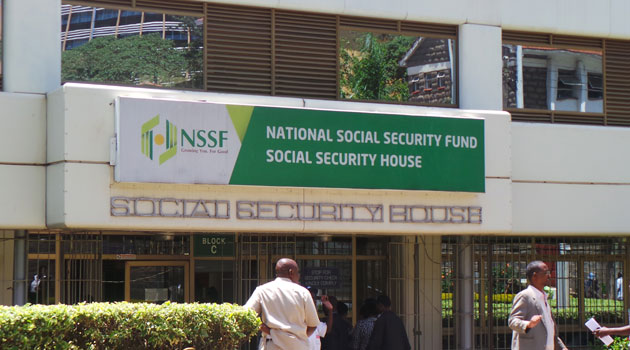
Kenyans should brace for higher salary deductions from February after new National Social Security Fund (NSSF) contribution rates took effect, according to a tax alert issued by PricewaterhouseCoopers (PwC).
Under the revised structure, the Lower Earnings Limit (LEL) has increased to Sh9,000, while the Upper Earnings Limit (UEL) has risen to Sh108,000, a move aimed at boosting long-term retirement savings for employees.
PwC said NSSF contributions will remain at 12 per cent of pensionable earnings, shared equally between the employee and the employer.
Contributions on earnings of up to Sh9,000 will be credited to Tier I, while earnings above this amount and up to Sh108,000 will be allocated to Tier II.
Under Tier I, employees will contribute Sh540, matched equally by employers, bringing the total contribution to Sh1,080. For Tier II, employees will contribute Sh5,950, with employers making an equal contribution, bringing the total to Sh11,900.
Employers have been urged to adjust their payroll systems to align with the updated thresholds, which mark the final phase of the four-year transition under the National Social Security Fund (NSSF) Act of 2013.
“These changes will naturally increase the employer’s share of monthly pension contributions, which should be factored into employment cost projections for the upcoming period,” PwC said.
The firm noted that while employees’ mandatory contributions will rise—boosting long-term retirement savings—the changes will also reduce monthly take-home pay.
PwC added that NSSF contributions remain tax-deductible, with employees eligible for tax relief on pension contributions of up to Sh30,000 per month.
In addition, employers may still channel Tier II contributions to registered private pension schemes, provided they comply with Retirement Benefits Authority (RBA) regulations and notify the NSSF at least 60 days in advance.