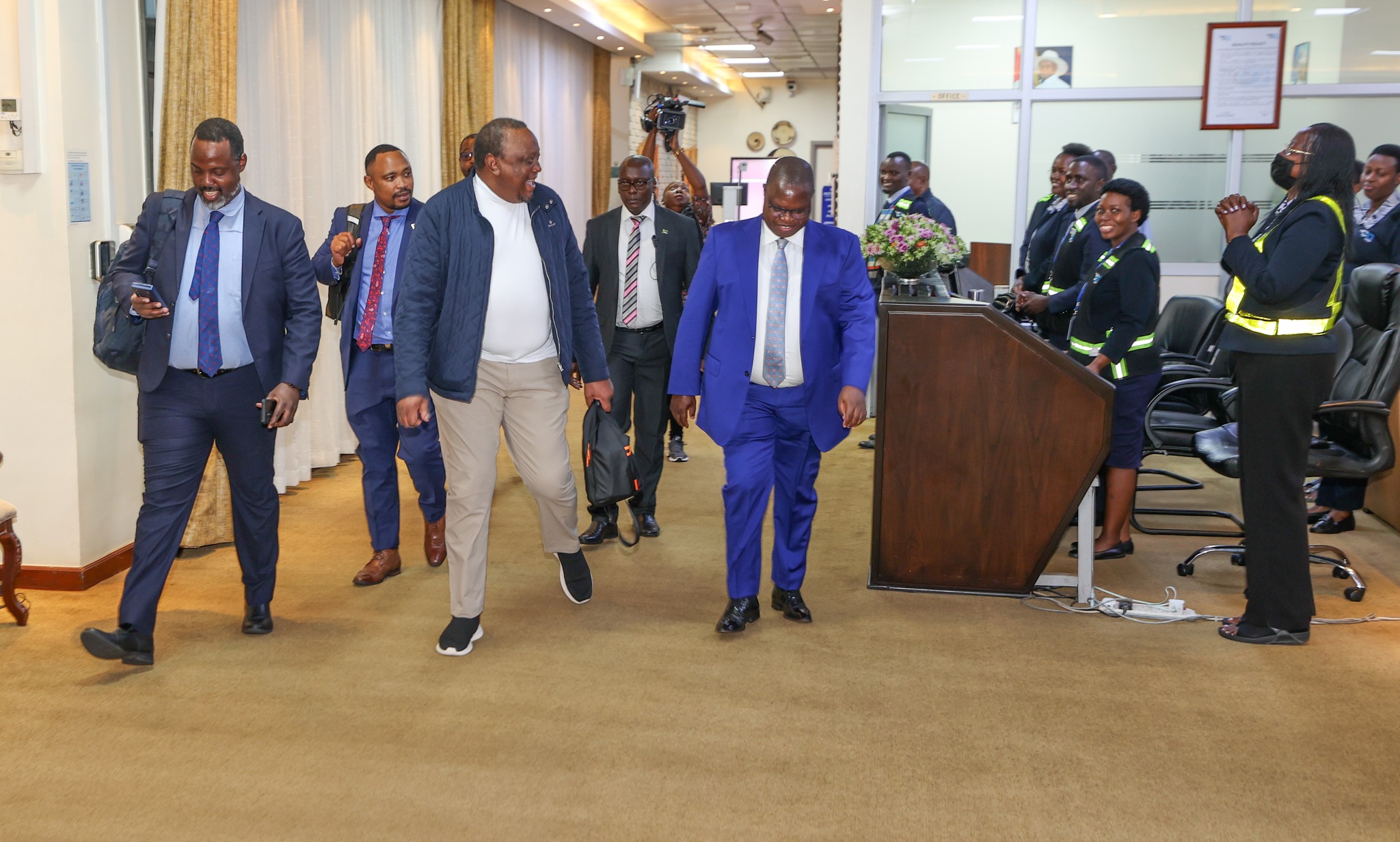
The Fourth President of Kenya, Uhuru Kenyatta, has arrived in Uganda for high-level talks on the African Union-led peace process in eastern Democratic Republic of Congo (DRC).
The Office of the 4th President of Kenya confirmed the visit in a statement shared on X on February 3, 2026.
Kenya’s Ambassador to Uganda, Joash Maangi, received Kenyatta at Entebbe International Airport.
“Former President Uhuru Kenyatta arrives in Uganda ahead of high-level engagements on the AU-led mediation for the eastern Democratic Republic of Congo (DRC) peace process,” the office said. “Kenyatta was received at Entebbe International Airport by Kenya’s Ambassador to Uganda, Joash Maangi.”
The meeting builds on regional efforts to address long-standing insecurity in eastern DRC, where armed groups have operated for decades. The conflict has displaced millions of people and caused widespread humanitarian suffering.
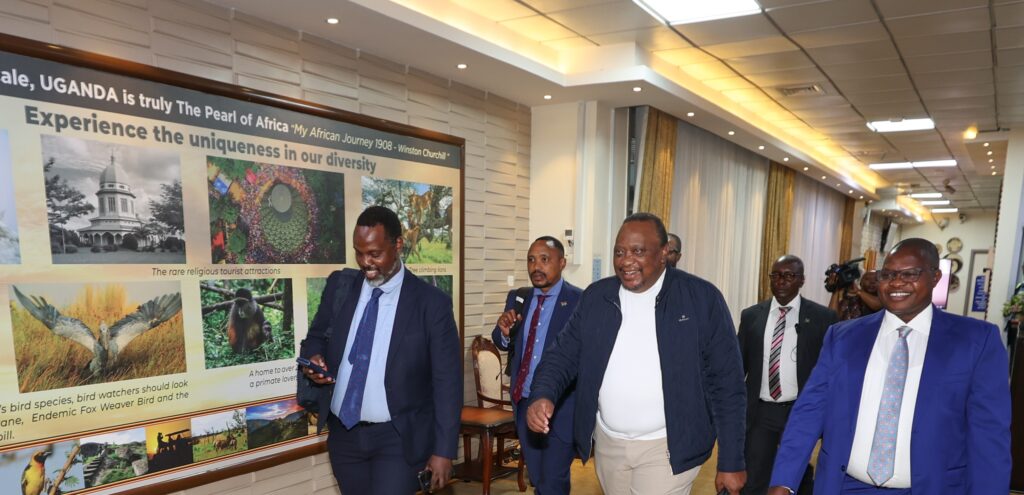
Kenyatta plays a central role in the peace process. He serves as the African Union–Kenya Peace Envoy and the Facilitator of the East African Community-led Nairobi Peace Process. In this role, he has pushed for dialogue between rival groups, improved humanitarian access, and political solutions to end the fighting.
Eastern DRC has experienced repeated cycles of violence involving rebel groups and regional actors. Between 6 to 12 million people have died over the years, according to international estimates, while millions more have fled their homes.
Kenyatta’s Uganda visit follows a series of recent diplomatic engagements. On December 5, 2025, he attended the signing of the Washington Accords for Peace between Rwanda and DRC at the United States Institute of Peace in Washington, D.C.
Rwandan President Paul Kagame and DRC President Félix Tshisekedi signed the agreement, which calls for a lasting ceasefire, the disarmament of rebel groups, the return of refugees, and stronger economic cooperation.
US President Donald Trump described the deal as a turning point.
“We have come to the U.S. Institute of Peace to sign a historic agreement that will end one of the longest-running conflicts anywhere in the world,” Trump said.
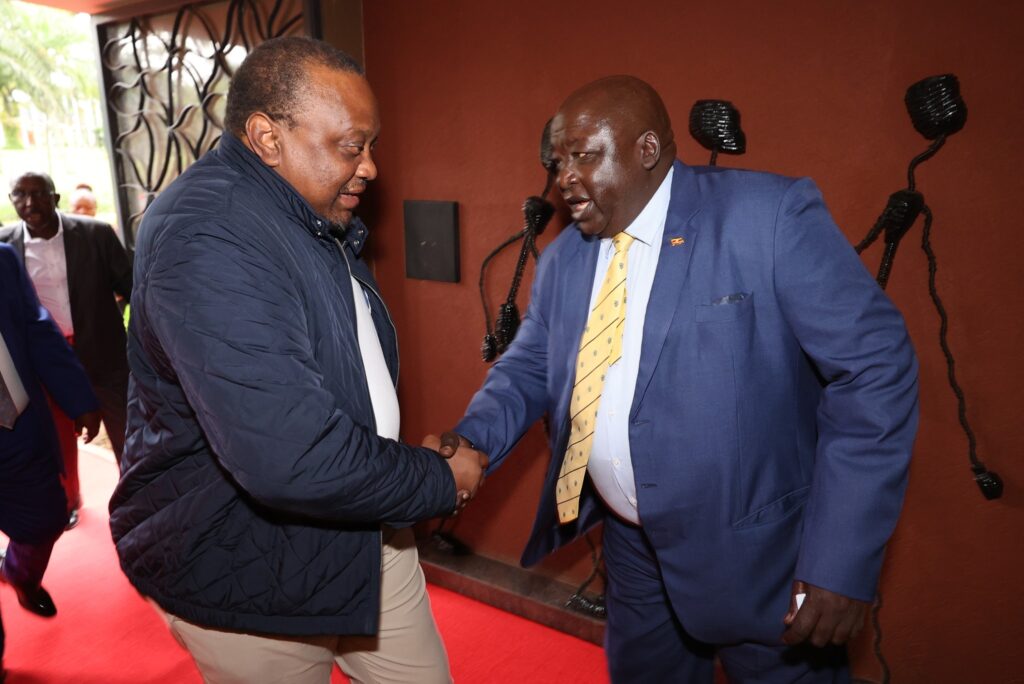
President Tshisekedi credited earlier African-led efforts for laying the groundwork.
“These two great Africans were there at the beginning; they started the Nairobi and Luanda peace processes,” Tshisekedi said, referring to Kenyatta and Angolan President João Lourenço.
In mid-January 2026, Kenyatta travelled to Lomé, Togo, for further consultations. He joined former Nigerian President Olusegun Obasanjo, former Ethiopian President Sahle-Work Zewde, former Central African Republic leader Catherine Samba-Panza, and former Botswana President Mokgweetsi Masisi.
The Office of the 4th President said the group met to strengthen efforts to end violence and support affected communities. Togo’s Foreign Minister Robert Dussey hosted the talks, which also included African Union Commission Chairperson Mahmoud Ali Youssouf.
Kenyatta’s work extends beyond conflict mediation. In July 2025, the World Health Organization honoured him for championing the WHO Pandemic Agreement, adopted in May 2025 to improve global preparedness for future health crises.