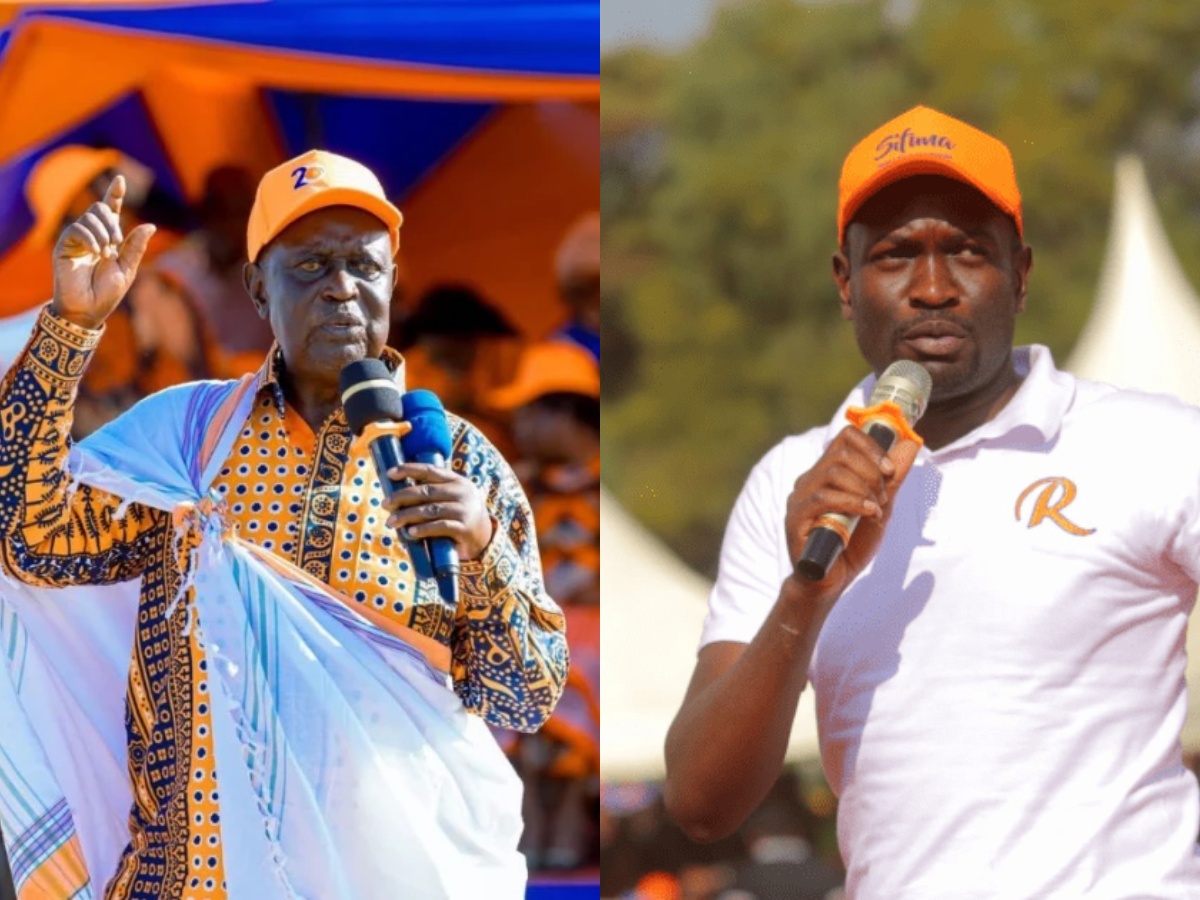
The Orange Democratic Movement (ODM) has moved to steady internal debate and reaffirm party discipline following controversial remarks by its Secretary General, Senator Edwin Sifuna, during a recent television interview.
In a statement, ODM party leader Oburu Oginga addressed the fallout from Sifuna’s comments, underscoring the need to separate personal opinion from official party policy while insisting that ODM remains united and anchored in its founding principles.
Oburu said he had taken note of Sifuna’s February 3, 2026 interview on Citizen TV and the intense public discussion it triggered, noting that safeguarding the party’s coherence and credibility was a core responsibility of the party leadership.
“ODM has always been a democratic movement that encourages robust debate,” Oburu said. “However, party policy is determined through constitutionally mandated organs, not individual preference.”
The ODM leader acknowledged that the Secretary General’s recent public remarks had created uncertainty among party members and supporters, arguing that Sifuna had at times blurred the line between his personal views and official ODM positions.
“In recent months, the SG has occasionally struggled to distinguish between his personal opinions and official party policy,” Oburu stated, warning that such contradictions risk weakening internal cohesion.
He stressed that ODM’s commitment to its constitution and the rule of law applied equally to all party officials, regardless of seniority.
Oburu also took issue with Sifuna’s questioning of the legitimacy of some national party officials, describing the argument as inconsistent.
“When Sifuna challenges the legality of leaders elected by the National Governing Council, he overlooks the fact that he himself was elected by the same organ in February 2018,” Oburu said, adding that those processes could not be selectively discredited.
The party leader further highlighted apparent inconsistencies in Sifuna’s position on coalition talks ahead of the 2027 General Election.
While Sifuna previously argued that ODM should not delay discussions on its political strategy, he has recently questioned the urgency of pre-election coalition engagement.
“As a serious party preparing to form the next government, planning ahead is not panic — it is prudence,” Oburu said.
He also expressed concern over repeated public references to rival political coalitions, warning that such focus could distract from strengthening ODM’s own structures.
Despite the tensions, Oburu reaffirmed ODM’s long-term vision, invoking the party’s founding ideals and Raila Odinga’s legacy.
“We remain committed to an inter-generational national conclave to build a stronger party where every generation is represented,” he said, calling for discipline, unity and focus.
“No individual, however senior, is above the collective decisions of the party,” Oburu added.
During the interview that sparked the debate, Sifuna defended his position on several party issues, including preparations for the 2027 elections.
He warned that both the 10-Point Agenda committee and the National Dialogue Committee had made “absolutely zero progress” since August 2025, issuing a March 7 deadline for a final report.
On the 2027 race, Sifuna reiterated that he would not personally support President William Ruto’s re-election, while emphasising that ODM has not made a formal endorsement decision.
He also raised concerns about the funding of recent ODM rallies, saying they were not financed through official party channels, and expressed frustration over decisions made during the late Raila Odinga’s funeral, claiming he felt sidelined.
Despite the public disagreement, Sifuna insisted he remains firmly in ODM.
“I am in ODM, and nobody can kick me out of ODM,” he said. “I have no intention of leaving.”