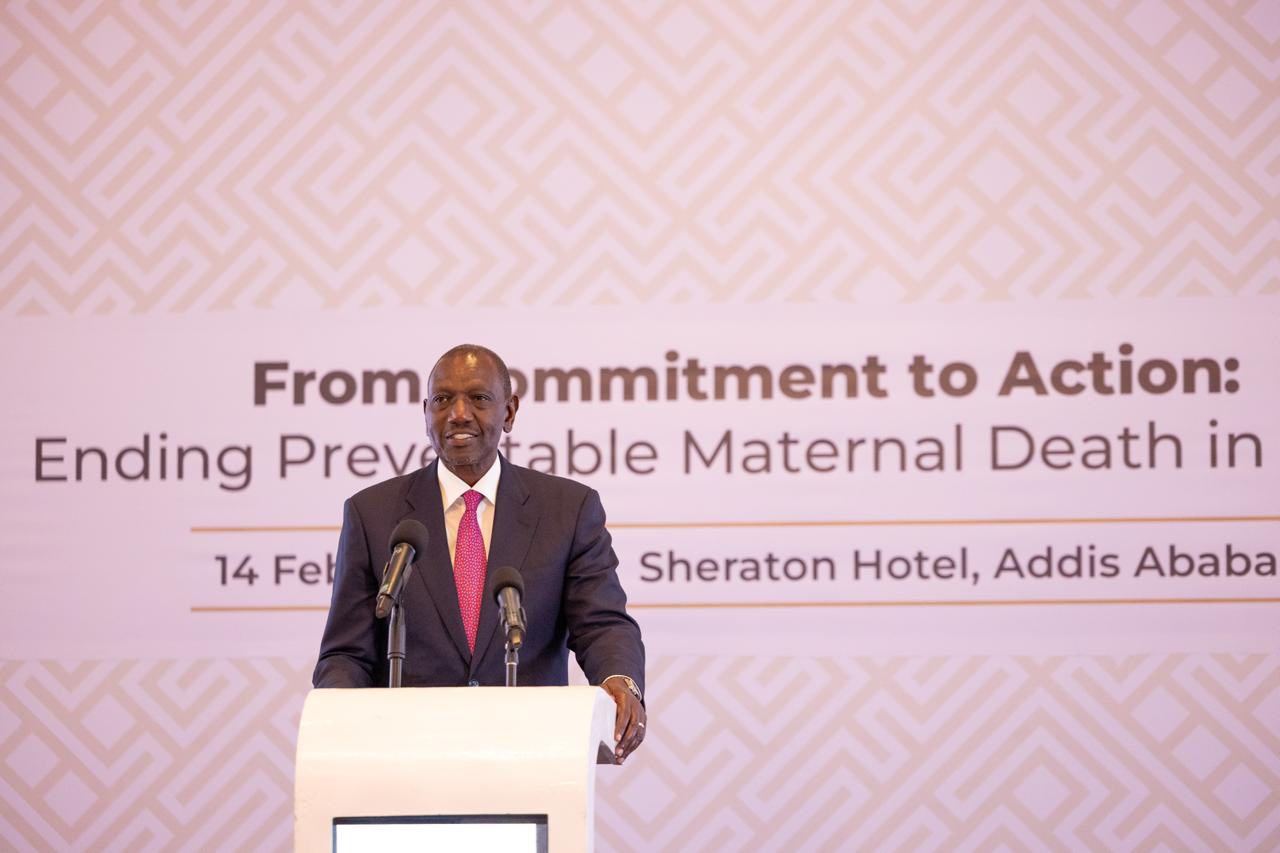
President William Ruto has proposed that the African Union convene an Extraordinary Summit in April 2026 to accelerate local manufacturing of health products, setting a target for Africa to produce at least 60 per cent of its health commodities on the continent by 2040.
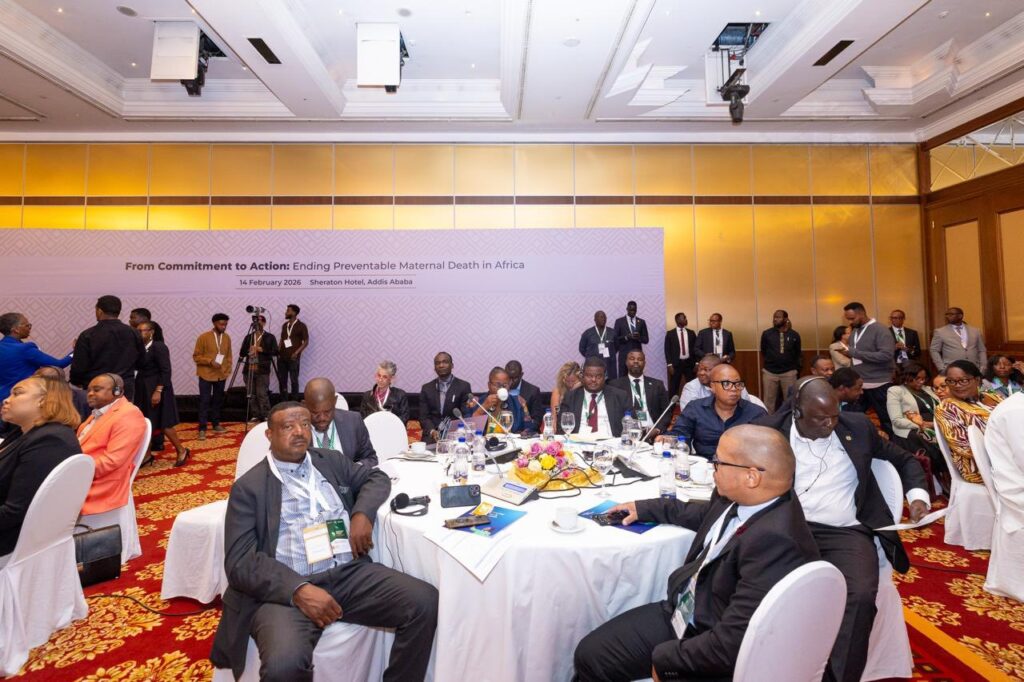
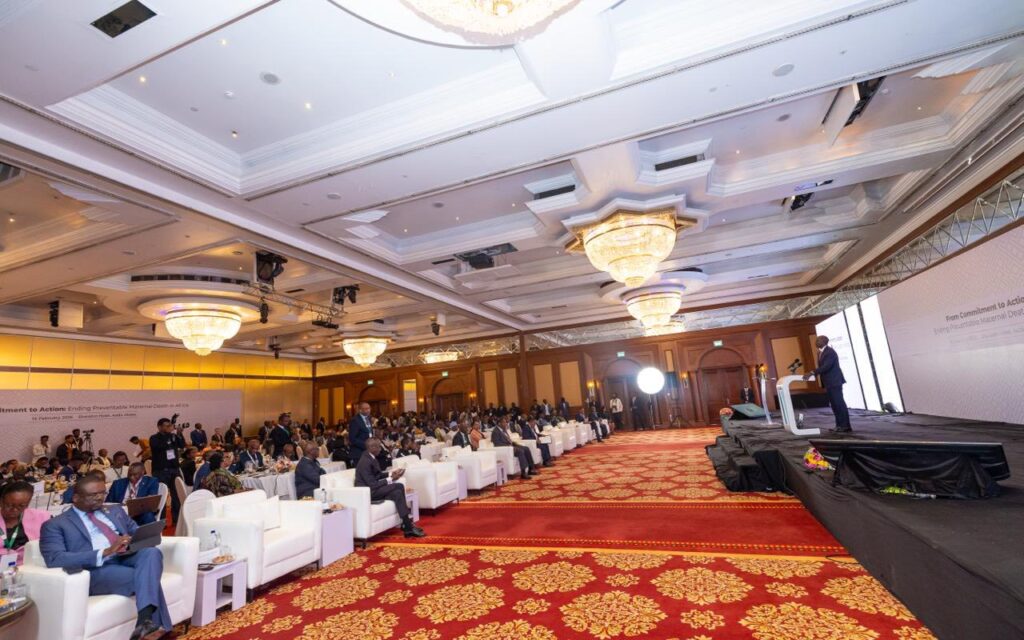
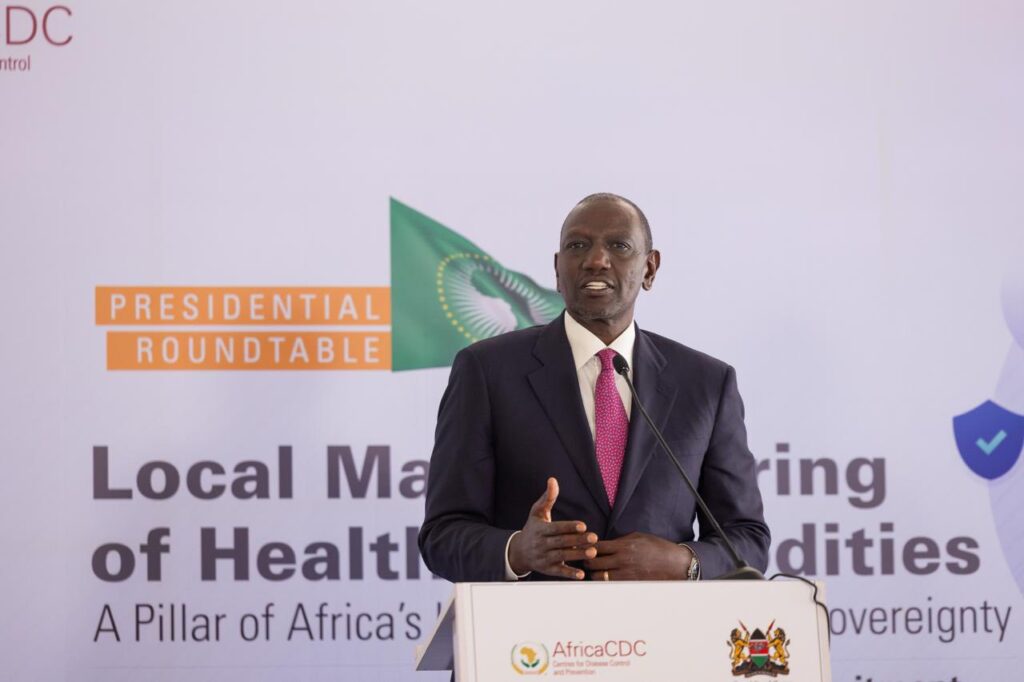
Speaking in Addis Ababa, Ethiopia, during a side event co-hosted by the Government of Kenya and the Africa Centres for Disease Control and Prevention on the margins of the 39th Ordinary Session of the Assembly of the African Union, the President said local production was now an urgent priority for the continent.
“For far too long, Africa has remained at the periphery of the global health economy largely as a net consumer of health commodities produced elsewhere,” he said.
“This has come at a significant cost to our national budgets, the sustainability of our healthcare ecosystems, and the resilience of our people.”
He added: “Local manufacturing of health products is no longer a goal we can postpone; it is an urgent priority. It sits at the heart of Africa’s health security and sovereignty agenda.”
Ruto said nearly 60 per cent of health expenditure in many African countries is paid out of pocket by citizens. He noted that millions obtain essential medicines through informal markets, “where the risk of sub-standard or falsified products is high.”
“We must address this challenge to both protect our people and to reduce the economic leakage that weakens trust and undermines formal pharmaceutical markets,” he said.
The President also outlined what he described as a strong economic case for local manufacturing. He said Africa’s pharmaceutical market was valued at about 36 billion US dollars in 2023 and is projected to exceed 122 billion dollars by 2032.
“If we manufactured even half of the products we currently import, we could save between $30 and $50 billion annually, resources that could be redirected toward infrastructure, social protection, and innovation,” he said.
He pointed to the continent’s demographic and market advantages, citing Africa’s youthful workforce and a single market of 1.4 billion people under the African Continental Free Trade Area framework.
He said the launch of the African Pooled Procurement Mechanism through Africa CDC was aimed at addressing market fragmentation and aggregating demand across countries.
“Without predictable and aggregated markets, local manufacturers cannot scale or remain viable,” he said.
“Pooled procurement is therefore not optional; it is necessary. It can help secure better prices, improve availability, and provide demand certainty, giving African producers the confidence to invest and scale up.”
According to the President, Africa now hosts more than 570 registered health product manufacturers and over 27 vaccine manufacturing initiatives. He said regulatory systems were advancing, with nine national authorities having reached World Health Organisation Maturity Level 3, and noted that the African Medicines Agency is operational.
To address skills gaps, he said the Regional Capability and Capacity Network was being developed to build a qualified workforce.
He called on all member states to subscribe to the African Pooled Procurement Mechanism and align procurement plans “so that measurable progress can be achieved within the year.”
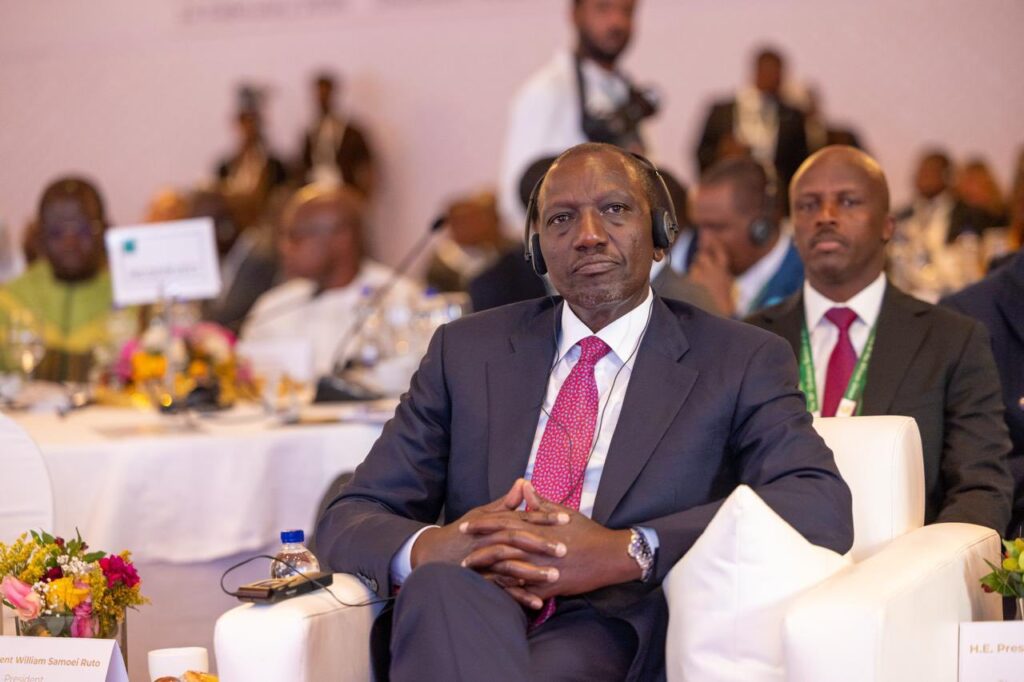
Ruto said industrialisation would require regional manufacturing ecosystems and value addition, urging African countries to move away from exporting raw materials and importing finished products.
He called for harmonised standards, sustained investment in research and development, and an enabling environment that includes sound policy, reliable infrastructure, effective regulation and affordable finance.
He said continental financial institutions, including the African Development Bank and Afreximbank, should continue converting commitments into practical, bankable projects for manufacturers.
“The African Continental Free Trade Area must be powered by African production,” he said.
“Without strong local manufacturing, it risks becoming a channel for imports rather than a driver of African industry.”
The proposed summit, he said, would provide an opportunity to review progress and strengthen partnerships needed to meet the 2040 target.