Like in Ukraine, Sudan and the jihadist-plagued Sahel, drone warfare is tilting the balance of power in the Democratic Republic of Congo’s three-decade-long eastern conflict.
Their rising importance was confirmed in early February when the Rwanda-backed M23 militia claimed a brazen drone strike on “a military drone command centre” at the strategic Kisangani airport, hundreds of kilometres behind the front line.
Located between the capital Kinshasa in the west and the M23’s eastern fiefdom, Kisangani airport serves as a launch base for the Congolese army’s attack drones and Sukhoi fighter jets, both pillars of the government’s military strategy.
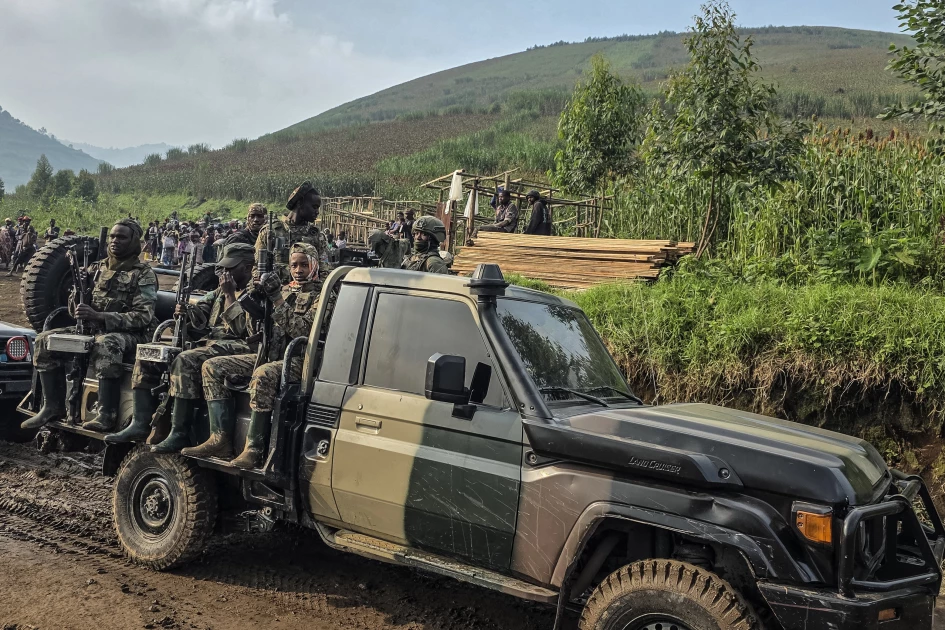
Courtesy of their superior training and weaponry, the M23 and its Rwandan allies have the upper hand on the ground.
Since the M23 took up arms again in 2021, that superiority has helped the militia seize swathes of land in the resource-rich east, including the key Congolese cities of Goma and Bukavu in early 2025.
But the Congolese army has kept relative control of the skies through the purchase of long-range attack drones, notably China’s CH4 model and the Turkish TAI Anka.
In response, the Rwandan army has deployed sophisticated GPS-scrambling systems along the border, which UN experts say is disrupting both civilian and humanitarian flights in the DRC.
Meanwhile foreign mercenaries, linked to an opaque network of private military companies — including some linked to an ally of US President Donald Trump — are present in the east to back up the Congolese army, with certain foreigners operating drones.
The DRC and Rwanda signed a peace deal in July at Trump’s urging, but it has failed to put a stop to the fighting, on the ground as in the skies.
– ‘Fewer constraints’ –
In a vast country largely devoid of paved roads, drone warfare “involves fewer operational constraints” than land assaults for the Congolese government, said Henry-Pacifique Mayala, a researcher at the Ebuteli institute in Kinshasa.
As a result, residents near Kisangani airport have had to become accustomed to the whirring of the drones taking off above their houses.
On the night of January 31 to February 1, several locals said they were woken up by a wave of detonations. Within 24 hours, eight drones attacked the airport and forced residents to flee, according to the provincial authorities.
While security sources believe the M23 had previously used explosive drones in its offensive on the eastern city of Uvira in December, the airport attack marked the first time the armed group had ever targeted Kisangani, around 400 kilometres (250 miles) from the front.
The government has yet to communicate on what model of drone and what type of munitions were used in the attack, fuelling rumours and speculation.
Observers have cast doubt on whether self-detonating explosive drones, typically lightweight and manoeuvrable, have the range to travel the hundreds of kilometres from the M23’s bases in the east to Kisangani.
According to security sources, the intelligence services believe a group snuck in close to the airport to launch the attack.
Of the dozens of armed groups at large in the eastern DRC, a number have obtained access to Elon Musk’s Starlink satellite internet network, to which “drones can easily be connected”, Mayala added.
– Foreign mercenaries –
Though the Congolese government has never publicly revealed which private military firms it employs, foreign mercenaries are clearly visible on the tarmac at Kisangani.
According to United Nations experts, the government directly recruited several former members of a mercenary firm to pilot the Chinese CH4 drones, after that company’s contract in Goma ended in July 2025.
Other soldiers-for-hire have been tasked with handling the Indian-made D4 anti-drone defence systems bought by the Congolese army in 2025, security sources believe.
According to the provincial authorities, the Kisangani airport attack was repelled with the help of foreign “partners”.
On top of that, fighters employed by companies linked to US businessman Erik Prince have likewise been deployed in the east, according to security and diplomatic sources.
A Trump ally and former Navy SEAL, Prince is the founder of the military contractor Blackwater, whose employees killed and injured dozens of civilians in Iraq.
A government source confirmed to AFP that an agreement involving the collection of mining taxes was signed with Prince.
The DRC has been accused of selling off the country’s mineral wealth to Washington as part of the peace process.