By Andrew Kariuki
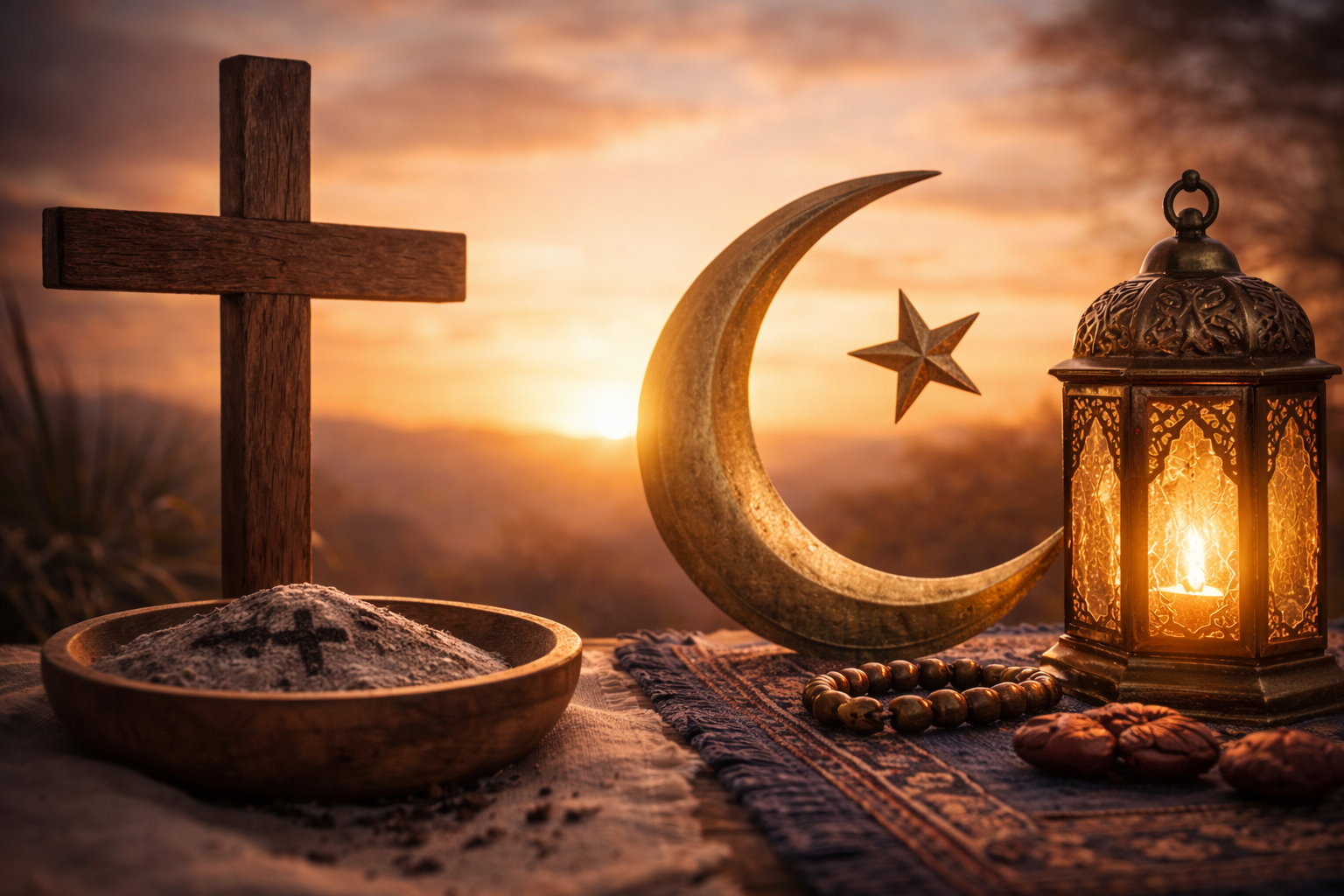
In a powerful and symbolic moment of faith, Ash Wednesday and the beginning of Ramadan have coincided on the same day, marking a rare spiritual alignment between the Christian and Muslim calendars that is being celebrated across Kenya and around the world.
Ash Wednesday ushers in the season of Lent for Christians, a solemn 40 day period of prayer, fasting, repentance and reflection leading up to Easter.
At the same time, Muslims have begun Ramadan, the holy month of fasting, devotion, charity and spiritual renewal.
Both traditions emphasize humility, sacrifice, discipline and a deeper connection with God, making this overlap especially meaningful for millions of believers globally.
Religious leaders and faithful from both communities have described the convergence as a moment of unity in a world often marked by division.
Churches and mosques alike have reflected on the shared values of compassion, self-restraint, forgiveness and service to humanity that define both observances.
This rare and holy alignment has not occurred since March 15, 2000, making the 2026 convergence particularly significant as the two observances rarely begin on the same day because the Islamic calendar follows the lunar cycle while the Christian liturgical calendar is based on a solar system calculation tied to Easter.
The coincidence marks a unique intersection of two distinct sacred calendars; a moment many believers see as heaven-sent.
Leaders from both faiths have welcomed the occasion as a divine reminder of shared humanity and coexistence.
“It is so good that through God’s intervention, Christians and Muslims are being united in the same day and time of saum, and for us we give glory and greatness to God for this opportunity that God wants us to be united in some special things,” said Reverend Richard Ooko of Tudor during an interview.
Similarly, Sheikh Rashid Rajab from Mombasa emphasized the broader social message carried by the moment.
“As Kenyans, we have forces that are trying to bring differences between Muslims and Christians. These two holy events are telling us the opposite. They are changing the narrative of those who are spreading wickedness, those who don’t want us to be one people, one nation, one human brothers and sisters,” he said.
Across Kenya the shared beginning of fasting and reflection has sparked conversations about unity, tolerance and interfaith harmony.
Globally, the alignment is being viewed as more than a calendar coincidence; it is being interpreted as a spiritual reminder of the deep common values that bind humanity across religious traditions.
As Christians receive ashes and Muslims observe their first fast of Ramadan, this uncommon convergence stands as a testament to faith, coexistence and the enduring possibility of unity in diversity.