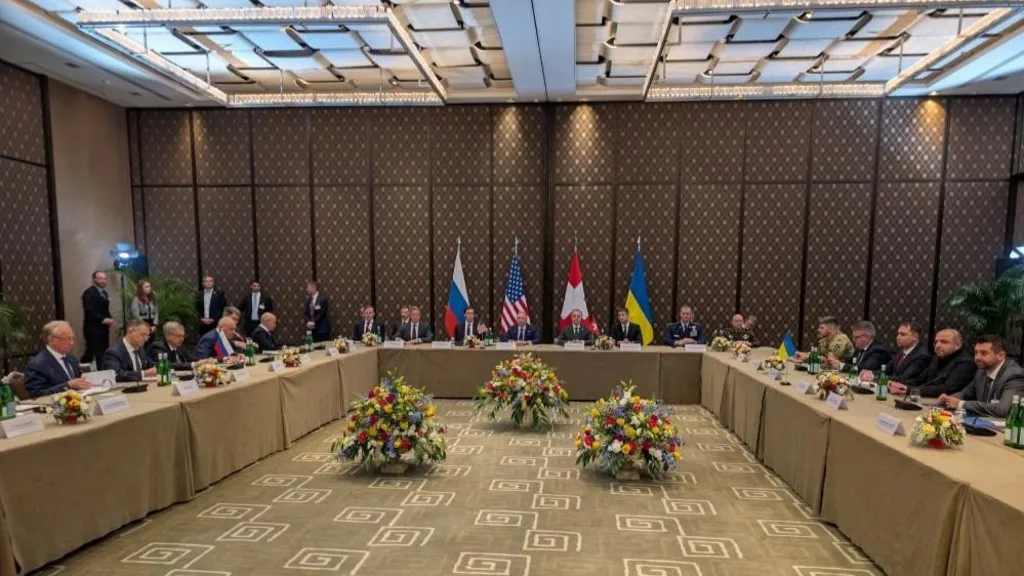
Talks between Russia, Ukraine and the US aimed at ending Moscow’s war in Ukraine have concluded without a breakthrough.
The trilateral meetings, held in Geneva, went on late on Tuesday but only lasted two hours on Wednesday.
Although US envoy Steve Witkoff had expressed optimism over the talks, both the chief Russian negotiator and Ukraine’s Volodymyr Zelensky indicated they had been “difficult”.
Some progress was made on “military issues”, including the location of the front line and ceasefire monitoring, according to a Ukrainian diplomatic source.
But an agreement on the issue of territory – without which no ceasefire can be envisaged – remains elusive, with Moscow and Kyiv’s positions still far apart.
Russia has not budged in its demand for full control of the eastern Donbas region – made up of the Donetsk and Luhansk regions – which is a non-starter for Ukraine.
While conceding talks were challenging, Kremlin negotiator Vladimir Medinsky added that they had been “businesslike” and said another meeting would take place “soon”.
Ukrainian President Volodymyr Zelensky also described the negotiations as “not easy” due to the difference in the two sides’ positions.
Ukrainian negotiator Rustem Umerov cut a less downbeat tone, saying the discussions had been “substantive and intensive” and that while there had been progress, no details could be disclosed “at this stage”.
“This is complex work that requires alignment among all parties and sufficient time,” Umerov said.
Shortly before the end of the talks was announced, Zelensky accused Russia of “trying to drag out negotiations that could already have reached the final stage”.
The Russian and Ukrainian delegations last met in US-brokered talks in Abu Dhabi in January, which led to the first prisoner exchange in several months. On Wednesday, Zelensky indicated that another swap might be forthcoming.
US President Donald Trump, who spearheaded diplomatic efforts to end the war, has been signalling impatience with the deadlock between the two sides.
On Monday, he said Ukraine had “better come to the table, fast” – a sentiment Zelensky has since rejected, saying it was “not fair” that his country should be the one asked to compromise.
Four years on from the start of Russia’s full-scale invasion of Ukraine, substantial distance still exists between Moscow’s demands and what Kyiv might consider a “just peace”.
Kyiv has long rejected Russia’s demand for the eastern Donbas, which would mean relinquishing Ukrainian sovereign territory, including several heavily fortified cities and a long defensive line in the region of Donetsk.
Many Ukrainians believe giving that territory up would leave the country vulnerable to another Russian invasion. Zelensky himself has drawn parallels with the 1938 Munich Agreement, when European powers let Hitler annex the Czech territory of Sudetenland.
On Tuesday, Zelensky told US media outlet Axios that any plan to hand over the Donbas would be rejected by Ukrainians if it were put to a referendum.
The Ukrainian president is also working to ensure that security guarantees to deter Russia from attacking again are provided by Kyiv’s western allies.
By Anthony Solly