By Andrew Kariuki
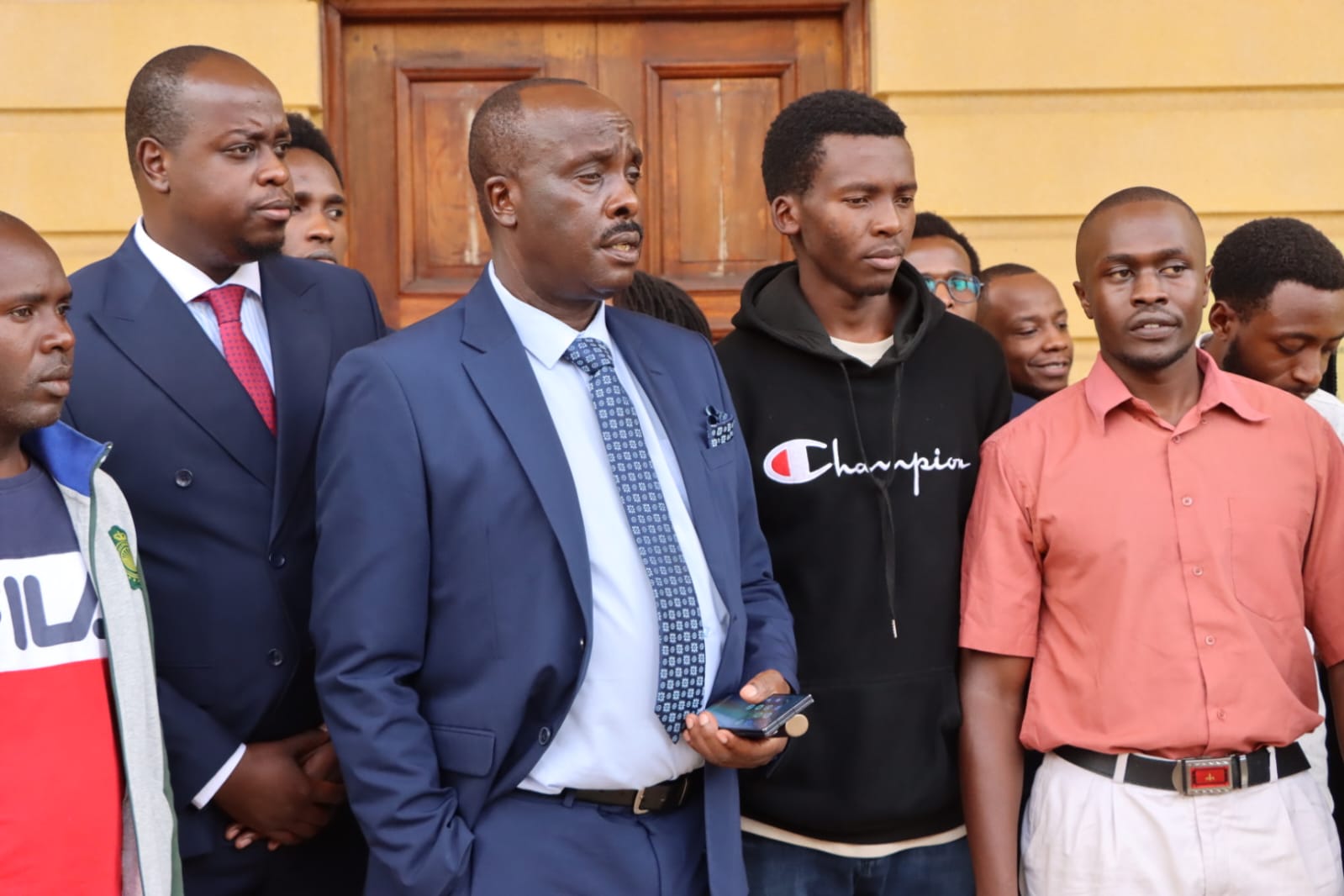
Telecommunications giant Safaricom PLC has been issued with a 48 hour demand notice to compensate university student David Mokaya, acquitted in a high-profile cybercrime case, following a court finding that his electronic devices were unlawfully accessed and location data handed out without a prior court order.
The demand, issued by Danstan Omari & Associates Advocates on behalf of David Mokaya, seeks Ksh200 million in compensation for alleged violation of constitutional rights stemming from the illegal forensic examination of his digital devices.
The development follows a recent landmark ruling by the Milimani Magistrates Court, which acquitted Mokaya of charges of publishing false information allegedly targeting President William Ruto.
Mokaya had been accused of sharing an image depicting a funeral procession accompanied by a caption suggesting that it showed the President’s body leaving Lee Funeral Home.
However, in her judgment, Magistrate Caroline Nyaguthi found that the prosecution had failed to prove its case, citing significant gaps in the evidence presented.
A key issue in the case was the handling of Mokaya’s electronic devices.
The court found that investigators had accessed and examined the gadgets without a valid court order, contrary to the law governing digital evidence.
Although, investigators claimed that they had obtained warrants authorising the search and extraction of data, the court noted that no such orders were ever produced during the proceedings.
The magistrate consequently held that the forensic analysis was conducted unlawfully after the devices had already been seized, rendering the evidence obtained unreliable.
She further emphasised that cybercrime cases require strict adherence to legal procedures, given the sensitive nature of electronic data, which is susceptible to interference or manipulation if not properly handled.
During the trial, the prosecution called six witnesses in an attempt to link Mokaya to the alleged publication.
However, the court found that the State had failed to establish that he was responsible for the social media post in question.
According to the prosecution, the content was allegedly published on November 13, 2024, through an account on X (formerly Twitter) under the handle “Landlord @bozgabi.”
The court, however, ruled that there was no conclusive evidence linking Mokaya to the account or the publication, leading to his acquittal.
Following the ruling, Mokaya’s lawyers have now turned their attention to seeking damages, arguing that his constitutional rights were violated through the unlawful obtaining, search and examination of his devices.
In a demand letter addressed to Safaricom, the advocates cite portions of the judgment in which the court acknowledged that electronic devices contain sensitive personal data that is protected under the Constitution.
The lawyers argue that the extraction and analysis of such data without judicial authorisation amounted to a serious breach of Mokaya’s rights.
They have demanded that Safaricom admit liability and compensate their client within 48 hours of receiving the notice.
Failure to comply, the letter warns, will result in legal proceedings being initiated against the company, with potential claims amounting to Ksh200 million.