What began as a straightforward introduction by Nairobi Senator Edwin Sifuna has developed into one of the most recognisable political slogans in Kenya’s current discourse.
The phrase “Mimi ndio Sifuna” was initially used by Senator Sifuna at public forums and political meetings as a simple declaration of identity.
In recent months, however, it has evolved into “Sisi ndio Sifuna”, a rallying call adopted by sections of his supporters across the country.
Sifuna serves as Secretary General of the Orange Democratic Movement (ODM) and has been a prominent voice within the party. His profile rose significantly during internal and national debates over whether ODM should formally cooperate with President William Ruto’s United Democratic Alliance (UDA) and the Kenya Kwanza administration.
In this context, Sifuna publicly opposed proposals that ODM enter into a structured working arrangement with UDA. In media interviews and public addresses, he maintained that ODM had a responsibility to remain firm in its oversight role.
Attention around his stance grew further when some ODM members accepted appointments to serve in President Ruto’s Cabinet.
Sifuna questioned the political implications of those appointments, stating in public forums that the party needed clarity on its position as an opposition outfit. His remarks were widely reported and debated across mainstream and social media platforms.
As internal discussions within ODM continued, reports emerged of friction between leaders who supported engagement with the government and those who resisted it.
Sifuna was consistently associated with the faction opposed to formal cooperation with UDA. His repeated criticisms of the executive and defence of ODM’s independence drew reactions both within and outside the party.
During this period, Sifuna appeared alongside other political figures at events branded under the phrase “Linda Wananchi”. The forums focused on governance issues and political accountability, further amplifying his visibility in national politics.

Subsequent developments within ODM culminated in a decision by the party’s National Executive Committee (NEC) to oust Sifuna from his position as Secretary General.
The move generated significant national attention and intensified political debate. Following the ouster, which was later revoked by the Political Parties Disputes Tribunal (PPDT), he received support from different parts of the country, with sections of Kenyans adopting and popularising the phrase “Sisi ndio Sifuna” in public forums and across social media platforms.
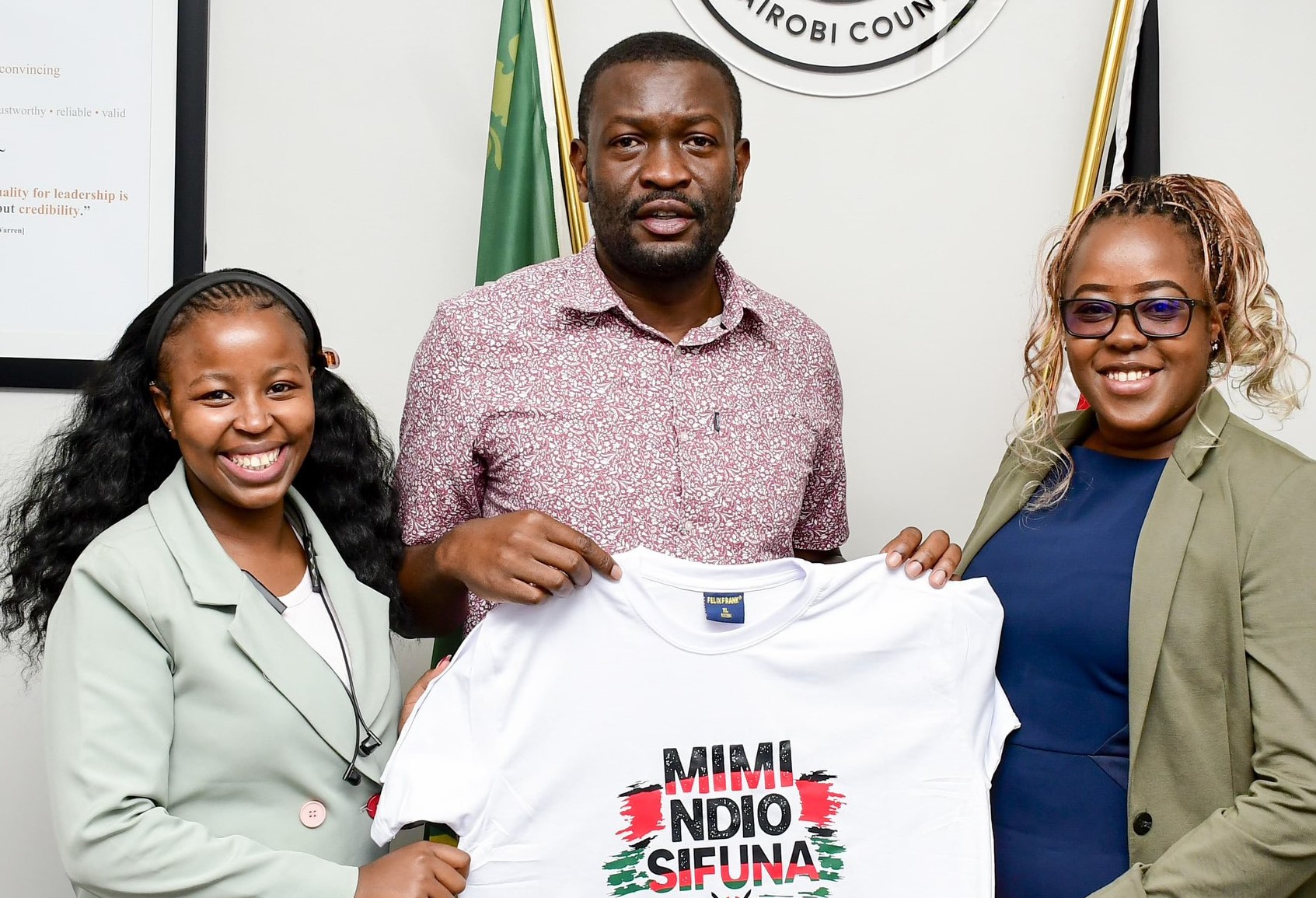
He also drew significant online attention after hosting two popular TikTok personalities at his office in Nairobi. Photos shared on his official X account showed the visitors presenting him with a white T-shirt bearing the inscription “Mimi ndio Sifuna.” The back of the shirt featured a printed Kenyan flag alongside the coat of arms.
In his caption, Sifuna thanked them for the gesture, writing: “Ma baddies wa pale TikTok wameamua kuni kit for Sunday. Thanks for the love and support, bwana. God bless.” The visit generated widespread reactions online, with several users echoing the slogan in their comments.
It was during this phase that the slogan became more widespread. Supporters posted the phrase “Sisi ndio Sifuna” on social media platforms, using it in hashtags, profile updates, and political discussions.
Placards bearing the slogan appeared at public gatherings and political events. The shift from the personal introduction “Mimi ndio Sifuna” to the collective expression “Sisi ndio Sifuna” marked a notable change in how the phrase was being deployed in public discourse.
The slogan has since featured prominently in online political conversations and at various events attended by opposition leaders. Its spread has coincided with continued discussions about ODM’s direction, opposition strategy, and relations with the Kenya Kwanza administration.
As Kenya’s political landscape continues to evolve, “Mimi ndio Sifuna” and its later adaptation, “Sisi ndio Sifuna” remain embedded in ongoing political discourse.
What started as a simple introduction at public forums has developed into a widely circulated phrase that is shaping political developments in the country.