By Andrew Kariuki
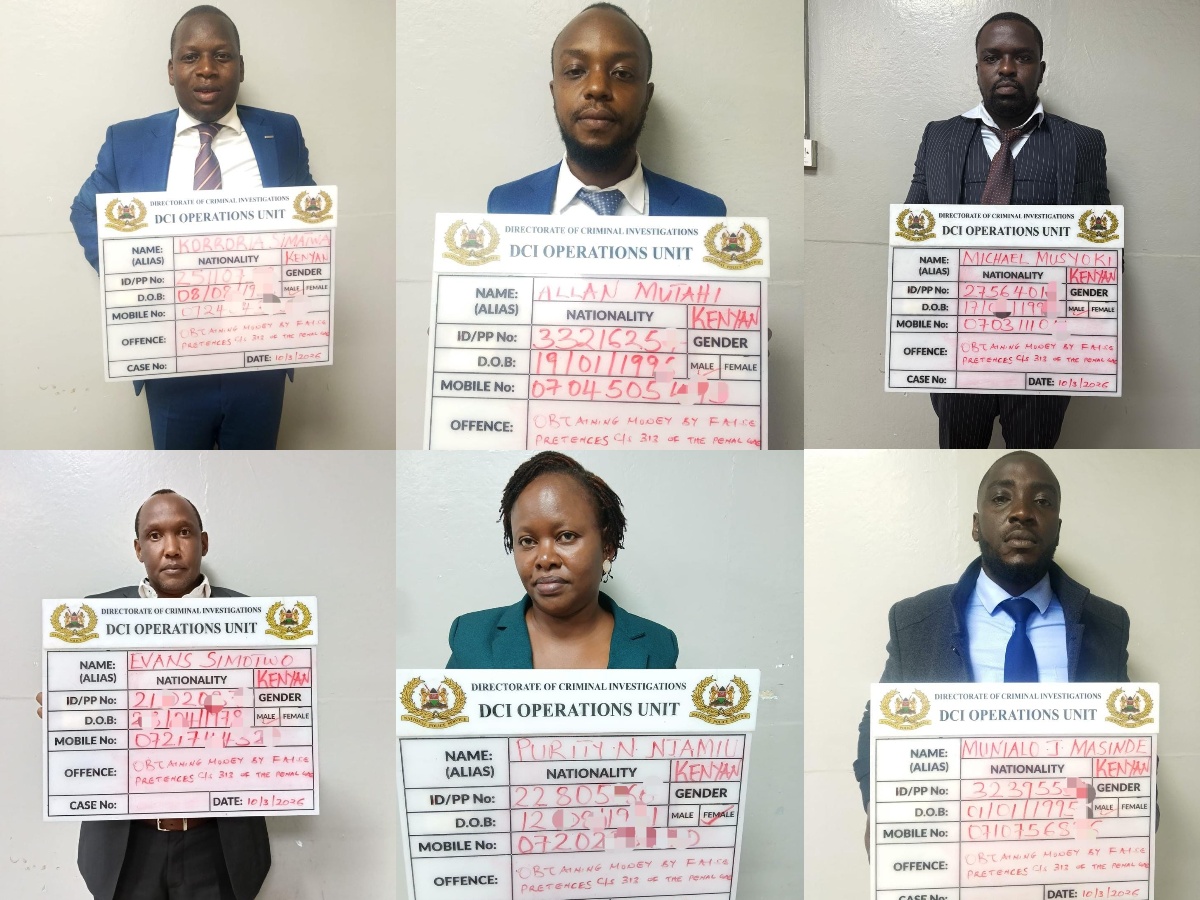
The arraignment of seven suspects linked to an alleged multi-million shilling fake tender scheme at Harambee House has triggered fresh questions over security at one of Kenya’s most protected government buildings, even as authorities maintain that no serving public officials were involved.
According to a statement issued by the Directorate of Criminal Investigations (DCI), the suspects, already charged before the Milimani Law Courts, are accused of orchestrating a fraudulent scheme in which they posed as government officials and lured foreign investors into a fictitious tender for the supply of Toyota Hiace High Roof ambulances.
The suspects allegedly accessed boardrooms within Harambee House on multiple occasions, where they conducted meetings with victims while presenting forged documents purported to originate from key government ministries, including the National Treasury and the Ministry of Health.
Authorities have insisted that the individuals involved were not and have never been government employees, with the exception of one accused person, Purity Njeri Njiami, who is said to be a former public servant with no current official role.
However, the circumstances surrounding the alleged operation have raised concerns, particularly regarding how individuals, without formal government authorization, were able to gain repeated access to a highly secured facility that hosts the Office of the President and other critical government offices let alone know the intricate path-ways to the conference room on the 5th floor without ever being employed in any capacity within the building.
Harambee House is a restricted government installation, guarded by state security personnel and governed by strict access control procedures, making claims of repeated unauthorized entry into boardrooms difficult to reconcile without further explanation.
The case now places a spotlight on possible security lapses, with questions emerging over whether due process was followed at entry points and how the suspects were able to move within restricted areas without detection or intervention.
It also raises the possibility of internal negligence or procedural weaknesses in the management of access to sensitive government spaces.
While investigators have distanced serving officials from the alleged scheme, the events described suggest a level of coordination and access that goes beyond casual infiltration, prompting speculation over whether there may be undisclosed accomplises or simply gaps in the official account that remain unaddressed.
The issue is further complicated by claims that the suspects facilitated meetings, processed visitors through security and occupied official spaces long enough to execute the alleged Ksh 60 million fraud.
As the matter proceeds in court, attention is now shifting from the alleged fraud itself to the broader institutional questions it raises on accountability, internal controls and the integrity of security systems within key government installations.
Whether the case ultimately points to isolated exploitation of procedural gaps or deeper systemic failures remains a question likely to shape public scrutiny as proceedings continue.