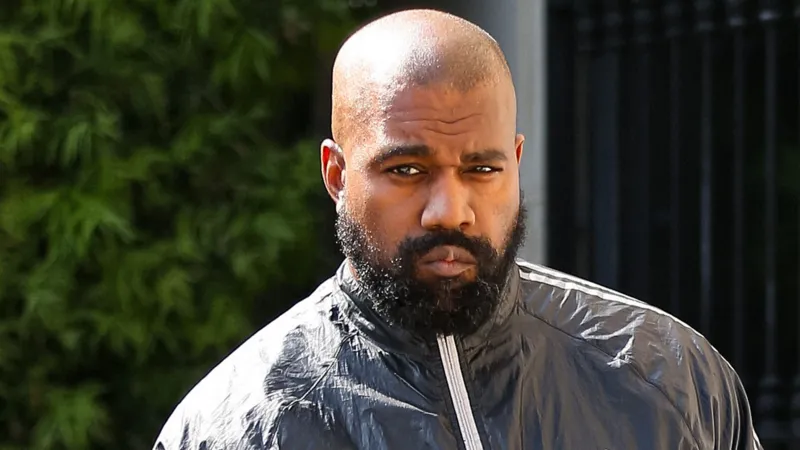
Kanye West has said he “would be grateful” to meet members of the Jewish community in the UK after controversy over his headline booking at this year’s Wireless Festival.
In a statement, the rapper, now known as Ye, said he had been “following the conversation around Wireless”, and offered to meet representatives of the community in person “to listen”.
“I know words aren’t enough,” added the star, who has a history of making antisemitic comments. “I’ll have to show change through my actions. If you’re open, I’m here.”
In a statement, the Board of Deputies of British Jews said it was “willing” to meet the rapper, on the condition that he pulls out of his planned performances at Wireless.
“The Jewish community will want to see a genuine remorse and change before believing that the appropriate place to test this sincerity is on the main stage at the Wireless Festival,” said the Board’s president, Phil Rosenberg.
The rapper was booked to headline all three nights of the London-based festival, which takes place in July.
He was granted a visa to perform in the UK “in the last few days”, according to Melvin Benn, managing director of Festival Republic, which organises the event.
Speaking on BBC Radio 4’s Today programme, Benn said: “He has a visa already issued to appear, to come into the country, and the Home Secretary may well rescind that today, I don’t know.”
“If she does, she does, and then the issue is over in terms of his appearance.”
The Home Office said it was “not aware of any immediate plans” for West, 48, to visit the UK, but “his permission to enter is currently being reviewed”.
For almost half a decade, West has caused outrage for a string of antisemitic, racist and pro-Nazi comments.
Amongst his many incendiary statements, West released a song called Heil Hitler, and sold merchandise featuring the swastika.
He apologised for his actions in a lengthy statement published in the Wall Street Journal in January and blamed manic episodes caused by his bipolar disorder.
Since then, West has been seeking a return to mainstream public view.
Last week, he played two sold out concerts at Los Angeles’ SoFi Stadium, with guest appearances by Travis Scott and Lauryn Hill.
West did not explicitly mention his history of antisemitic comments on stage, but told the audience: “Tonight we’re going to put all this behind us, ain’t that right LA?”
By Mary Munywoki