







By Peter John
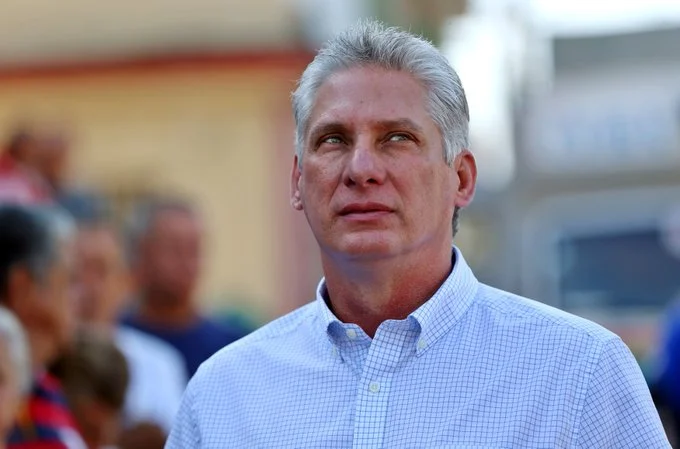
Cuban President Miguel Díaz-Canel has firmly rejected calls to step down, declaring that his government will not bow to pressure from the United States amid escalating geopolitical tensions.
In his first television interview with a US broadcaster, Diaz-Canel said Cuba remains a sovereign nation that will not be dictated to by Washington.
“We have a free sovereign state, a free state. We have self-determination and independence, and we are not subjected to the designs of the United States,” he said.
The 65-year-old leader also dismissed any suggestion of resignation, saying the idea of revolutionaries stepping down “is not part of our vocabulary.”
Mounting pressure from Washington
The remarks come as the United States intensifies its pressure campaign against the communist-run island, including measures that have effectively created an energy blockade.
Washington has threatened tariffs on countries supplying oil to Cuba, worsening an already severe energy crisis triggered by the disruption of supplies from Venezuela. The shortages have led to widespread blackouts, fuel rationing and disruptions to essential services.
US President Donald Trump has taken a hardline stance, at times floating the idea of taking control of Cuba and labelling its leadership a threat to US national security.
Russia steps in
As tensions escalate, Russia has reaffirmed its support for Havana. Russian Deputy Foreign Minister Sergei Ryabkov visited Cuba this week and held talks with Diaz-Canel, signalling deepening ties between the two nations.
Ryabkov said Moscow would not abandon its long-time ally, pledging continued assistance beyond recent oil shipments.
“We cannot betray Cuba. That is out of the question. We cannot leave it on its own,” he said, adding that Russia has no intention of stepping back from its interests in the Western Hemisphere.
Last month, Russia delivered a tanker carrying hundreds of thousands of barrels of crude oil to Cuba—its first shipment in three months—providing temporary relief to the island’s energy shortages.
Uncertain path ahead
Despite the standoff, Diaz-Canel has indicated a willingness to engage in dialogue with the United States, but only on terms that respect Cuba’s sovereignty and political system.
Analysts say the situation underscores a renewed geopolitical contest in the region, with Cuba once again at the centre of tensions between Washington and Moscow.
As the crisis deepens, the island nation faces mounting economic challenges, while its leadership remains defiant in the face of external pressure.me. They have very bad and corrupt leadership and whether or not they get a boat of oil, it’s not going to matter.”
Cuba produces only 40 per cent of the fuel it consumes, and it stopped receiving key Venezuelan oil shipments after the US attacked Venezuela in early January and arrested Maduro.