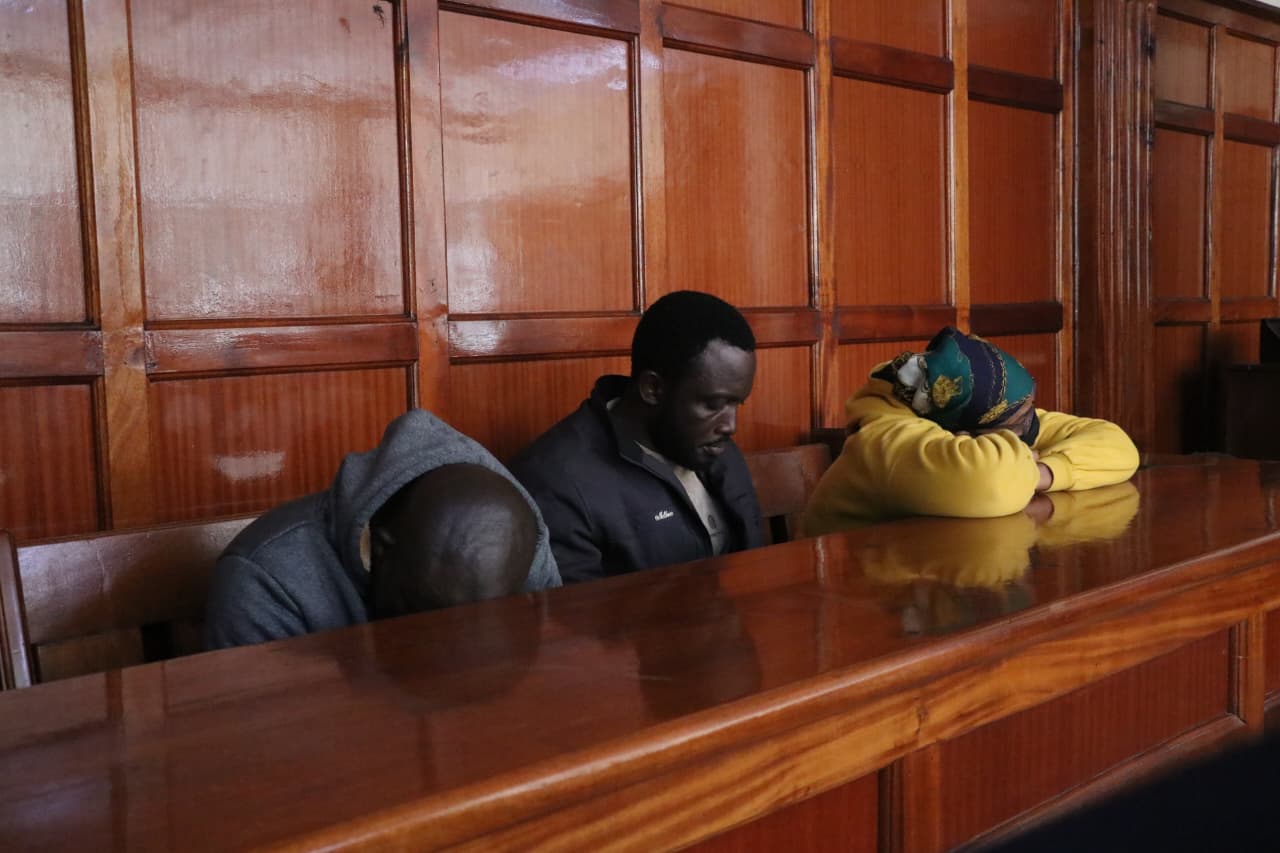
By Andrew Kariuki
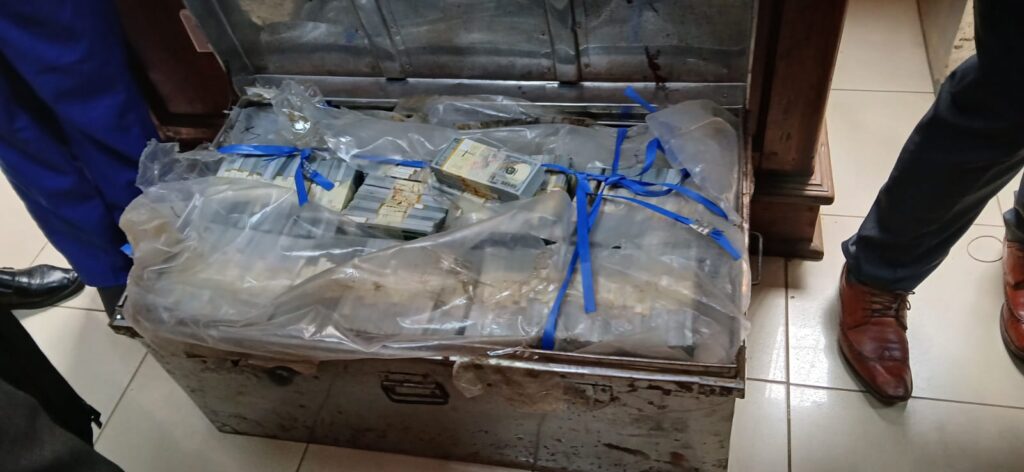
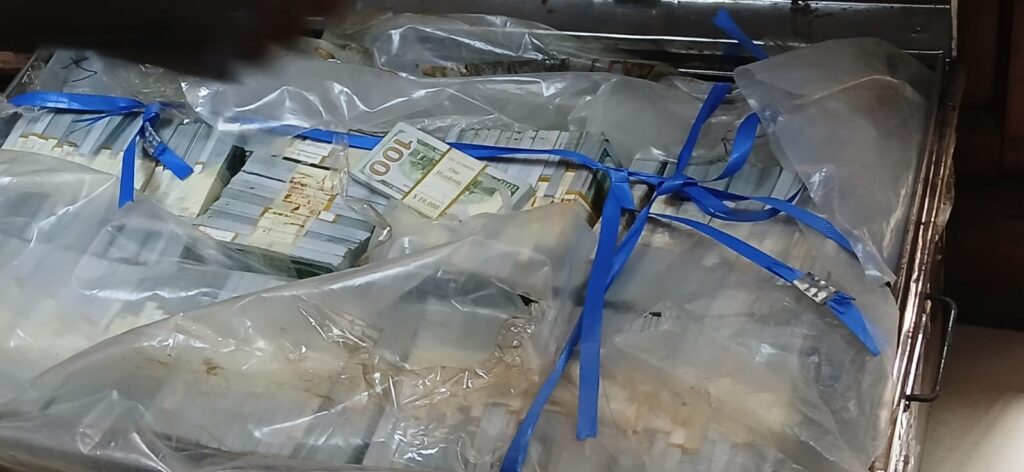
The Milimani Magistrates Court was on Thursday shown bundles of suspected fake US dollars in 100 dollar bills allegedly recovered from suspects linked to a high-profile gold scam syndicate operating in the city.
The dramatic proceedings at the Milimani Law Courts saw the counterfeit notes produced before court as prosecution witnesses detailed how the suspects allegedly operated an elaborate fraud scheme involving fake gold deals, forged currency and illegal firearms.
Chief Inspector Martin Gitahi, a forensic analyst and document examiner attached to the Directorate of Criminal Investigations (DCI), testified that the exhibits examined by the forensic laboratory were not genuine currency.
“The questioned notes were mere papers cut and sized to resemble US dollar bills,” Gitahi told the court during his testimony.
According to the forensic expert, the exhibits were delivered to the DCI documents laboratory on September 14, 2023, by Sergeant Rhemas Musungu of the Operations Support Unit (OSU), accompanied by an official exhibit memo.
The court heard that investigators submitted four metallic boxes, bundles of suspected US dollars, white papers, carton boxes and several pieces resembling Kenyan Ksh1,000 notes for forensic examination.
Gitahi testified that among the exhibits were six bundles of 100-dollar denomination notes without serial numbers, alongside multiple pieces resembling Kenyan currency.
Upon examination, the forensic officer concluded that the suspected dollars lacked critical international security features found in genuine US currency.
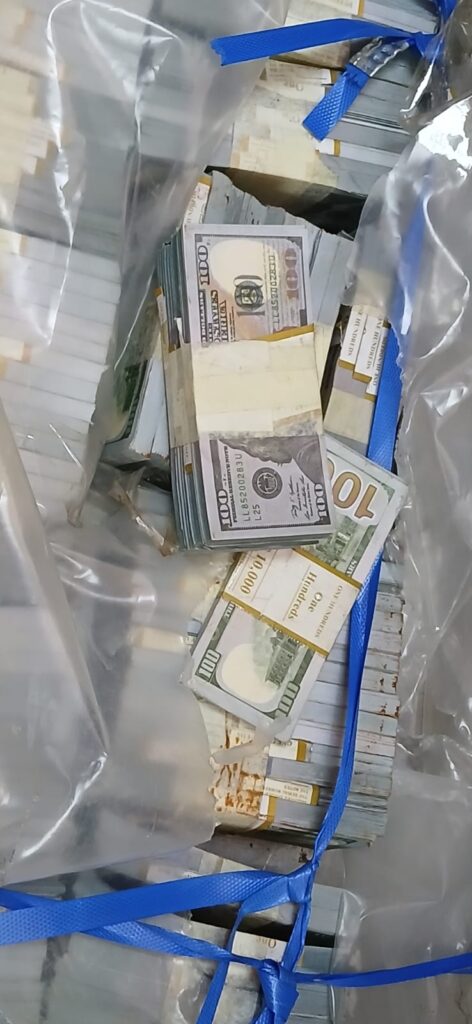
“The paper quality did not conform to genuine dollar notes of the same denomination. Features such as raised prints, microprints and security threads had not been incorporated,” he said.
He further testified that some of the recovered notes had repeated serial numbers while others lacked the colour-shifting features expected in authentic US dollars.
“The denomination on a genuine note changes from copper to green or gold to green when tilted. Those features were absent,” Gitahi stated.
Under ultraviolet examination, the notes reportedly “flourished brightly” and failed to reveal embedded security markers present in authentic currency.
The forensic examiner also told the court that the suspected Kenyan Ksh1,000 notes lacked watermarks, security threads and other security features associated with genuine Kenyan money.
“In my opinion, they were simply papers cut and sized to resemble genuine notes,” he testified.
During cross-examination by the defence, Gitahi admitted that he did not personally know who signed the inventory of the recovered exhibits and only knew the officer who delivered them to the laboratory.
He also confirmed that he had not brought genuine sample notes to court for comparison during his testimony.
When pressed on whether his findings were supported by reports from institutions such as the US Federal Reserve, Gitahi said his conclusions were based on forensic analysis and official reference materials available within the DCI forensic laboratory.
“We have genuine notes of major world currencies for comparison. The data we use is provided by reserve authorities,” he said.
The court also heard testimony regarding a firearm allegedly recovered during the arrests.
A ballistic witness told the court that the gun had originally been issued in 2007 before allegedly being stolen in 2009. He stated that he only learned the weapon had been recovered in 2023 while he was in Uganda and after suspects had already been arrested.
The accused persons are facing several charges, including conspiracy to defraud, possession of forged bank notes, possession of papers for forgery, unlawful presence in Kenya and possession of a firearm and ammunition without a licence.
According to the charge sheet before court, the suspects, namely Nelson Fru Che, Roland Johnson, Joseph Gikonyo, Alice Kavata, Ian Wekesa Mulongo, Duncan Muchai and Police Constable Festo Akula Wamwayi, allegedly conspired to defraud a complainant of USD 400,000 in a fake gold deal said to have been staged at a residence in Nairobi’s Garden Estate area.