By Bonface Mulyungi
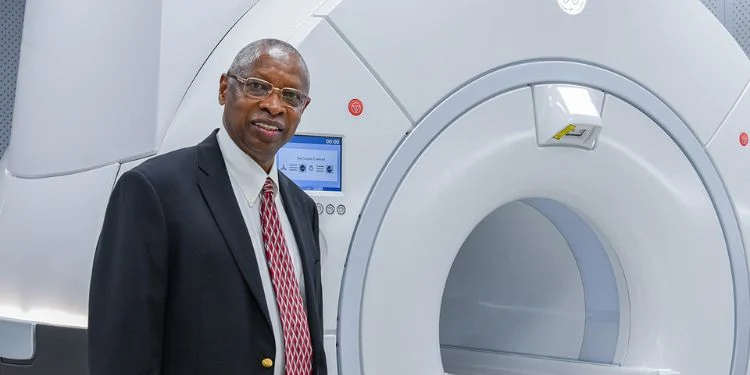
Kenyan researcher Professor George Njoroge has won a prestigious Ksh. 446 million global award alongside UK scientist Professor Robert Bristow for their groundbreaking work in advancing the early detection of oesophageal cancer.
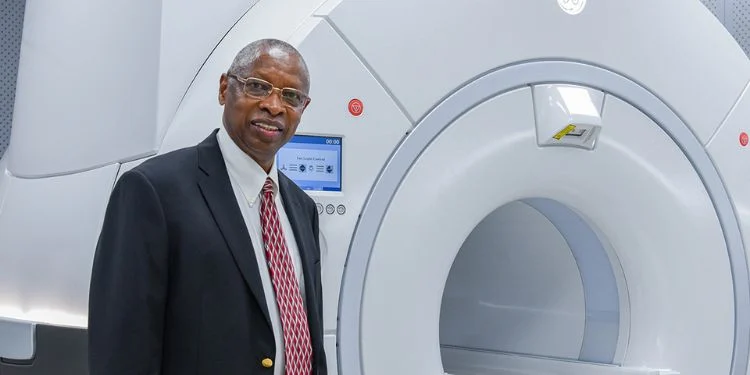
The two scientists were recognised for pioneering research aimed at improving diagnosis and treatment outcomes for one of the world’s deadliest cancers. Their work is expected to transform how oesophageal cancer is detected, especially in high-risk populations where late diagnosis has often led to poor survival rates.
Njoroge, widely respected for his contributions to medical research and innovation, described the recognition as a major milestone not only for his career but also for Kenya’s growing footprint in global scientific research.
The award highlights the increasing role African researchers are playing in addressing some of the world’s most pressing health challenges. Oesophageal cancer remains one of the most difficult cancers to diagnose early because symptoms often appear when the disease has already advanced.
Through their collaborative efforts, the researchers have focused on developing more effective methods of identifying the disease at its earliest stages, giving patients a better chance of successful treatment and recovery.
The multimillion-shilling award will support further research, innovation, and international collaboration aimed at improving cancer care and saving lives across different regions of the world. His achievement has sparked pride among Kenyans, with many celebrating Professor Njoroge as an example of African excellence on the global stage.
Professor Njoroge’s career spans decades of pharmaceutical innovation and academic excellence:
In 1988, George joined Schering-Plow Research Institute (SPRI), focusing on the treatment of viral diseases and cancer.
During his time at the SPRI, George held positions including Senior Principal Scientist, Associate Director, and Director of Medicinal Chemistry.
He also led the discovery of Victrelis, the first-in-class oral HCV protease inhibitor for hepatitis C, in May 2011.
In addition to his scientific contribution, he contributed to the second-generation inhibitor that was marketed in Russia.
He was also the honorary professor of medical education at the University of Manchester in the UK.
Upon returning to Kenya after spending over 30 years in the United States pharmaceutical industry, he took up the role of Chief Scientific Officer at KUTRRH.
Between 2022 and 2025, George served as a board member at KCA University and as a member of the Board of Directors at KEMRI, where he chaired the Research and Innovation Committee.
George further chaired the Center of Africa’s Life Sciences (C.O.A.L.S.) in Naivasha, which was aimed at training African scientists.
Apart from his scientific contributions, George Njoroge is an author and co-author of 134 scientific publications and 104 U.S.-granted patents.
Professor Njoroge has since received several awards honors.
He led the development of Victrelis, the first FDA-approved hepatitis C protease inhibitor, and contributed to Zokinvy, a treatment for progeria.
He was the first African scientist to secure over 100 US patents and author of 130+ peer-reviewed papers.
Njoroge was also inducted into the American Chemical Society Hall of Fame (2012) and recipient of the Thomas Alva Edison Patent Award.