By Bonface Mulyungi
The United States has imposed sanctions on a senior Tanzanian police officer over alleged human rights violations involving the detention and torture of Kenyan activist Boniface Mwangi and his Ugandan counterpart Agather Atuhaire.
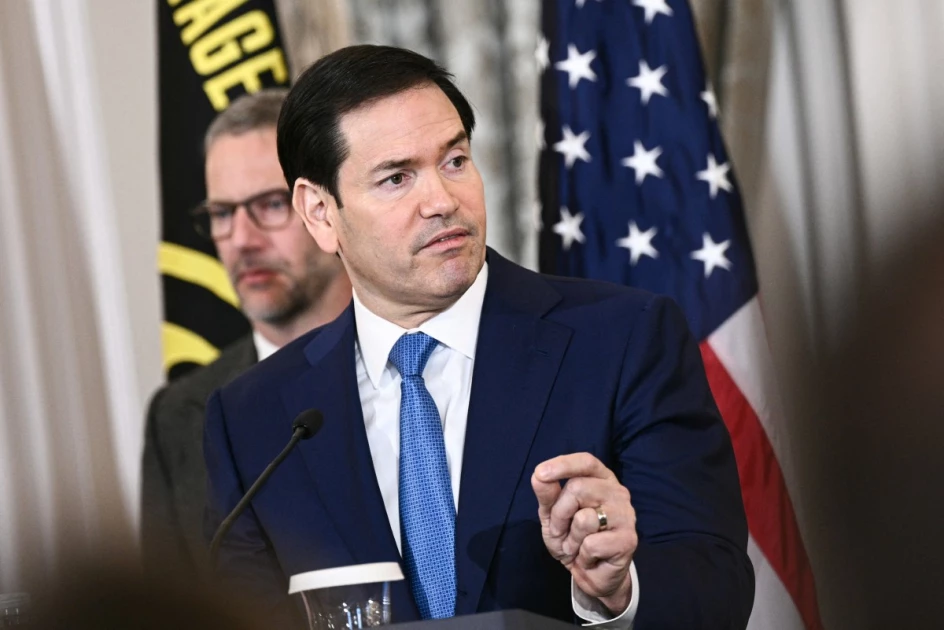
In a statement issued on Thursday, U.S Secretary of State Marco Rubio announced the designation of Tanzanian Police Force Senior Assistant Commissioner Faustine Jackson Mafwele under Section 7031(c) of the U.S Department of State appropriations law.
Section 7031(c) allows the U.S government to designate foreign officials implicated in significant corruption or gross violations of human rights, rendering them ineligible for entry into the United States.
Rubio said the designation was based on “credible information” linking Mafwele to gross violations of human rights.
“One year ago, members of the Tanzanian Police Force detained, tortured, and sexually assaulted Ugandan Agather Atuhaire and Kenyan Boniface Mwangi, who were in Dar es Salaam to observe the judicial trial of opposition leader Tundu Lissu,” Rubio said.
The sanctions bar Mafwele from entering the United States.
Just a day prior to the U.S announcement, Atuhaire had published an emotional account recounting the lasting impact of the alleged torture.
“I always want to put the torture I and Boniface Mwangi were subjected to in Tanzania behind me but yesterday and today have refused. A year later, we are yet to recover from it,” she wrote in a social media post.
Atuhaire said she continues to suffer physically from the ordeal, revealing that she still wears doctor-prescribed shoes fitted with foot pads due to persistent pain allegedly caused by the abuse.
“In March the pain was so bad and I was given cortisone shots in between the toes. They numbed the pain for a few weeks and we went back to zero,” she stated.
She further accused Mafwele of personally threatening them during their detention.
“When people asked about our whereabouts the following day, he told them he will do whatever he wants to us and there is nothing anyone will do,” Atuhaire claimed.
Despite the ordeal, she said the experience had not silenced their activism or broader calls for accountability in Tanzania.
“What he did didn’t stop us from demanding for the respect of human rights and dignity,” she wrote, while also accusing Tanzanian authorities under President Samia Suluhu Hassan of suppressing dissent.
In a tell-all press address on June 2, 2025, Mwangi and Atuhaire said they had travelled to Dar es Salaam to monitor court proceedings involving Tanzanian opposition figure Tundu Lissu, a case that attracted regional and international attention.
They narrated how they were forcefully taken from their hotel rooms on May 18, driven to one police station after another, questioned by immigration officers and eventually handed to their tormenters.
“We were transferred to a police station where we found a guy called Mafwele. The beating continued in the presence of three lawyers. At that station, Mafwele said he is going to rape Agather,” Mwangi recalled at the time.
“When the lawyers left us they did not tell our families that we are being beaten, threatened and harassed. Because Mafwele, in front of the lawyers asked if I was circumcised. He said they would circumcise me again.”
At the Central Police Station, an unknown gang walked in. The activists were blindfolded and pushed into a Landcruiser which drove off for about 20 minutes. They were ushered into a room that became their torture chamber.
“They told me to strip naked. When I stripped, they removed my handcuffs. I was grabbed by around four men, they lifted me up so fast, and tied me upside down. They started beating my feet. They put my underwear in my mouth, they played Gospel music in the car to drown my pain,” he narrated.
He said he was then sexually assaulted, ‘in the name of Samia’.
“They would ask me to say I am feeling nice, and say ‘Asante Samia’. I started bleeding. All this time they are saying they are recording what they are doing to me,” the prominent Kenyan activist shared.
Atuhaire recalled that their tormenters used objects to sexually assault them, all the while handcuffed and blindfolded, as pain was also inflicted on their feet.
“The people had come with one instruction. ‘Inflict as much pain as you can,” she said.
After the torture, they spent the night on a cold floor before being separately transferred to a different location the next morning.
Atuhaire, during the press conference, specifically named Faustine Mafwele as the man who ordered the gang to assault them.
The United States government, at the time – through its Bureau of African Affairs – called for investigations into the allegations of human rights abuses involving Mwangi and Atuhaire, further appealing to all countries in the region to hold those culpable to account.
Mwangi and Atuhaire, alongside seven civil society organisations, have since filed a case before the East African Court of Justice.
They’re accusing the government of Tanzania of grave human rights violations including enforced disappearance, torture, arbitrary detention, sexual abuse and unlawful deportation.
They’re also demanding public apologies from the governments of Tanzania, Uganda, and Kenya, plus compensation of at least USD 1 million each, which is approximatley Ksh.130 million.
The activists further sought public apologies from the three countries, rehabilitation and psychological support.