GAZA CITY, Gaza Strip
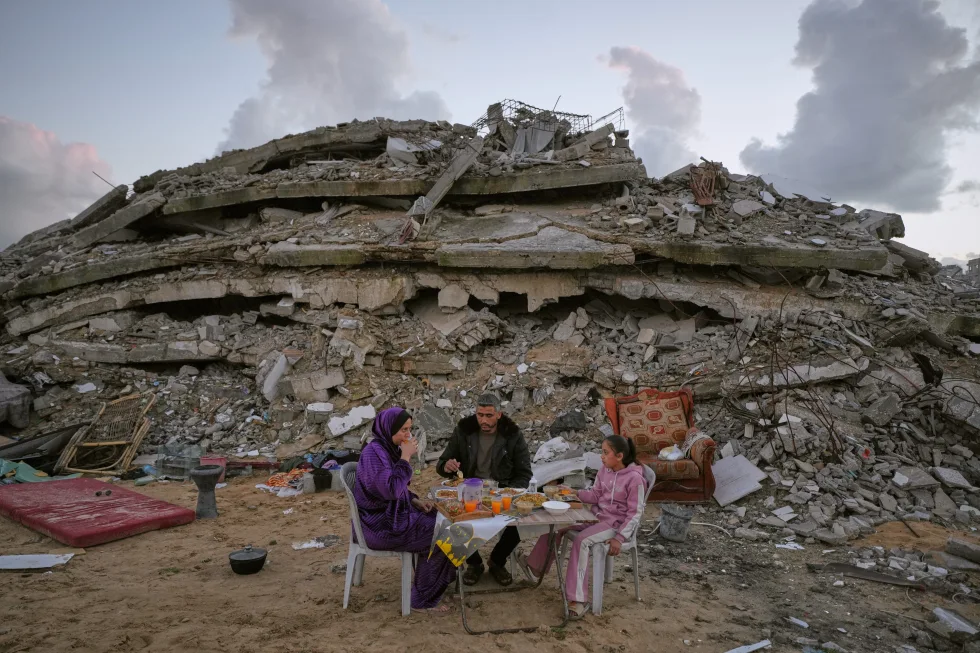
As the sun sets over Gaza City, Saddam al-Yazji, his wife and their young daughter sit on the ground, sipping noodle soup from plastic bowls. Their iftar table—a small folding stand—is set in the dirt at the foot of a mountain of twisted metal and shattered concrete.
It is the only place they have left.
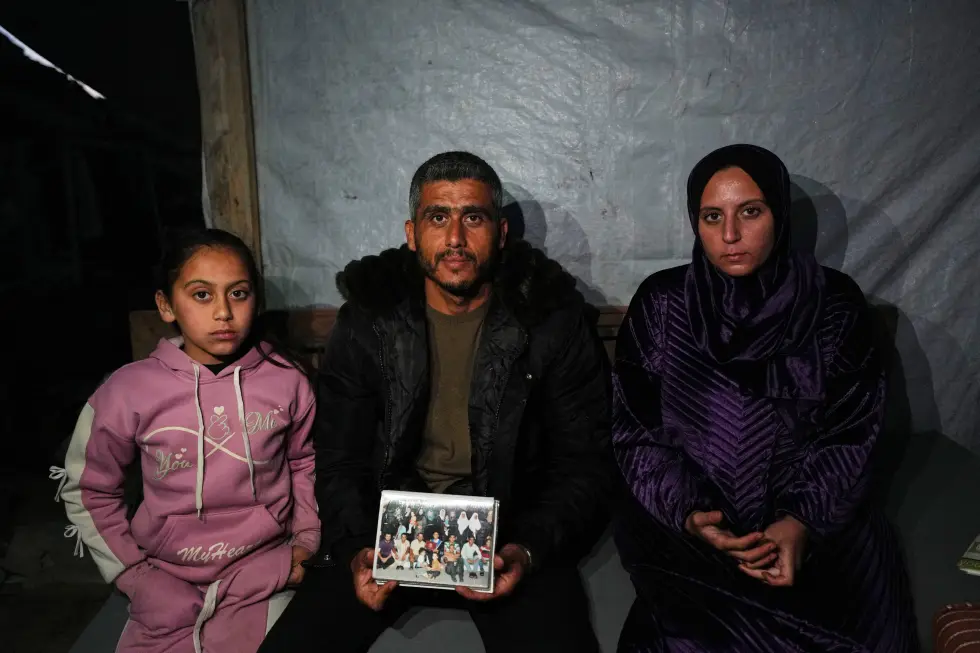
Buried beneath the debris behind them are the bodies of most of their family. Al-Yazji’s parents, his three brothers, his sister, and most of their children are gone.
His wife’s parents and siblings are also dead. In all, 40 relatives were killed in a single Israeli airstrike that leveled their home in December 2023.
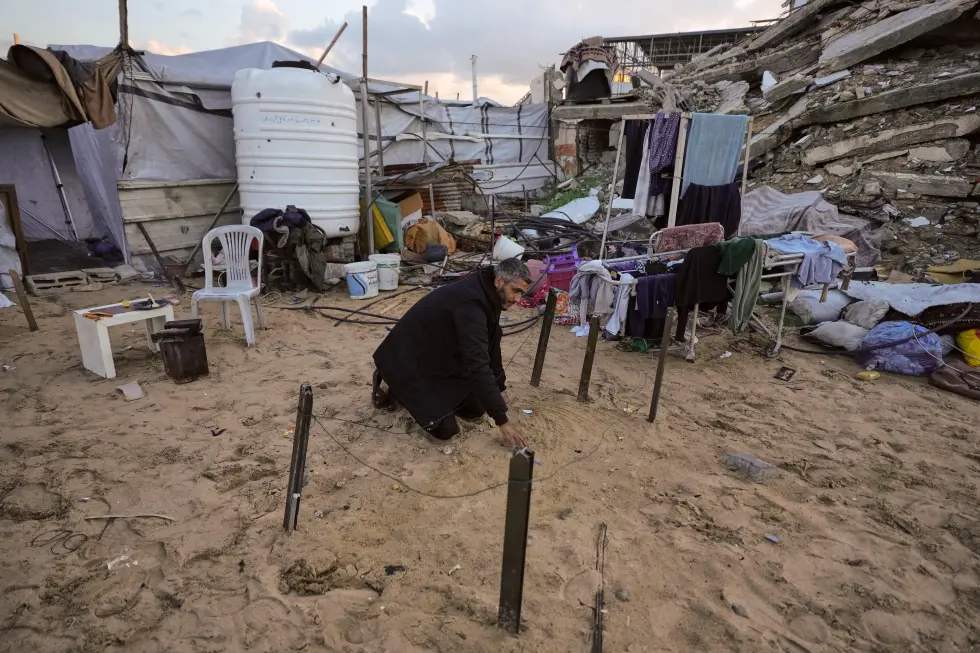
“We break our fast here because this is where they are,” al-Yazji said quietly, gesturing toward the rubble. “This is where our life used to be.”
The Islamic holy month of Ramadan is traditionally a time for large, joyful family gatherings—homes filled with laughter, the smell of festive meals, and the warmth of multiple generations sharing the sunset meal.
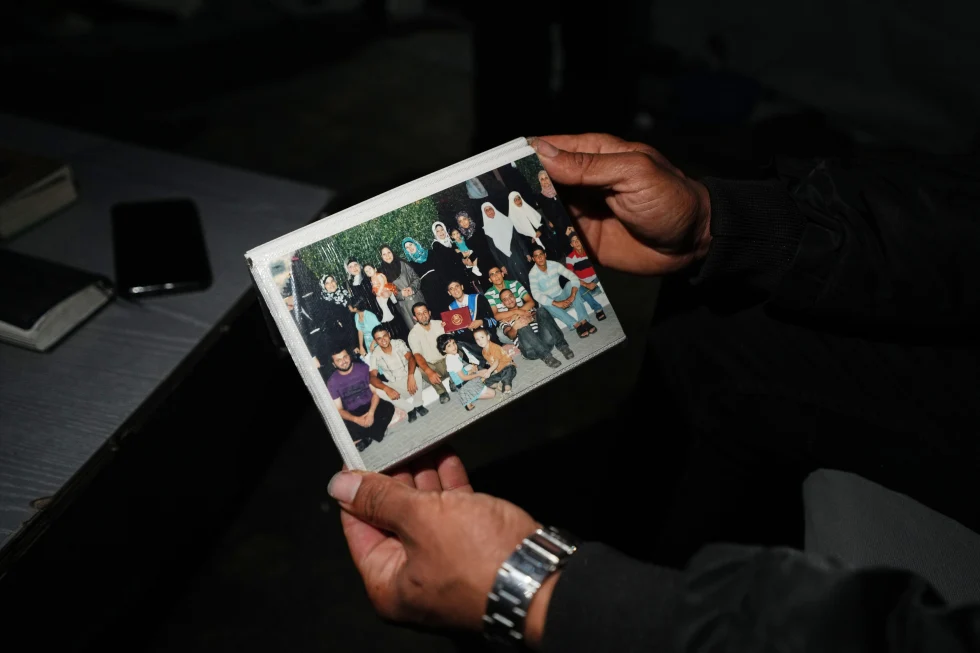
For the al-Yazji family, and countless others across the Gaza Strip, the holy month has instead become a season of profound grief.
More than two years into the war between Israel and Hamas, many of the families observing Ramadan are doing so in mourning.
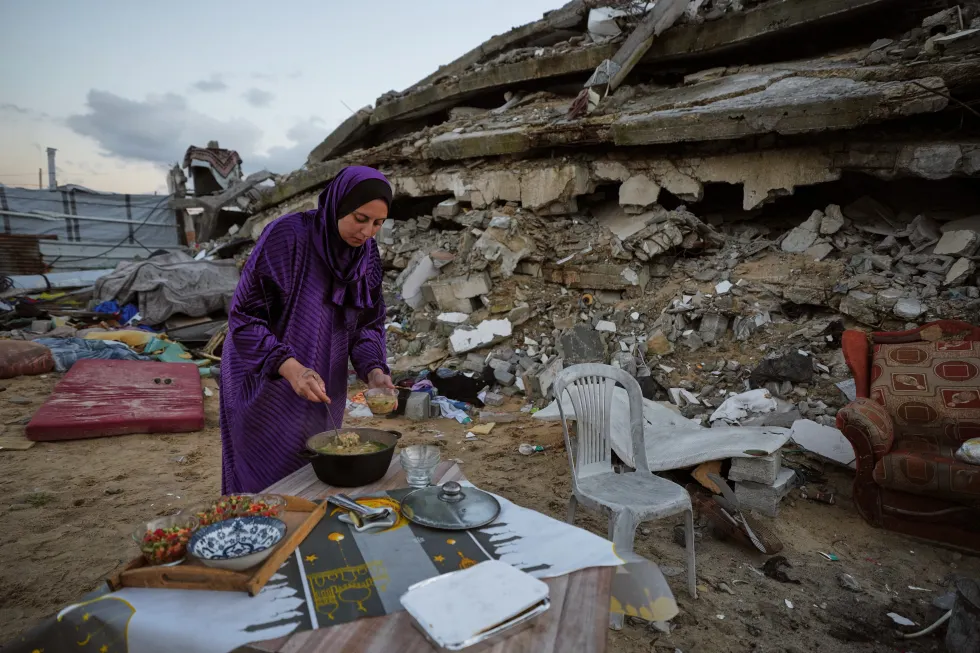
With vast swaths of the territory reduced to rubble and the death toll continuing to climb, the traditional iftar table has, for many, been replaced by a folding stand in the dust, set against the backdrop of what was lost.
The three survivors now eat their meager meal in the shadow of the destruction, surrounded by the silence where 40 voices once filled the air.
By James Kisoo