By Andrew Kariuki
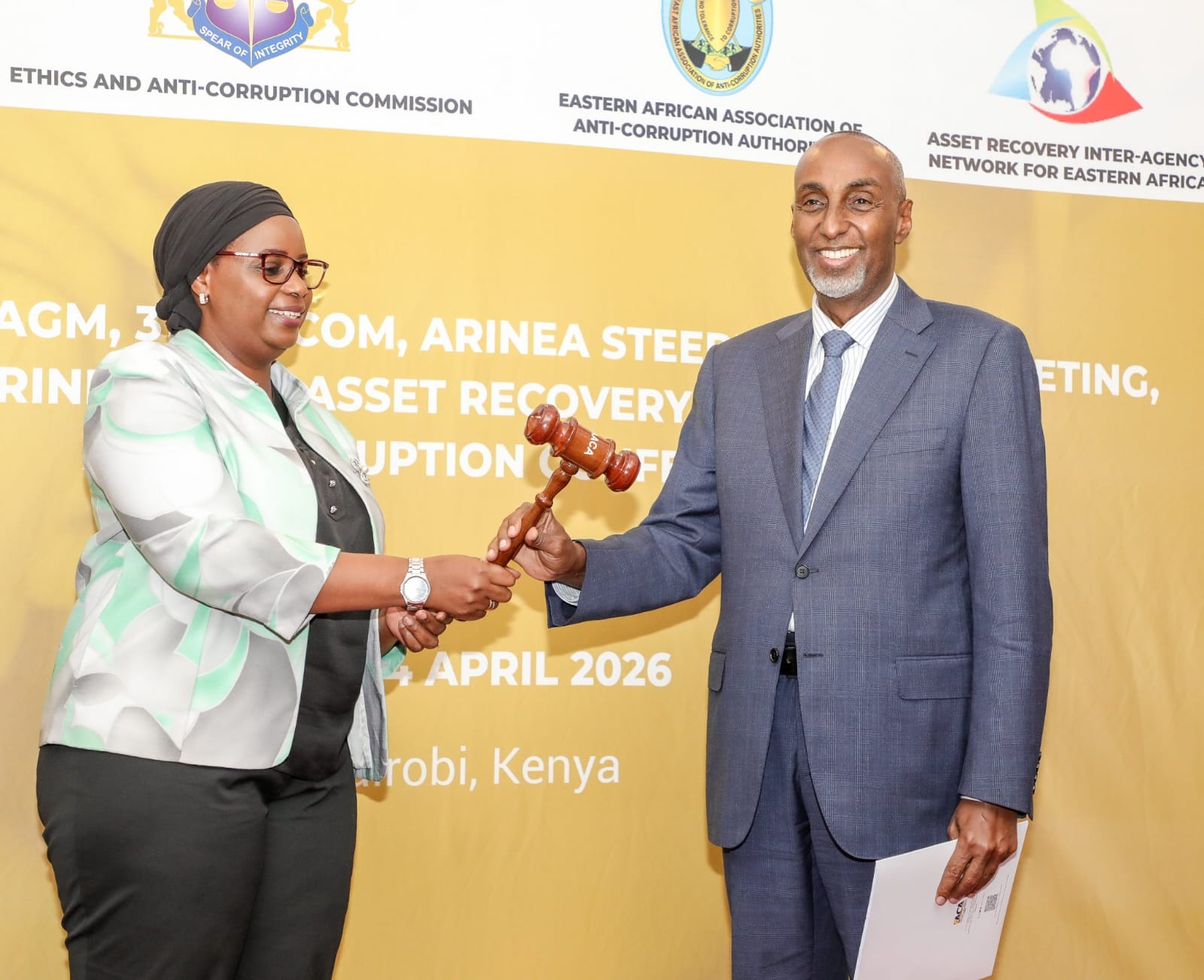
Abdi Mohamud, the Chief Executive Officer of the Ethics and Anti-Corruption Commission (EACC), has been elected President of the Eastern Africa Association of Anti-Corruption Authorities (EAAACA).
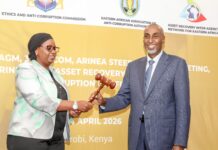
Mohamud assumed the regional role during the 16th Annual General Meeting held in Nairobi from April 20 to 24, 2026, marking a transition from his previous position as Vice President of the association, a role he held for two years.
His election signals a shift towards strengthened regional coordination in the fight against corruption, with a focus on enhancing collaboration among anti-corruption agencies across Eastern Africa.
During the handover, outgoing President Naluzze Aisha Batala, Inspector General of Government of Uganda, was commended for her leadership and contribution to advancing anti-corruption efforts in the region.
In his acceptance remarks, Mohamud reaffirmed his commitment to building on existing frameworks, emphasizing the need for deeper cooperation, stronger partnerships and coordinated action to tackle corruption across borders.
He outlined key priorities under his leadership, including strengthening mutual legal assistance and cross-border investigations, enhancing intelligence sharing among member agencies, promoting harmonisation of anti-corruption laws and policies, and advancing knowledge exchange through peer learning and technical collaboration.
Mohamud also highlighted the upcoming launch of the Centre for Research on Ethics and Anti-Corruption (CEREAC), scheduled for June 2026 in Nairobi, describing it as a critical platform for generating evidence-based research to support policy development, prevention strategies, and enforcement mechanisms across the region.
He further called on heads of anti-corruption agencies and stakeholders to actively support regional initiatives and participate in the CEREAC launch, positioning it as a shared platform for innovation and knowledge generation.
The 16th AGM brought together representatives from eight East African countries and featured a series of engagements, including the 31st Executive Committee Meeting, ARINEA Steering Group discussions, the 8th Asset Recovery Workshop, and the Anti-Corruption Conference.
Mohamud noted that his election reflects a broader move from national-level implementation to regional coordination, aimed at improving policy influence, operational synergy, and the global positioning of Eastern Africa’s anti-corruption agenda.
He concluded by expressing appreciation to delegates for their participation and contributions, extending his commitment to advancing integrity and accountability across the region.