By Bonface Mulyungi
When Arsenal finally broke their 22-year drought, the celebrations weren’t confined to London. In Kenya, the victory stirred emotions that transcended sport, weaving together faith, politics, and community spirit.
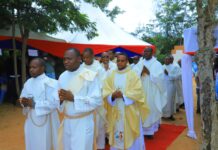
Nyeri Archbishop Anthony Muheria, visibly elated, jokingly demanded to be treated as Arsenal’s manager while he was alighting from his car. His joy carried a personal resonance: he was appointed Bishop of Embu 22 years ago — the very year Arsenal last lifted the trophy.
For him, the triumph was not just about football, but a poetic alignment of life milestones.
In Nairobi, thousands poured into the streets in a peaceful demonstration that wound its way from Thika Road to the CBD. The march was less about protest and more about shared jubilation, a reminder of football’s power to unite across divides.
The late Raila Odinga, once ODM’s towering figure, was a devoted Arsenal fan. He followed matches at Bush Mark in Karen, where his portrait still hangs in the “Raila corner.” His fandom remains part of his legacy, a testament to how football passions can become cultural memory.
President William Ruto added his voice, congratulating Arsenal fans on their triumph. Whether he is a true supporter or simply acknowledging the joy of his constituents, his gesture reflects how leaders often tap into collective celebrations to connect with the people.
This story is not just about a football club’s victory. It’s about how sport becomes a mirror of human life — faith leaders finding poetry in timing, politicians remembered for their fandom, and ordinary citizens marching together in joy.
Arsenal’s win is a reminder that sometimes, the beautiful game is about far more than goals; it’s about the shared humanity it awakens.