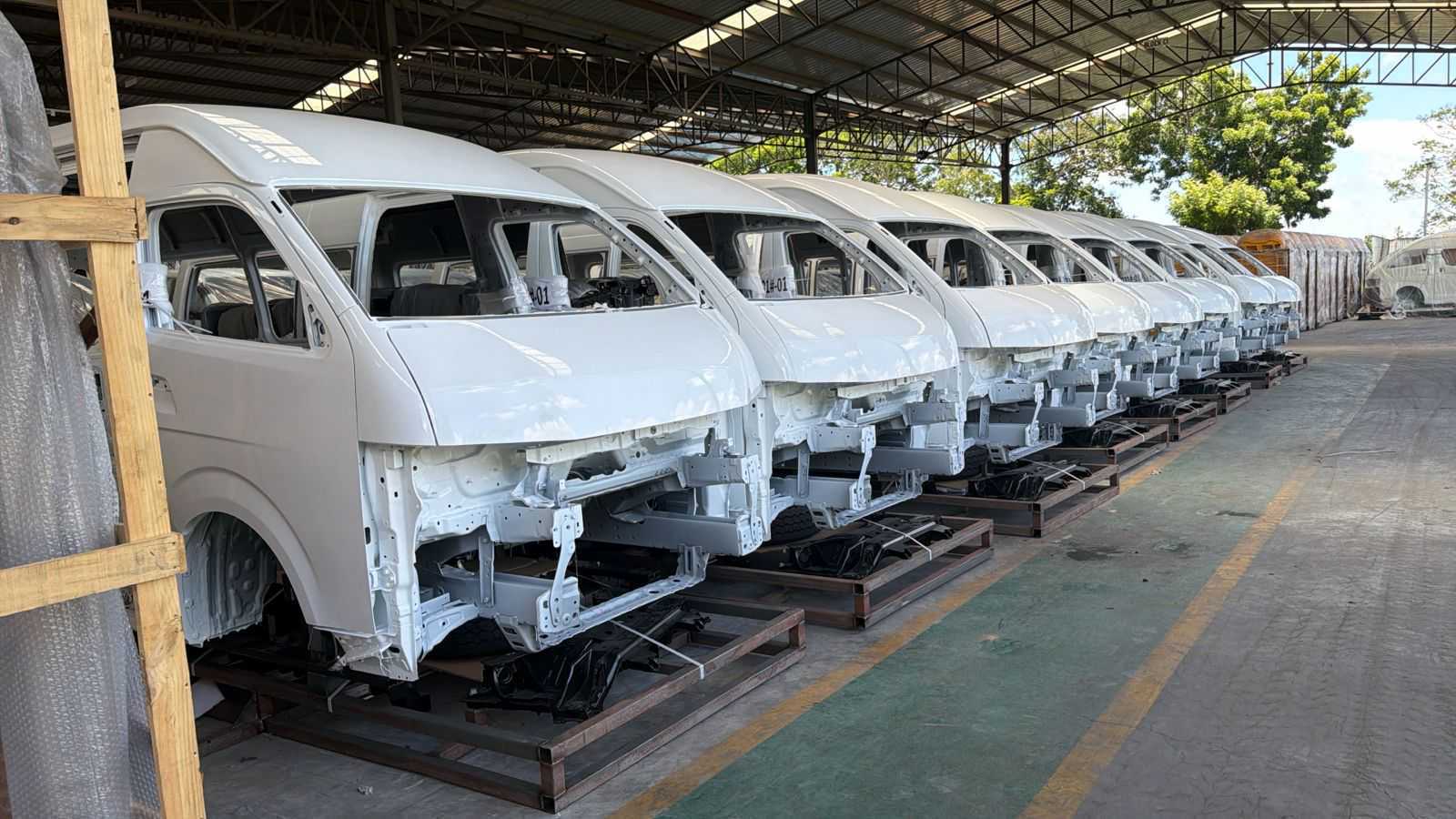
BasiGo has begun assembling electric vans in Kenya, marking the first local production of its Ma3e model as the company moves to scale operations.
The work is being carried out in partnership with Associated Vehicle Assemblers, with initial units already lined up for delivery between April and May.
The vans are built in Mombasa using Complete Knocked Down kits, a model that allows manufacturers to localise production without full-scale industrial setup. BasiGo says the first batch includes 22 units.
The Ma3e van has been designed for intensive, repeat-use transport environments. It offers a range of up to 300 km on a single charge under standard testing conditions and is positioned for use across multiple sectors, including public service routes, school transport, and corporate mobility.
The company has spent the past 10 months testing the model on intercity corridors such as Nyahururu, Nyeri, Nakuru, and Thika. Those trials form the operational backbone of its expansion strategy.
BasiGo reports a reservation pipeline of more than 500 units, driven in part by the performance of its initial fleet. The company has been running a limited number of electric vans in real-world conditions to test durability, cost efficiency, and charging logistics.
That early validation appears to have shaped investor and operator interest, particularly among fleet owners looking to transition away from diesel-powered vehicles.
The decision to assemble locally reflects a broader effort to anchor electric mobility within Kenya’s manufacturing ecosystem. CKD assembly lowers import costs, creates local jobs, and offers a pathway toward deeper industrial participation over time.
For AVA, the partnership adds electric vehicles to a portfolio historically dominated by internal combustion models, indicating a gradual transition within the sector.
BasiGo plans to deploy electric vans at scale across Kenya, targeting high-frequency transport segments where operating cost savings are most visible. The company has also pointed to Kenya as a potential reference market for similar rollouts in other African countries.
The pace of expansion will likely depend on charging infrastructure, financing models for operators, and policy support tied to clean transport adoption.