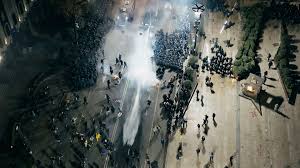
Protesters in the capital Tbilisi described being drenched by water cannon that left a burning sensation on their skin—one that could not be washed off. Many also reported lasting symptoms including shortness of breath, coughing, and vomiting that persisted for weeks.
Through interviews with chemical weapons experts, police whistleblowers, and doctors, the BBC has identified the likely agent as a compound called “camite,” first deployed by France against Germany in World War I. Camite was phased out by the 1930s over concerns about its long-term effects and later replaced by modern tear gas such as CS.
The protests erupted on 28 November 2024 after Georgia’s ruling party announced it was pausing the country’s EU accession process—a goal enshrined in its constitution. Police responded with water cannon, pepper spray, and CS gas.
Among those sprayed was paediatrician Dr. Konstantine Chakhunashvili. “It felt like my skin was burning for days,” he said. “It was worse when trying to wash it off.”
Dr. Chakhunashvili later launched a survey of nearly 350 people affected during the first week of demonstrations. Almost half reported one or more symptoms lasting more than 30 days, including headaches, fatigue, cough, and breathing difficulties. Sixty-nine examined participants also showed a “significantly higher prevalence of abnormalities” in their heart electrical signals.
His study has been peer-reviewed and accepted for publication in the international journal Toxicology Reports.
Local journalists, doctors, and civil society groups had already suspected the water cannon was laced with an unknown chemical, but Georgia’s Ministry of Internal Affairs refused requests to identify the substance.
The BBC spoke to several high-level sources from Georgia’s riot police—the Special Tasks Department—who pointed to the same explanation.
Lasha Shergelashvili, former head of weaponry for the department, said he tested a potent chemical for use in water cannon in 2009. Its effects, he recalled, were severe and persistent.
“Even after we washed our faces with water and a baking soda solution, we still couldn’t breathe freely,” he said. He advised against its use, but says the water cannon were loaded with it anyway—and remained so at least until he left the force in 2022.
Watching footage of the 2024 protests from his new home in Ukraine, Shergelashvili said he immediately recognized the effects. Contacts still within the department have since confirmed to him that the same compound was used.
Another former high-ranking officer separately verified to the BBC that the chemical loaded during Shergelashvili’s tenure was indeed deployed against protesters in late 2024.
The Georgian authorities dismissed the investigation’s findings as “absurd,” insisting police acted legally against what they called “illegal actions of brutal criminals.”
By James Kisoo