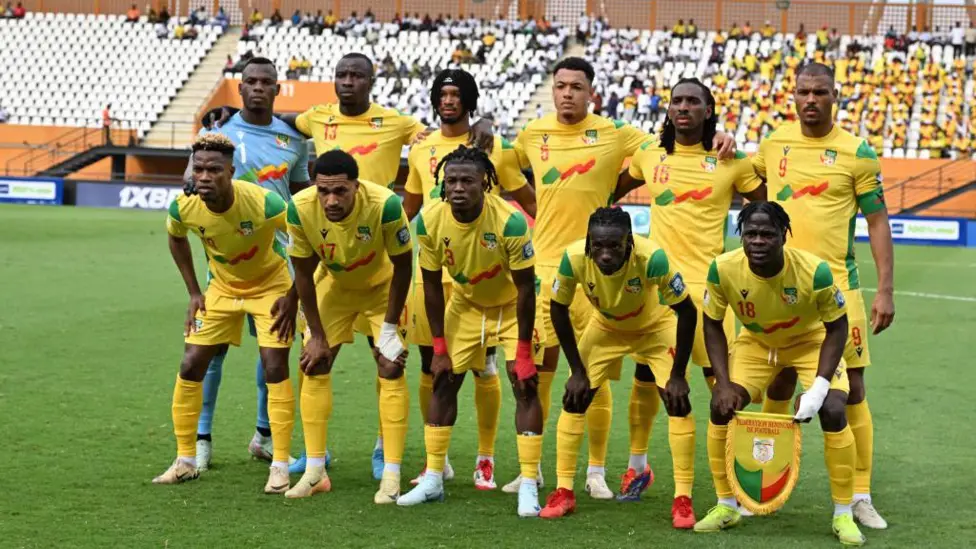
BBC – Benin are aiming to impress at the 2025 Africa Cup of Nations (Afcon) in Morocco as the squad prepare for their fifth appearance at the continent’s biggest football tournament.
The Cheetahs made their finals debut in 2004 but recent years have been challenging, with the team missing out on qualification for both the 2021 and 2023 editions.
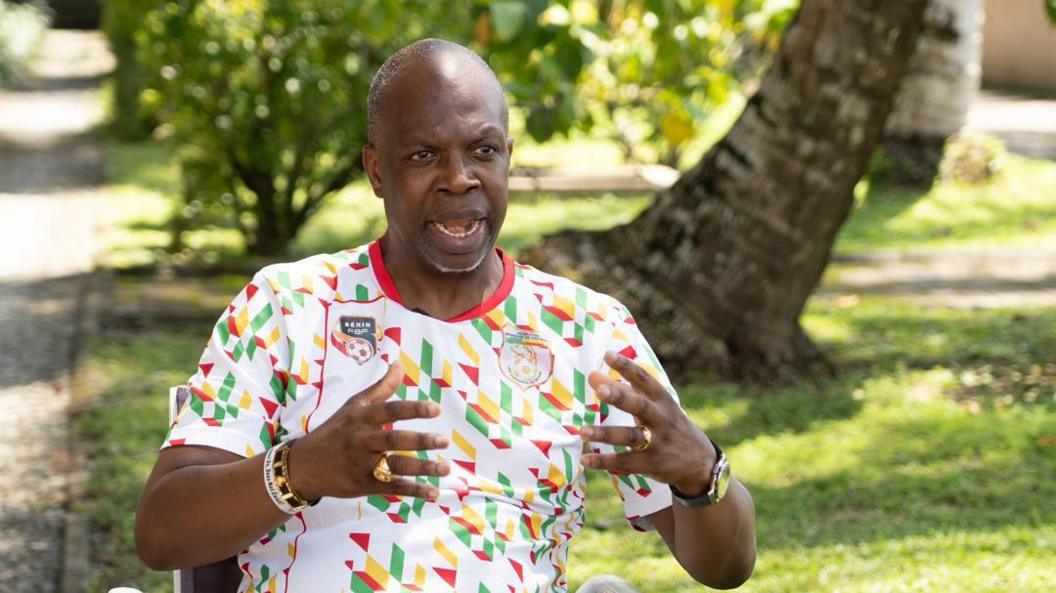
After coming close to reaching the Fifa World Cup for the very first time, assistant coach and head scout Tunde Adelakun hopes to draw inspiration from their best-ever Afcon performance in 2019, when Benin reached the quarter-finals.
“I want my team to play good football, and let the clubs know that it was worth it to release [the players] at a very difficult time of the season,” Adelakun told BBC Sport Africa.
“I’d love to win the tournament. The journey will be tough [but] what I’ve got at the moment is seven Afcon finals to navigate.”
Head coach Gernot Rohr has named a squad largely made up of players who impressed during qualifying for 2026 World Cup, with captain Steve Mounie leading the team.
That campaign saw Benin come agonisingly close to securing a historic first-ever spot at the World Cup, only to suffer late heartbreak on the final matchday against Nigeria, ultimately losing out to group winners South Africa.
The West Africans now arrive in Morocco, where they will face Senegal, DR Congo and Botswana in Group D, eager to turn disappointment into a memorable Afcon outing.
“Losing out [on] qualification for the World Cup was a bitter pill we found really hard to swallow,” Adelakun said.
“We’ve put it behind us, there’s no regrets [and] we’re proud of what we did. It’s time to get onto the African stage and prove to the world what we are made of.”
A group full of ‘quality’
Benin hold a unique place in Afcon history as the first team to advance to the knockout stage of the tournament without recording a single victory.
At the 2019 edition, the Cheetahs drew all three of their group stage matches, doing just enough to progress as one of the four best third-placed teams.
The West Africans upset Morocco in the round of 16, holding them to a 1–1 draw after extra time before claiming a memorable 4–1 victory in the penalty shootout.
Benin’s run then came to an end in the last eight, where they were edged out 1-0 by eventual runners-up Senegal.
Adelakun is under no illusions about the task this time around in North Africa.
“We know what we are up against,” he said.
“We played Senegal about a year and a half ago in a friendly and we gave it as good as it got.
“These boys are fired up. They know that this is their showcase.”
Benin will begin their campaign on Tuesday, 23 December against DR Congo, a team which defeated heavyweights Cameroon and Nigeria in the continental play-offs for next year’s World Cup in North America.
“They (DR Congo) have got a huge pedigree,” Adelakun admitted.
“This is a team that has quality all over every department of the pitch.
“We’ve done our work. We know what they’re capable of doing, and we [are] prepared for them.”
The Nigerian DNA
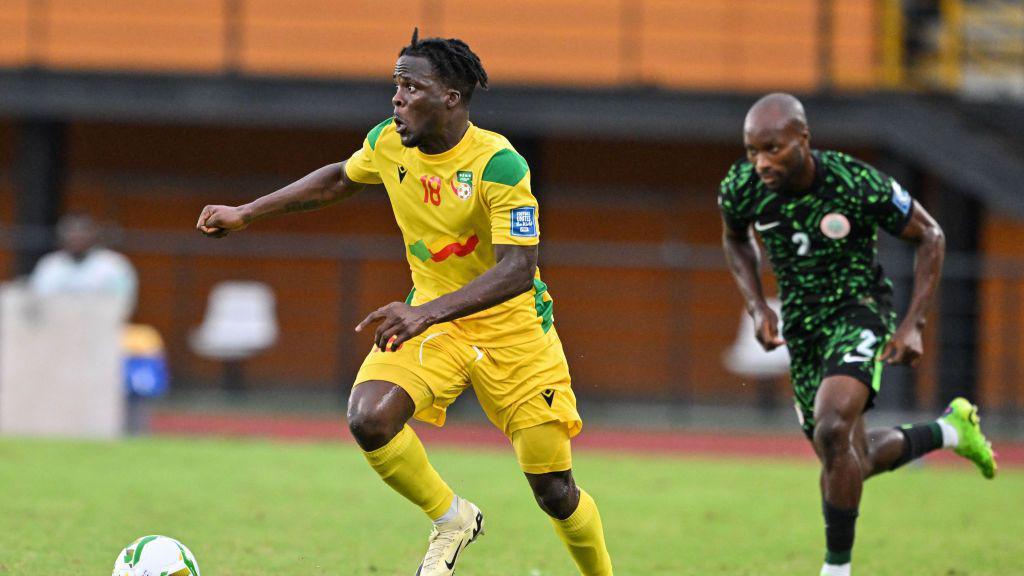
Players of Nigerian descent, including Junior Olaitan and Tosin Aiyegun, have grown into influential figures within the Benin national team, playing pivotal roles in the squad’s recent progress.
Adelakun, himself Nigerian and a former member of Rohr’s backroom staff during the Franco-German’s time in charge of the Super Eagles, described the players as “competitive” and having a “desire” to win.
“These are players who have got the DNA of Nigeria,” Adelakun revealed.
“They are playing in a team that has what it takes to actually go out there and make impressions.”
While acknowledging it is a great “privilege” to have players of Nigerian origin in the squad, Adelakun was quick to highlight the strong similarities between those players and their Beninois team-mates, stressing the shared mentality, commitment, and unity within the team.
“We cut the same physical attributes, physical DNA [and] same mentality,” Adelakun explained.
“It’s a good mix between the original core Beninois and [players of] Nigerian origin.
“That is bringing out what you’re seeing in Benin football.”