By Bonface Mulyungi
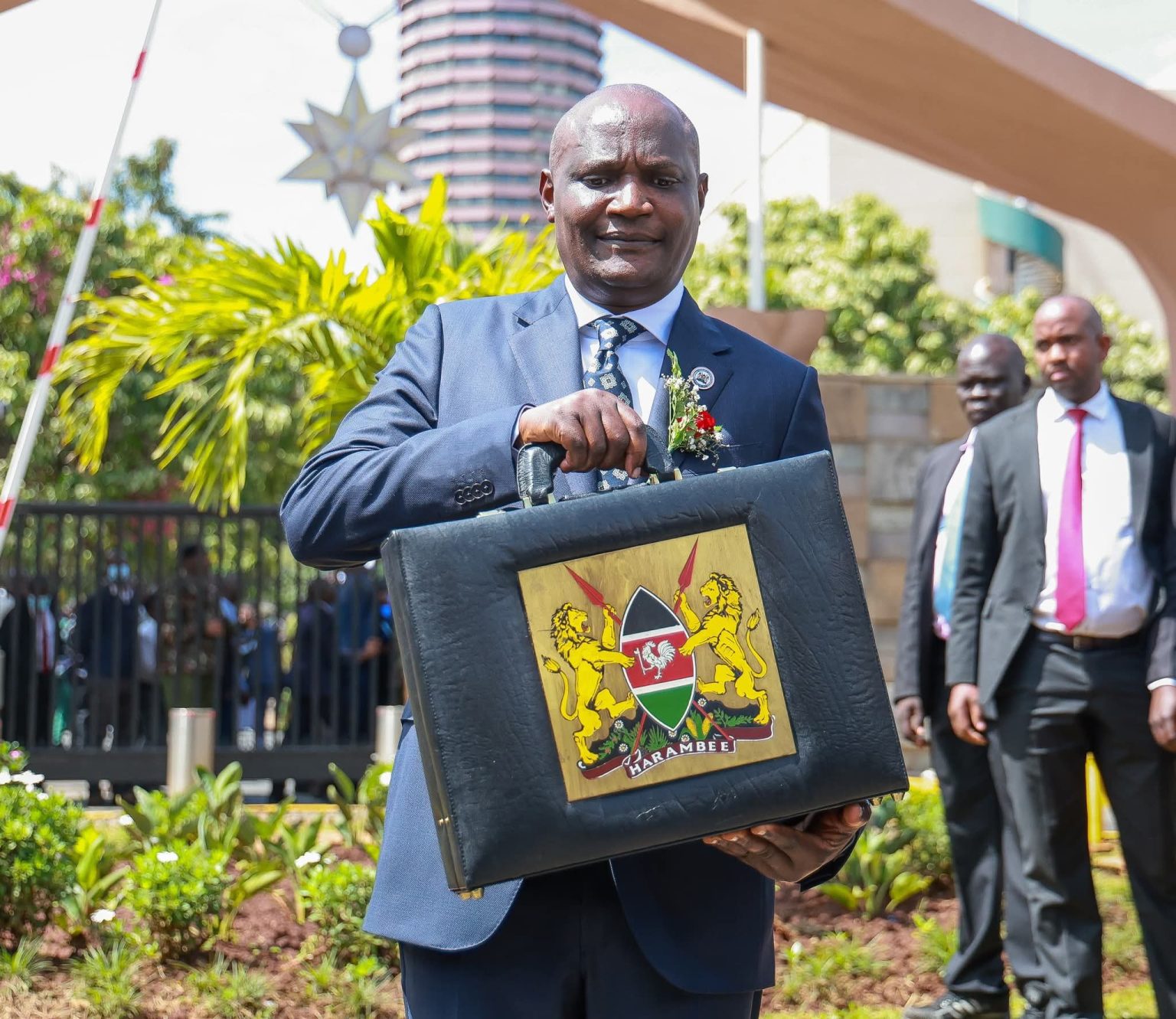
President William Ruto’s 2026/27 budget is proving to be a test of whether the government can sustain its ambitious Bottom-Up Economic Transformation Agenda (BETA) while keeping public debt under control.
The 2026/27 budget projects total expenditure of Sh4.82 trillion against expected revenue and grants of Sh3.67 trillion, leaving a fiscal deficit of Sh1.146 trillion, equivalent to 5.5 per cent of GDP. The government plans to bridge this gap through a combination of domestic and external borrowing, with domestic borrowing carrying the heavier burden.
According to Treasury estimates, Sh1.03 trillion of the deficit financing will come from the domestic market, while net external financing will contribute Sh116.2 billion. This means nearly 90 per cent of the budget shortfall will be financed locally.
The financing strategy reflects the government’s preference to reduce exposure to external debt and exchange rate risks, especially after recent years marked by high debt servicing costs and pressure from maturing Eurobonds. It also factors in global tensions such as the middle east tensions.
However, the approach raises questions about whether increased government borrowing could crowd out private sector access to credit, particularly for businesses the administration says it wants to empower.
The budget allocates Sh386.1 billion directly to the five pillars of the Bottom-Up agenda: agriculture, MSMEs, affordable housing, healthcare, and the digital economy.
Agriculture remains a major beneficiary, receiving funding for fertilizer subsidies, food systems resilience, land settlement programmes and agricultural value chain development. The aim is to increase productivity, improve food security and boost farmer incomes.
Support for micro, small and medium enterprises continues through programmes such as SAFER and NYOTA, designed to improve access to affordable financing and create employment opportunities for young people.
One of the most visible expression of the Bottom-Up agenda is the affordable housing programme. The budget sets aside Sh50.6 billion for construction of affordable housing units and another Sh20.9 billion for social housing.
Treasury argues that the deficit remains manageable and forms part of a broader fiscal consolidation strategy. The government projects that the budget deficit will gradually decline from 5.5 per cent of GDP in 2026/27 to 3.3 per cent by 2028/29 through enhanced revenue collection and expenditure rationalisation.
from: citizen