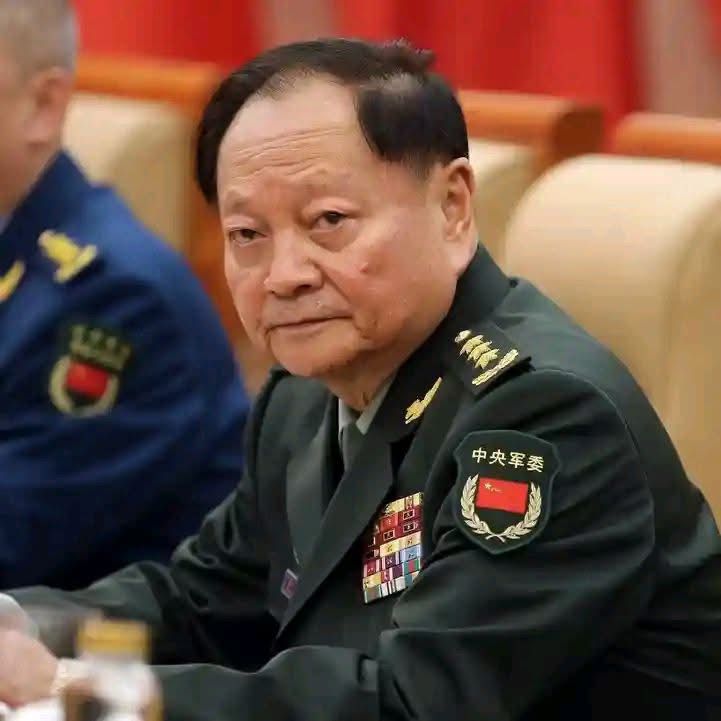
In an extraordinary development that has sent ripples through international security circles, China’s highest-ranking uniformed officer, General Zhang Youxia, is under investigation for allegedly leaking sensitive nuclear weapons information to the United States, according to major news reports citing people familiar with a closed-door military briefing.
China’s Ministry of National Defence publicly acknowledged on 24 January 2026 that Zhang, who serves as vice chairman of the Central Military Commission (CMC) — the Chinese military’s top command body chaired by President Xi Jinping — is being probed for “serious violations of discipline and law.” However, authorities have not publicly confirmed details of the alleged nuclear data leak.
The explosive accusation emerged first in a Wall Street Journal report, which said the claims were outlined before the official announcement of the investigation during a high-level briefing attended by senior military officers. According to the briefing, Zhang is accused of passing “core technical data” related to China’s nuclear weapons programme to the United States — an allegation that, if true, would represent one of the most severe breaches of national security in modern Chinese history.
In addition to the alleged leak, Zhang faces multiple other charges detailed in internal accounts: forming political cliques that could undermine party unity, abusing authority within the Central Military Commission, and presiding over corrupt practices in military procurement. Some reports also link him to accepting large bribes, including for facilitating official promotions, notably involving a former defense minister.
Zhang’s sudden fall from grace is remarkable given his long tenure and close association with President Xi. At 75, he was considered one of China’s most powerful military figures — second only to Xi in the armed forces hierarchy. His removal underscores a growing shake-up within China’s military leadership, with implications for internal governance, military cohesion, and Beijing’s broader strategic posture.
The probe comes amid an expansive anti-corruption campaign that has ensnared hundreds of thousands of officials since Xi took power, increasingly reaching into the upper echelons of the People’s Liberation Army (PLA). Analysts say the purge not only aims to root out corruption but also to consolidate Xi’s control over the military, especially as tensions rise over Taiwan and other regional flashpoints.
International observers and intelligence analysts are closely watching how Beijing manages the fallout. Taiwan’s government has already signaled heightened vigilance following what it described as “abnormal” military leadership changes in China, even as it stresses that the PLA remains a formidable force despite internal disruptions.
At this stage, independent verification of the nuclear leak allegation is lacking, and Chinese authorities have been careful to frame the investigation officially in terms of internal discipline and legal violations. Yet the sheer gravity of the charges — particularly if tied to foreign intelligence breaches — milestones into rare and deeply sensitive territory for a nation that tightly controls both its nuclear arsenal and internal political reporting.
As details continue to emerge and foreign governments react, this case could reshape perceptions of Beijing’s military integrity, its internal power dynamics, and the security calculus between China and the United States.