The Democratic Republic of Congo has handed the United States a vetted list of mining and processing projects open to American investment, signalling Washington’s most concrete move yet to chip away at China’s grip on critical minerals.
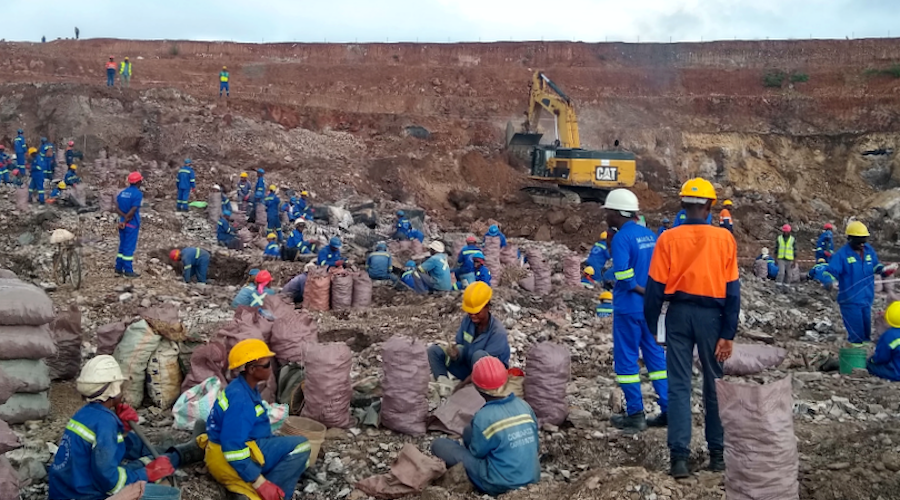
The shortlist, delivered to US officials last week, spans Kisenge’s manganese, gold and cassiterite licences, Gecamines’ Mutoshi copper-cobalt project and a germanium-processing venture, Sokimo’s four gold permits, Cominiere’s lithium licences, and Sakima’s coltan, gold and wolframite assets, according to two people familiar with the matter quoted by Reuters.
The projects are intended for US investors to review under a minerals partnership and mark tangible progress in translating peace and investment talks with Congo into leverage over its supply chains, the sources said.
The move follows a Dec. 4 accord that gives US companies privileged access to Congo’s vast reserves of copper, cobalt, lithium and tantalum, materials critical to electric vehicles, defence systems and advanced electronics. Congo is the world’s second-largest copper producer and the top supplier of cobalt, a key battery metal.
Turning point
The renewed focus on securing overseas supply comes as US metals policy enters what analysts see as a turning point. BMO analysts Helen Alamos and George Heppel said in a note on Tuesday that President Trump’s reassertion of the Monroe Doctrine as part of the US National Security Strategy marks an inflection point in how markets assess future US metals inventories.
They said investors are increasingly betting that the large volumes of metal accumulated by the US over the past year, particularly copper, will soon be released, easing tight supply elsewhere and pushing prices lower. However, the analysts cautioned against assuming a drawdown is inevitable, arguing inventories could continue to rise over the months and years ahead, potentially approaching levels last seen during the Cold War.
“The pathway for US metals inventory from here is now probably the single most important debate for the metals complex right now,” Alamos and Heppel said, noting that Trump’s second term has already seen the largest build so far in copper, followed by platinum and palladium.
Congolese officials said the list went through several rounds of internal vetting and represents Kinshasa’s most direct offer yet to Washington, adding they were not authorized to speak publicly.
China’s hold
Chinese companies such as CMOC, Zijin and Huayou dominate copper and cobalt production in the DRC, where the metals are often mined together, while US firms have historically stayed away because of conflict, corruption and logistical hurdles.
Kinshasa hopes American capital can dilute that dominance after years of Chinese expansion. In 2007, Congo granted Chinese miners tax breaks running to 2040 in exchange for $9 billion in promised investment, of which about $6 billion materialized, as Western governments showed little appetite to curb sales to Chinese buyers.
By the time US President Donald Trump returned to office in January 2025, Chinese firms controlled about 80% of Congo’s mining output, including Tenke Fungurume, once US-owned and now the world’s second-largest source of cobalt, operated by CMOC.
The minerals pact sits within a broader US-brokered peace agreement between Congo and neighbouring Rwanda aimed at ending decades of violence in eastern Congo. Under the so-called Washington Accords, the US will help oversee a regional peace process in return for Congo facilitating American investment, even as fighting persists in parts of the country.
Washington has identified 60 critical minerals essential to technologies ranging from weapons systems to wind turbines and semiconductors, many predominantly supplied by China, and the administration has argued that securing alternative supplies is a strategic priority.
(With files from Reuters)