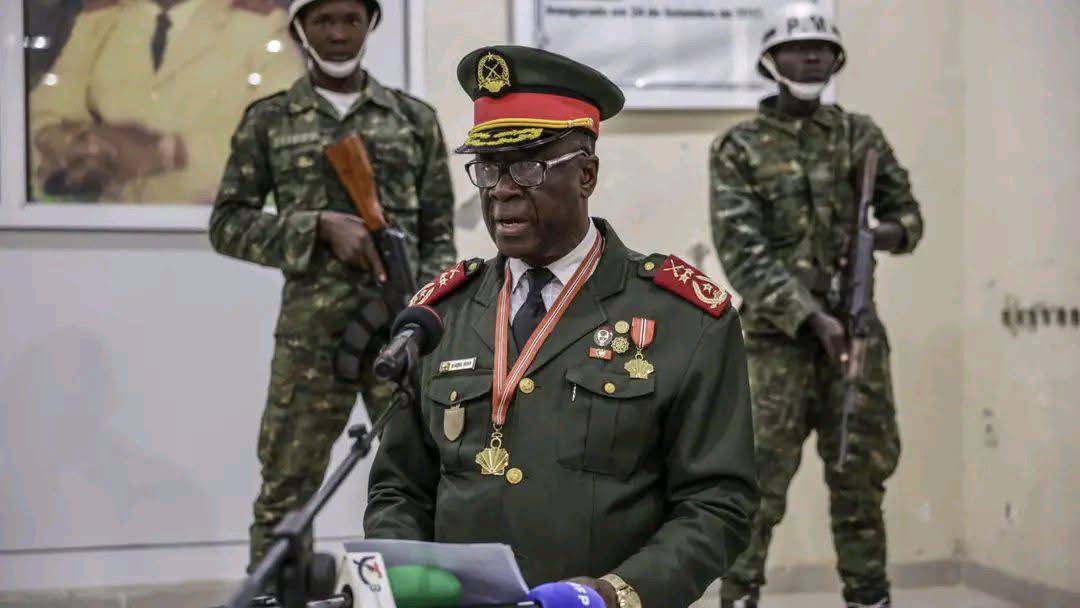
Guinea-Bissau’s transitional authorities have announced that presidential and legislative elections will be held on December 6, a move they describe as a decisive step toward restoring constitutional order after months of political upheaval.
The announcement was made on Wednesday, January 21, through a decree read to the press by the head of the transition, General Horta N’Tam, who has led the country since the military takeover. According to the decree, conditions are now deemed adequate to organize elections that are “free, fair, and transparent,” in line with commitments previously made by the military authorities to regional and international partners.
The polls form a central pillar of the transition charter, published in early December, which outlines a one-year transitional period aimed at returning the country to civilian rule. In a bid to bolster confidence in the process, the decree explicitly states that General Horta N’Tam will not stand as a candidate in the elections, a provision intended to reduce fears of military entrenchment in politics.
Regional Pressure and ECOWAS Role
The announcement comes amid intensified regional pressure, particularly from the Economic Community of West African States (ECOWAS). Just days earlier, a high-level ECOWAS delegation visited Bissau, led by Sierra Leonean President Julius Maada Bio, the current chair of the bloc, and joined by Senegalese President Bassirou Diomaye Faye.
During the visit, ECOWAS urged the transitional authorities to ensure a short, inclusive and transparent transition, warning against prolonged military rule. The delegation also called for the release of political figures arrested during the coup, including Domingos Simões Pereira, a prominent opposition leader whose detention has drawn criticism from rights groups and political actors.
Background to the Crisis
Guinea-Bissau’s latest political crisis followed disputed election results, with rival camps of then-president Umaro Sissoco Embalo and opposition leader Fernando Dias de Costa both claiming victory. The armed forces said they intervened to prevent escalating tensions and possible post-election violence.
Following the takeover, Fernando Dias de Costa sought refuge at the Nigerian embassy, where he was later granted asylum, while Embalo subsequently left the country. Since then, General Horta N’Tam — known to be close to the former president — has overseen the transitional administration.
Cautious Optimism
While the announcement of an electoral timetable has been welcomed by regional leaders as a positive step, observers say significant challenges remain, including restoring trust among political actors, ensuring the participation of all parties, and guaranteeing security during the campaign period.
ECOWAS and international partners are expected to closely monitor the transition in the coming months, viewing the December elections as a critical test of Guinea-Bissau’s ability to break with its long history of coups and political instability.
If successful, the vote could mark a turning point for the country, opening the door to renewed democratic governance and improved relations with regional and international partners.