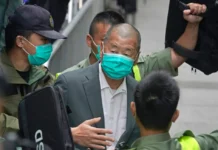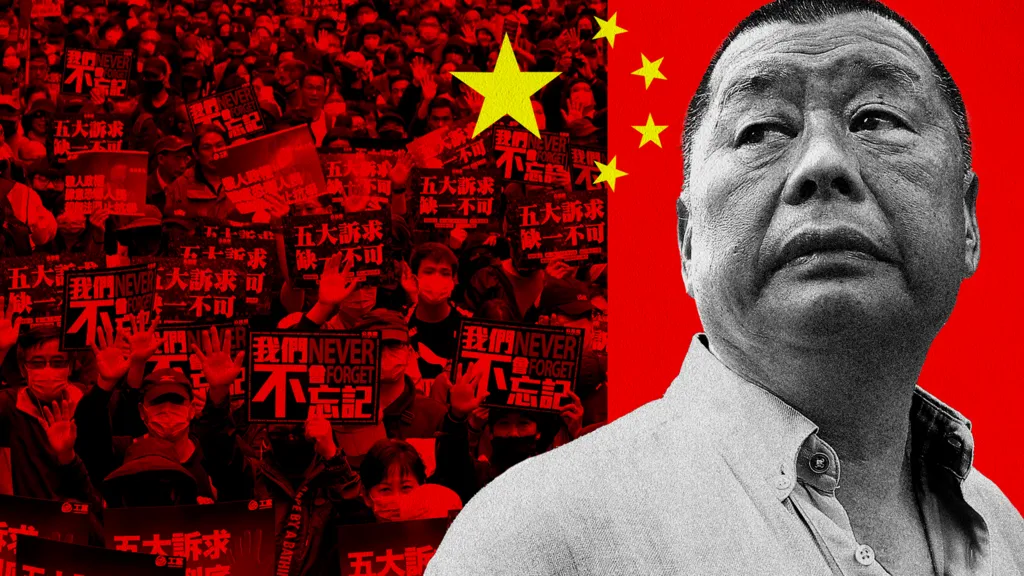
On a winter morning in 2022, Raphael Wong and Figo Chan entered Hong Kong’s Stanley Prison to visit Jimmy Lai. The media tycoon had been arrested two years earlier and was awaiting trial on national security charges.
All three had been swept up in the mass protests of 2019, when hundreds of thousands filled the streets demanding democracy and greater freedoms. Back then, their meetings were far removed from prison walls. They shared long dinners—sometimes extravagant—talking politics and gossip over dim sum, pizza, or claypot rice.
Now, their conversations took place behind bars. Lai’s tastes had changed too. In prison, Chan recalled, he “loved eating rice with pickled ginger.” It was hard to reconcile with the man once jokingly known as “Fatty Lai.” He had lost a noticeable amount of weight.
None of them could have imagined such a reunion. The protests had been crushed, fellow activists jailed, and Hong Kong—still energetic on the surface—had fundamentally changed.
Separated by decades in age—Lai in his seventies, Wong and Chan about 40 years younger—they shared the same vision of a freer Hong Kong. Lai had been one of the movement’s most prominent figures, using his most powerful platform, the hugely popular Apple Daily newspaper, to push for liberal democracy.
That influence came at a high cost after Beijing imposed a sweeping national security law in 2020. The law made dissent dangerous, and Lai’s outspoken criticism of the Chinese Communist Party put him squarely in its sights.
Despite holding British citizenship, Lai refused to leave. He said he owed everything to Hong Kong.
“I got everything I have because of this place,” he told the BBC just hours before his arrest in 2020. Fighting back tears, he called it his “redemption.”
He wanted the city to keep the freedoms that had allowed him to succeed. That conviction defined his politics—and ultimately cost him his freedom.
By James Kisoo