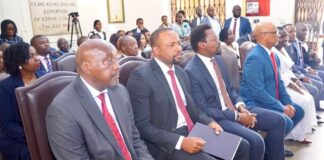








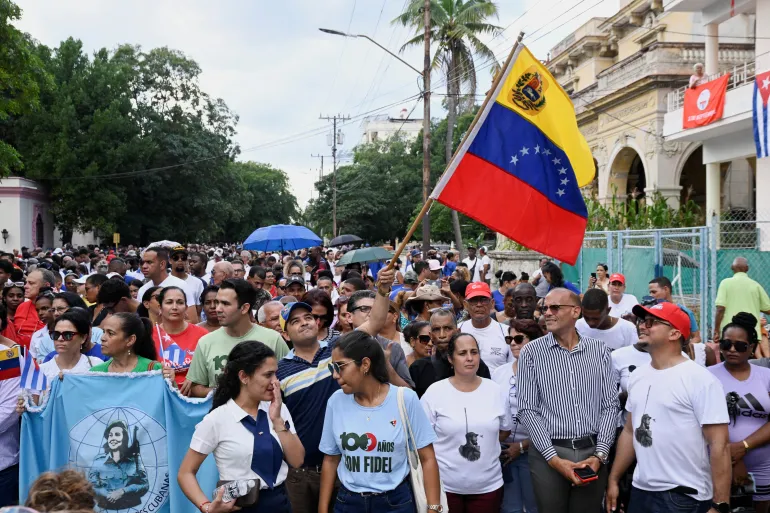
Cuba has announced the death of 32 of its citizens during the United States military operation to abduct and detain Venezuelan President Nicolas Maduro and his wife in Caracas.
Havana said on Sunday that there would be two days of mourning on January 5 and 6 in honour of those killed and that funeral arrangements would be announced.
The state-run Prensa Latina agency said the Cuban “fighters” were killed while “carrying out missions” on behalf of the country’s military, at the request of the Venezuelan government.
The agency said the slain Cubans “fell in direct combat against the attackers or as a result of the bombing of the facilities” after offering “fierce resistance”.
Cuba is a close ally of Venezuela’s government, and has sent military and police forces to assist in operations in the Latin American country for years.
Maduro and his wife have been flown to New York following the US operation to face prosecution on drug-related charges. The 63-year-old Venezuelan leader is due to appear in court on Monday.
He has previously denied criminal involvement.
Images of Maduro blindfolded and handcuffed by US forces have stunned Venezuelans.
Venezuelan Minister of Defence General Vladimir Padrino said on state television that the US attack killed soldiers, civilians and a “large part” of Maduro’s security detail “in cold blood”.
He did not release a casualty count, however.
The New York Times, citing a Venezuelan official, said that at least 40 people had been killed in the attacks.
‘A lot of Cubans’ killed
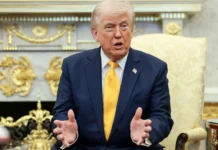
US President Donald Trump, speaking to reporters on board Air Force One on Sunday, said that “there was a lot of death on the other side” during the raids.
He said that “a lot of Cubans” were killed and that there was “no death on our side”.
Trump went on to threaten Colombian President Gustavo Petro, saying that a US military operation in the country sounded “good” to him.
But he suggested that a US military intervention in Cuba is unlikely, because the island appears to be ready to fall on its own.
“Cuba is ready to fall. Cuba looks like it’s ready to fall. I don’t know how they, if they can, hold that, but Cuba now has no income. They got all of their income from Venezuela, from the Venezuelan oil,” Trump said.
“They’re not getting any of it. Cuba literally is ready to fall. And you have a lot of great Cuban Americans that are going to be very happy about this.”
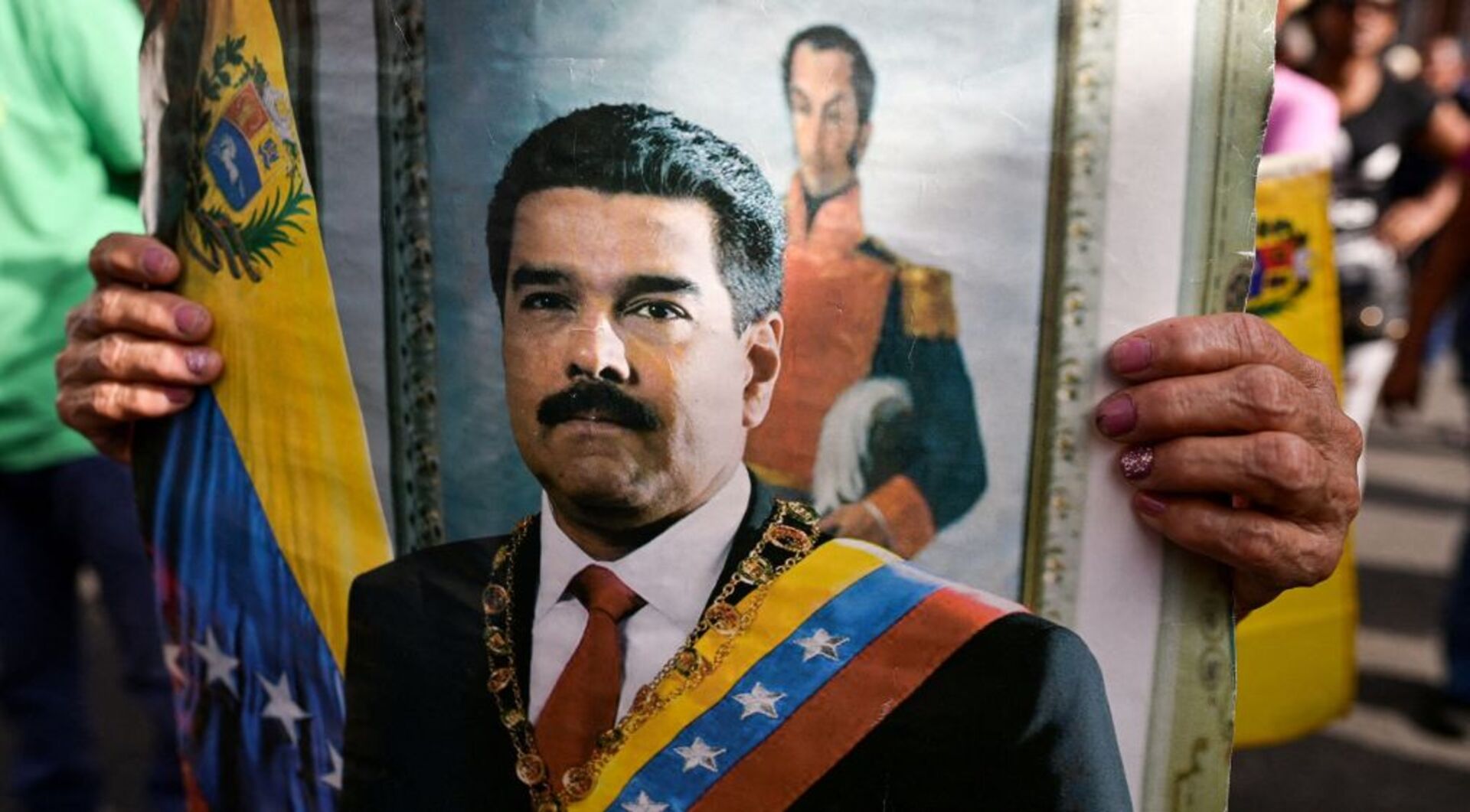
The US attack on Venezuela marked the most controversial intervention in Latin America since the invasion of Panama 37 years ago.
The Trump administration has described Maduro’s abduction as a law-enforcement mission to force him to face US criminal charges filed in 2020, including “narco-terrorism” conspiracy.
But Trump also said that US oil companies needed “total access” to the country’s vast reserves and suggested that an influx of Venezuelan immigrants to the US also factored into the decision to abduct Maduro.
While many Western nations oppose Maduro, there were many calls for the US to respect international law, and questions arose over the legality of abducting a foreign head of state.
Left-leaning regional leaders, including those of Brazil, Colombia, Chile and Mexico, have largely denounced Maduro’s removal, while countries with right-wing governments, from Argentina to Ecuador, have largely welcomed it.
The United Nations Security Council plans to meet on Monday to discuss the attack. Russia and China, both major backers of Venezuela, have criticised the US.
Beijing on Sunday insisted that the safety of Maduro and his wife be a priority, and called on the US to “stop toppling the government of Venezuela”, calling the attack a “clear violation of international law“.
Moscow also said it was “extremely concerned” about the abduction of Maduro and his wife, and condemned what it called an “act of armed aggression” against Venezuela by the US.