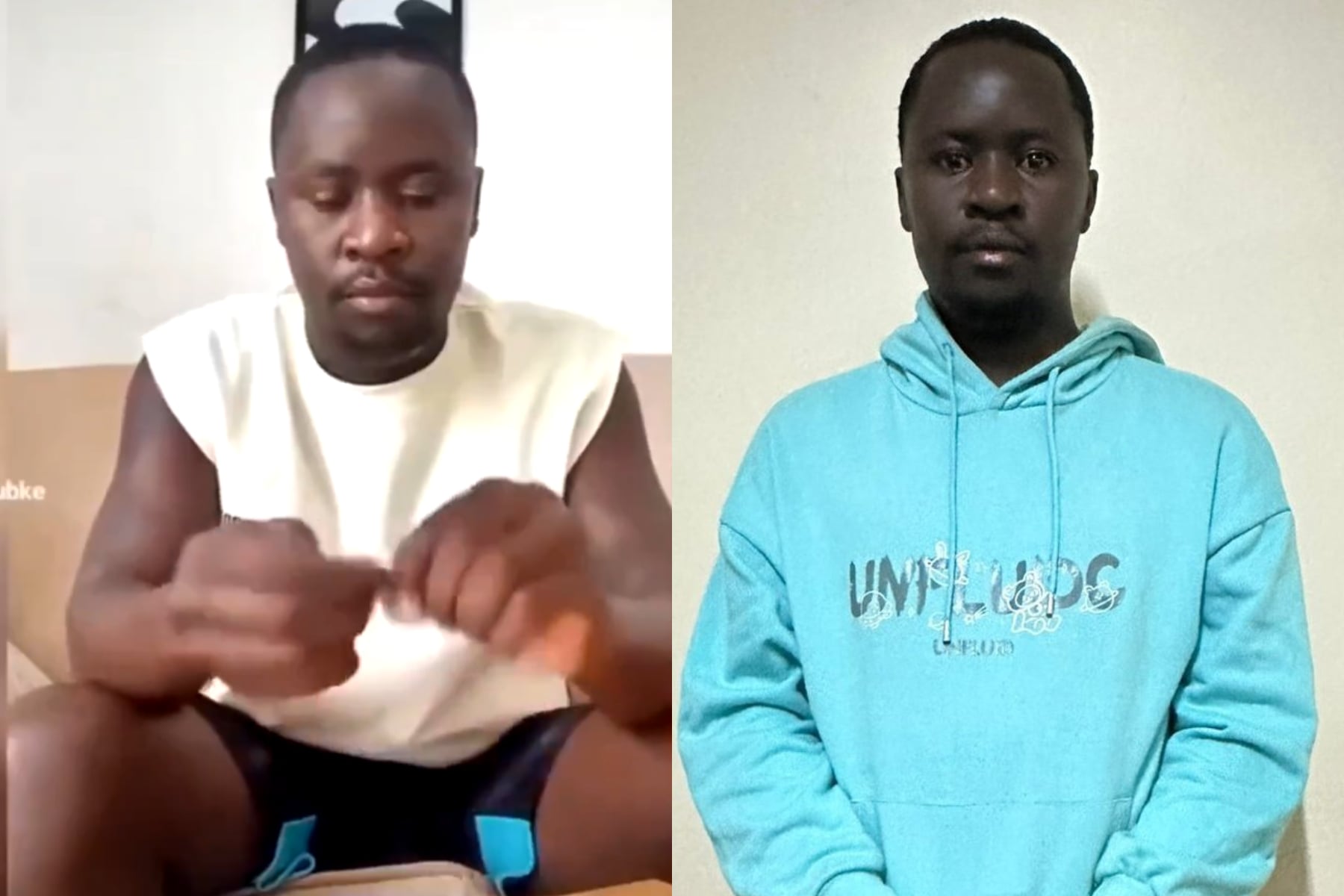
Detectives from the Banking Fraud Investigations Unit (BFIU) have arrested a man who recorded himself mutilating Kenyan currency notes.
In a statement on Tuesday, March 10, the Directorate of Criminal Investigations (DCI) said the suspect, identified as Maximilian Motara, posted the video on TikTok.
The investigative agency said the suspect is in police custody and is being processed before being arraigned in court.
“Banking Fraud Investigations Unit (BFIU) detectives have arrested Maximilian Motara, who was wanted for allegedly mutilating Kenyan currency notes and flaunting the acts on TikTok.
“He is currently in custody and is being processed for arraignment in court,” DCI stated.
Section 367 of the Penal Code (Cap. 63, Laws of Kenya) prohibits the defacement, mutilation, or impairment of currency notes.
Any person who willfully defaces, mutilates, or in any way impairs any currency note issued by a lawful authority commits an offence under the Penal Code.
This comes weeks after the Central Bank of Kenya (CBK) warned businessmen involved in the trade of money bouquets over the mishandling of the Kenyan currency notes.
In a notice on February 2, CBK noted that the mechanism of creating the bouquets could damage the notes and render them unusable.
“The use of adhesives, pins, staples, and similar materials damages banknotes and interferes with the efficient operation of cash-handling and processing equipment, including automated teller machines (ATMs), cash counting machines, and sorting equipment.
“This results in increased rejection of banknotes during processing and leads to the premature withdrawal and replacement of currency, at an avoidable cost to the public and the Bank,” the statement read in part.
CBK maintained that while it does not object to the use of cash as a gift, such use should not involve any action that alters, damages, or defaces banknotes.