
By Andrew Kariuki
Deputy Chief Justice Philomena Mwilu has called on judges of the Employment and Labour Relations Court (ELRC) to strengthen access to justice for migrant workers, noting that labour migration disputes are increasingly presenting complex transnational legal challenges.
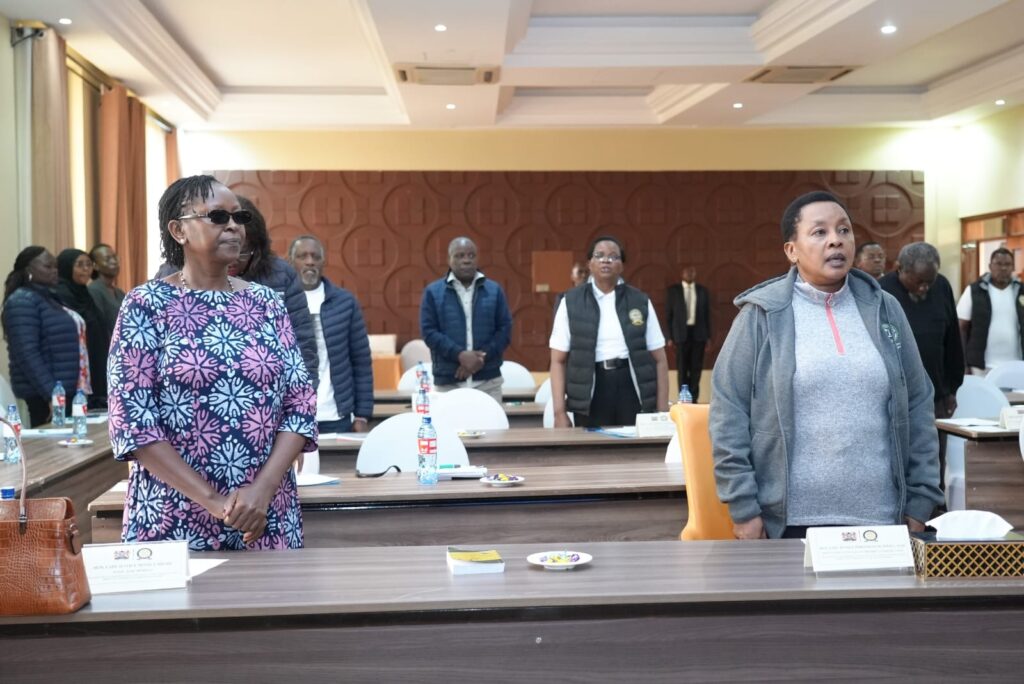
Speaking while closing the 2026 Annual Conference of ELRC Judges, themed “Labour Migration and Access to Justice,” the Deputy Chief Justice emphasized that Kenyan workers do not lose their constitutional protections simply because they cross international borders.
She said the justice system must remain accessible even when the alleged violations occur outside the country.
“A people-centred justice approach requires this Court not merely to resolve disputes, but to examine how our procedures, remedies, partnerships and jurisprudence can remove barriers, empower agency, preserve human dignity (utu) and generate outcomes that restore social equilibrium,” Mwilu stated.
The Deputy Chief Justice noted that labour migration disputes frequently involve power imbalances, exploitation and trauma, particularly among low-wage domestic workers navigating complex cross-border recruitment systems.
Mwilu explained that the Judiciary’s framework on Social Transformation through Access to Justice (STAJ) requires institutions to design justice systems that are accessible, affordable and effective, especially for vulnerable groups.
“Migrant workers, especially low-wage domestic workers navigating transnational recruitment systems, represent precisely the justice-seekers contemplated by STAJ. Their justice journeys often traverse multiple jurisdictions, power imbalances, trauma and economic precarity,” she said.
According to the DCJ, labour migration cases offer a critical test of whether the justice system can respond effectively to the realities faced by vulnerable workers whose disputes extend across multiple jurisdictions.
Mwilu also acknowledged the role played by institutional partners such as the International Labour Organization and Global Justice Kenya, saying such collaborations help courts better understand the human impact behind labour migration cases.
The partners shared insights on emerging labour migration trends, international labour standards and the challenges migrant workers encounter while working abroad.
The Deputy Chief Justice further urged judges to examine employment contracts more critically in migrant-worker disputes, warning that some agreements may conceal coercion, exploitation, and structural inequality.
She encouraged the development of jurisprudence addressing issues such as recruitment accountability, joint liability and enforcement of employment rights arising from foreign-based work arrangements, within the framework of Kenya’s Constitution.
The conference brought together judges, legal practitioners, and stakeholders to examine the legal, institutional and human rights dimensions of labour migration, as the Judiciary continues to refine its response to cross-border employment disputes.