By Lilian Mutua
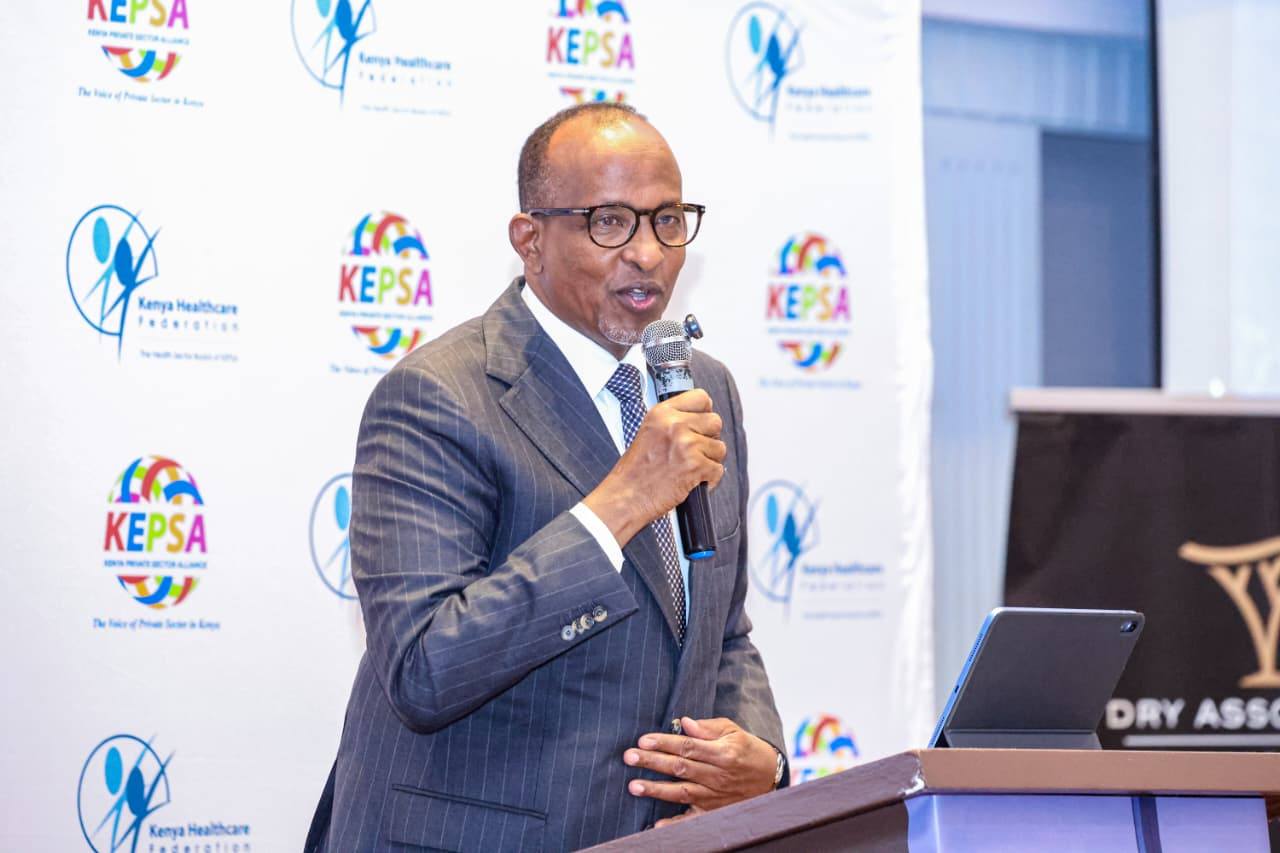
Health Cabinet Secretary Aden Duale has reaffirmed the government’s commitment to strengthening Kenya’s healthcare system through deeper collaboration with private and faith-based providers.
Speaking during the Kenya Healthcare Federation (KHF) Chief Executive Officers Forum in Nairobi, Duale said the private sector remains central to the success of ongoing health reforms under the Bottom-Up Economic Transformation Agenda (BETA).
The forum brought together key industry players to discuss the impact of global geopolitical shifts on Kenya’s health commodity security, with a focus on building a more resilient and self-sustaining healthcare system.
Four Pillars of Reform
Duale outlined four key pillars guiding the transformation of the sector: sustainable healthcare financing through the Social Health Authority (SHA), investment in primary healthcare and the health workforce, strengthening commodity security through local manufacturing, and accelerating digital transformation across the health system.
He revealed that the Social Health Authority has so far disbursed KES 137.4 billion, including KES 63.8 billion to private healthcare providers, significantly expanding access to both primary and specialised care.
Digital Uptake and Accountability
The CS commended healthcare providers for adopting the SHA digital platform, noting that 4,123 out of 10,646 onboarded facilities are privately owned.
However, he emphasised strict compliance, warning that adherence to the unified tariff remains mandatory and reiterating the government’s zero-tolerance stance on fraud and malpractice within the system.
Boosting Supply Chains and Local Manufacturing
On health commodity security, Duale said the government is strengthening the Kenya Medical Supplies Authority (KEMSA), which has achieved a 92 per cent refill rate.
He added that efforts are underway to roll out integrated digital supply chain systems and promote local manufacturing to reduce reliance on imports and ensure the consistent availability of essential medical supplies.
Regulatory Reforms Underway
Addressing concerns from stakeholders, Duale acknowledged challenges within regulatory processes and pledged to improve efficiency at the Pharmacy and Poisons Board (PPB), including reducing approval timelines and streamlining licensing procedures to support private sector investment.
He also highlighted ongoing legislative and structural reforms, including the proposed Quality of Healthcare and Patient Safety Bill, 2025, and the establishment of a unified national emergency medical service.
Stakeholder Engagement
To strengthen coordination and accountability, the CS announced plans to institutionalise a biannual Ministerial Stakeholders Forum, backed by structured workstreams and a quarterly accountability framework to track progress.
Duale urged all stakeholders to remain focused on delivering solutions that will guarantee equitable, accessible, and high-quality healthcare for all Kenyans.
The forum was hosted by KHF Chairperson Dr Kanyenje Gakombe and attended by Social Health Authority CEO Dr Mercy Mwangangi, alongside other leaders from the healthcare sector.