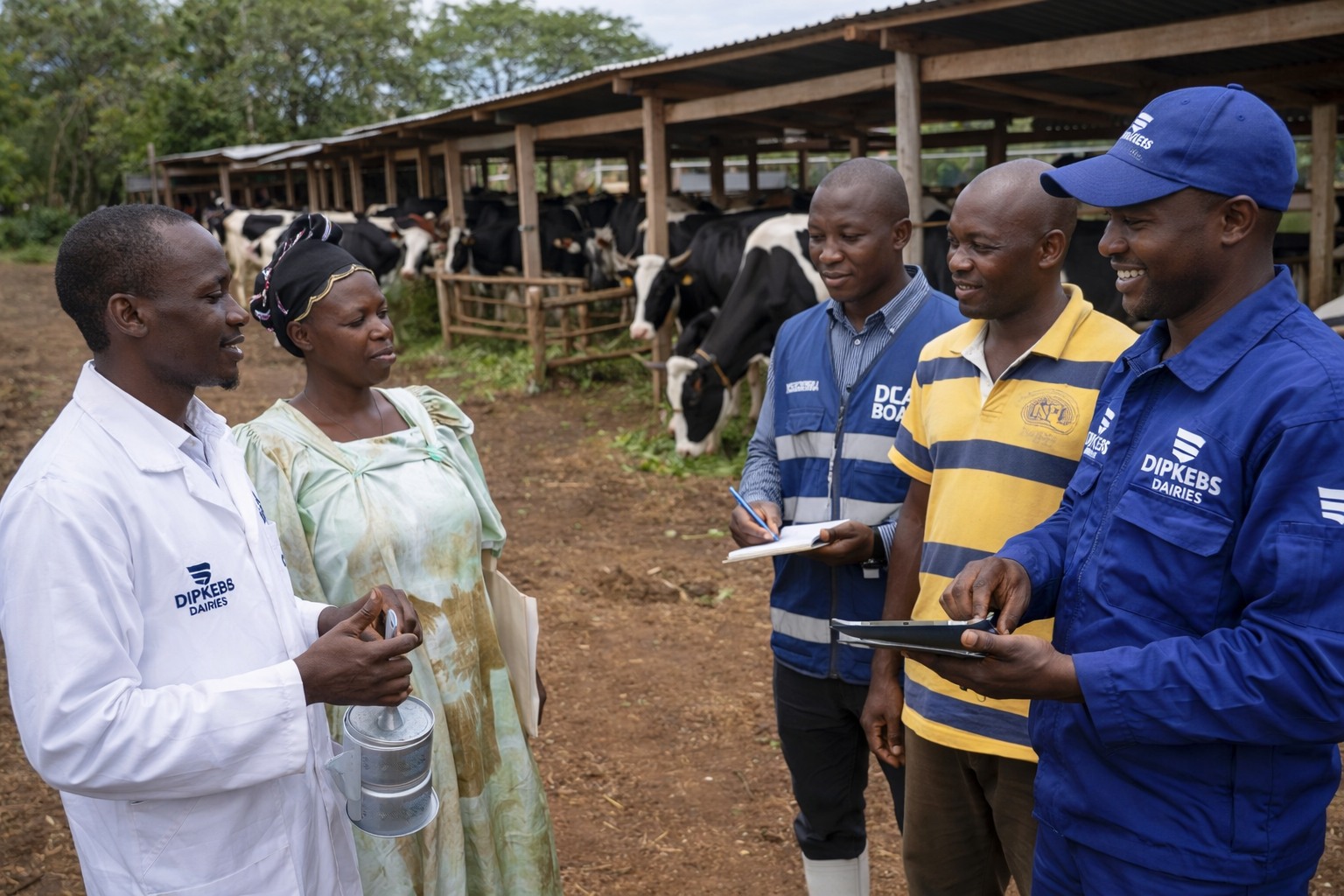
A growing number of dairy farmers in Eldoret and its surrounding areas are shifting to Dipkebs Dairies, a farmer-focused milk collection enterprise that is positioning itself as a reliable and transparent partner in the region’s dairy value chain.
The shift comes amid ongoing challenges in the dairy sector, where farmers have often cited delayed payments, lack of transparency in measurements and limited support services as key concerns.
Dipkebs Dairies operates as a milk collection centre while also incorporating farmer support services into its model. The company outlines its approach as one that combines milk collection with systems aimed at improving record keeping and payment processes.
Farmers supplying milk to the facility deliver their produce through structured collection schedules, with both morning and afternoon options available. This allows for regular intake of milk across different times of the day.
The company uses digital systems to record deliveries, with entries made in real time. These systems also generate confirmations and track volumes supplied, allowing farmers to follow their delivery records.
Payments are made through channels such as M-PESA and bank transfers, with options for weekly, bi-weekly or monthly schedules. This structure is intended to provide consistency in how farmers receive their earnings.
In addition to milk collection, the enterprise has incorporated services such as veterinary support, artificial insemination and farm advisory. These services are positioned as part of efforts to address productivity challenges among dairy farmers.
There are also plans to expand into agrovet services, which would provide access to farm inputs including feeds and other supplies.
The company works with external partners in areas such as feed supply and agricultural technology, which it says are aimed at improving service delivery and operational efficiency.
Dipkebs Dairies targets a range of farmers, including smallholder and larger-scale producers in Eldoret and nearby regions.
As farmers continue to explore different collection options, the presence of structured milk collection centres reflects broader changes in how dairy supply chains are being organised, particularly around payment systems, record keeping and access to support services.